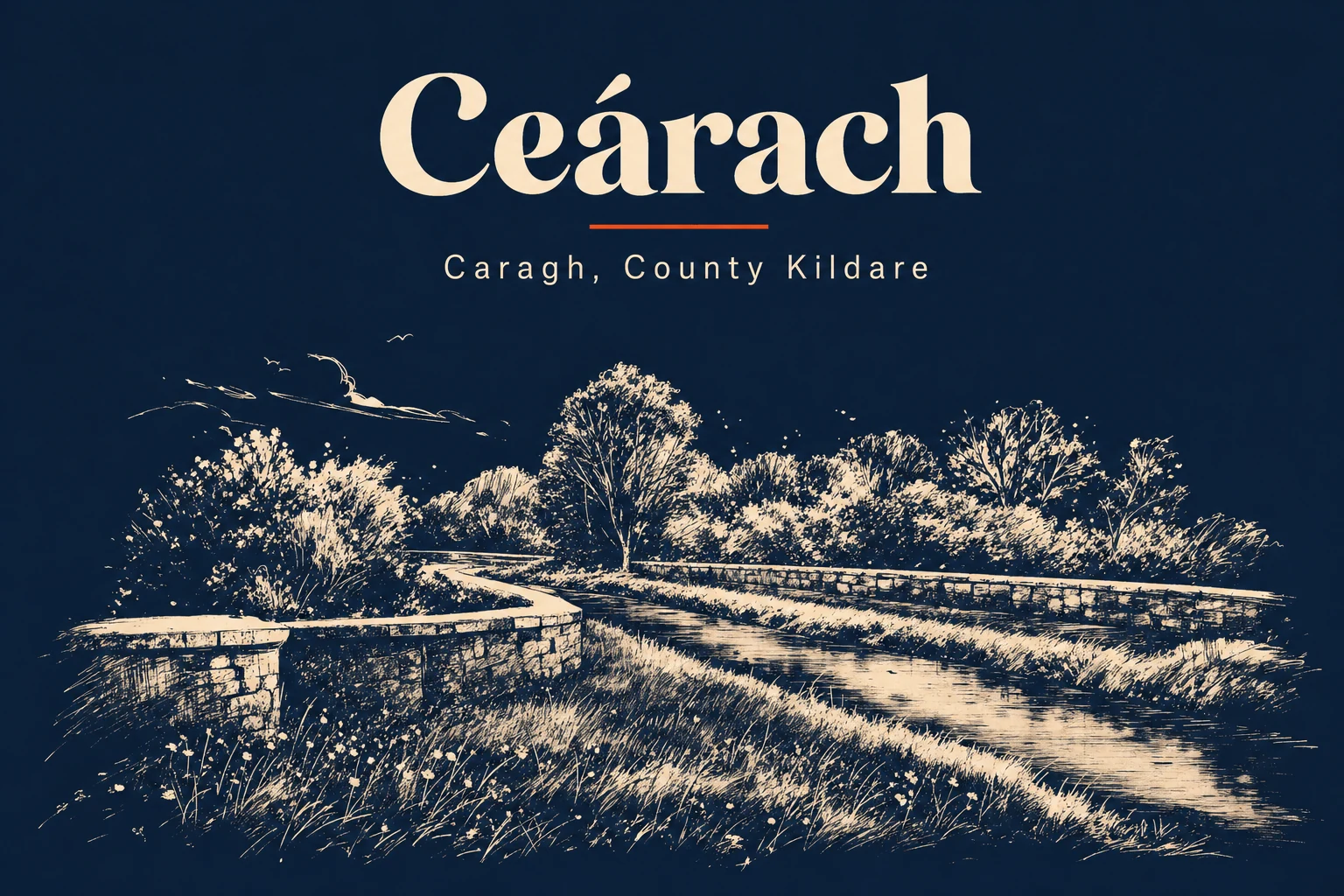
Ceárach · Co. Kildare
A Liffey-side village built around the oldest bridge on the river.
Caragh sits on the Liffey six kilometres north-west of Naas, on the R409 between the river and the Grand Canal. Most people who pass through are commuters cutting the corner from the M7 toward Prosperous or Clane. Most people who stop are here for one of three reasons: the bridge, the pub, or somebody's match.
The village was 242 people in 2002. It was 966 by 2016. That kind of jump in fifteen years rewrites a place - the new estates outnumber the old terrace, the school has been rebuilt, the church redeveloped, and the conversation in Cooke's any given evening is half local and half blow-in. The original village is the bit by the bridge: the church, a few houses, a shop, a pub. Walk that in fifteen minutes and you have seen the Caragh that existed before the Celtic Tiger arrived.
What is worth coming for, if you are not from here: the stone bridge over the Liffey, which is older than most things still in use in Ireland; a long flat walk along the riverbank to the Leinster Aqueduct, where the Grand Canal climbs over the Liffey on a stone trough built in 1783; and a meal in Cooke's, which has been a Caragh fixture for fifty years and has earned the reviews it gets.