County Laois Ireland · Co. Laois · Castletown Save · Share
POSTED FROM
CASTLETOWN
CO. LAOIS · IE

Castletown
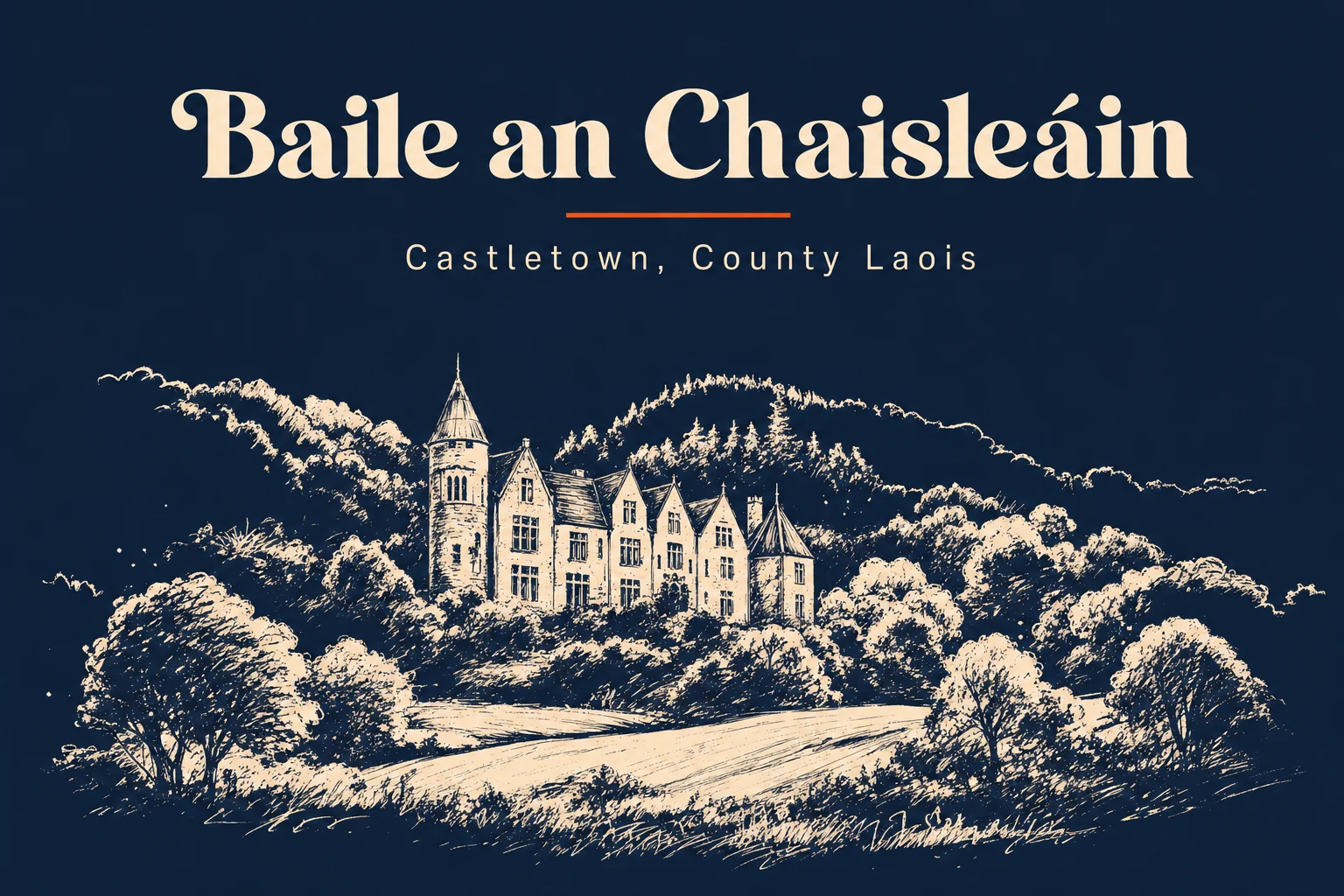
Baile an Chaisleáin, Co. Laois

The Ireland's Ancient East
STOP 08 / 08
Baile an Chaisleáin · Co. Laois

A Tidy Towns village on the River Nore below the Slieve Blooms - it won the national title in 2002 and still looks like it.

Castletown is a small village on the upper River Nore, about three kilometres south-west of Mountrath - the old accounts put it at one and three-quarter miles. It is not on the way up the mountain, whatever a passing map might suggest; it is down in the river country below the Slieve Blooms, built around a green that slopes toward the water.

The name comes from a castle. There was one here from the 13th century, on a commanding spot on the bank of the Nore. In the early 1500s Sir Oliver Norris, son-in-law of the Earl of Ormonde, garrisoned it to check the power of the Fitzpatricks, the lords of Upper Ossory. The Fitzpatricks took it in the end, and burned it to the ground in 1600 rather than let the English hold it. The foundations and part of the walls are all that is left.

What the village is known for now is winning. Castletown took the overall Tidy Towns title in 2002, and the care shows - the green, the painted shopfronts, the river walk. There is a pub, a Victorian monastery, an old corn mill, and not a great deal else, which is the honest size of the place. It is a stop, not a destination, and a pleasant one.

Use it as a quiet base in the Mountrath direction rather than a day out in itself. Roundwood House, the Georgian country house just outside Mountrath, is the bed most people come this way for. The mountain walks proper start at Clonaslee and Rosenallis, north of here.
Population
436 (2016)
Founded
Castle on the Nore, 13th century; village on the green
Coords
52.9769° N, 7.4942° W
01 / 08

At a glance.

Three things every local will eventually mention. Read these and you've already understood more than most day-trippers do.

02 / 08

The pubs.

None of these are themed Irish pubs, because they don't need to be. A few that earn the trip:

The Castletown Inn

Country local, locals and passers-through
Village pub & bar

The village pub, run by the Phelan family, between Mountrath and Borris-in-Ossory and handy off the M7. The one bar in the village. Check current hours before you bank on food - it is a small country pub, not a gastropub. Phone ahead at the weekend.

03 / 08

Where to sleep.

PlaceTypeLocal note
Roundwood House Georgian country house B&B, near Mountrath The reason most people come this way to stay. A lived-in Palladian house built around 1741 at the foot of the Slieve Blooms just outside Mountrath, with ten en-suite rooms, woodland and meadow, a library of two thousand books, and dinner served by arrangement. Desmond Guinness called it doll's-house-like. Family-run for decades. Book ahead - it is small and well known.
04 / 08

Stories & lore.

The reason to come back. The things every local will eventually tell you about, usually after the second pint.

Built 13th century, burned 1600

The castle on the Nore

The village takes its name from a castle that stood on the bank of the River Nore from the 13th century, on a commanding rise above the water. In the early 16th century Sir Oliver Norris - son-in-law of the Earl of Ormonde - held it with a garrison to curb the Fitzpatricks, the Mac Giolla Phádraig lords of Upper Ossory whose territory this was. The Fitzpatricks eventually took the castle and, in 1600, burned it to the ground sooner than let the English seize it. The foundations and part of the walls survive. There is no grand ruin to photograph here - just the site, the river, and the name.

The Brothers, here since 1881

The De La Salle monastery

The De La Salle Brothers, a teaching order, have had a monastery at Castletown since 1881, in a substantial three-storey range built around 1870 on the Fair Green at Elderfield. The order first came to Ireland in 1880 and Castletown was one of their early Irish foundations. It is a working religious house rather than a visitor site - listed on the National Inventory of Architectural Heritage - and it is much the largest building in the village.

Water power on the Nore, c. 1840

The corn mill

A tall corn mill stands on the river from around 1840 - a four-bay, five-storey block with later ranges added to the side. The Nore drove it. The waterfalls in front of the old mill are part of why the riverside here is worth a slow walk. Laois was milling country, and this is one of the better-surviving examples in the south of the county.

05 / 08

Things to do outside.

Wear waterproofs. Bring a sandwich. Tell someone where you're going if it's the mountain.

The green and the riverside The award-winning walk: down across the sloping green toward the River Nore, past the old corn mill and its waterfalls, with the Slieve Blooms filling the view to the north-west. Short, flat, well kept. This is the village showing you why it wins Tidy Towns.
Under 2 kmdistance
30-45 minutestime
Slieve Bloom Way (from the north of the county) Castletown is in the river country below the mountains, not on the trail itself. The proper Slieve Bloom Way access is at Clonaslee, Rosenallis and Glenbarrow, north of here. Drive up, pick up the OS map, and set out from there - do not expect to walk onto the mountain from the village.
Variabledistance
Half day or moretime
06 / 08

When to go.

There is no bad time. There are different times.

Spring
Mar-May

The green and riverside at their best, the Slieve Blooms greening up to the north.

◉ Go
Summer
Jun-Aug

Long evenings, the Nore clean enough to swim, the village at its tidiest.

◉ Go
Autumn
Sep-Oct

Good light on the river and the mountains. Quiet.

◉ Go
Winter
Nov-Feb

Very quiet, short days, the mountains often in cloud. The pub keeps going.

◐ Mind yourself
07 / 08

What to skip.

Honestly? Don't bother.

If a local was sitting beside you, this is the bit where they'd lean in.

×
Coming for a castle to walk around

The castle is gone - burned in 1600, with only foundations and a stretch of wall left. The name promises more than the site delivers. Come for the village and the river, not a ruin.

×
Treating it as the gateway to the Slieve Blooms

It is below the mountains, on the Nore, not at the trailhead. Mountrath is the gateway town and the actual walking access is further north at Clonaslee and Rosenallis. Plan the mountain day from there.

+

Getting there.

By car

About 3 km south-west of Mountrath, off the M7 between Mountrath and Borris-in-Ossory (junctions for both). Roughly an hour and a quarter from Dublin, half an hour from Portlaoise.

By bus

Bus Éireann Expressway route 12 (Dublin - Dublin Airport - Portlaoise - Limerick) serves the area; check whether your service stops at Mountrath, the nearest reliable pick-up. Otherwise drive.

By train

No station. Mountrath and Castletown railway station closed in 1976. The nearest working stations are Portlaoise and Ballybrophy on the Dublin-Limerick/Cork lines.