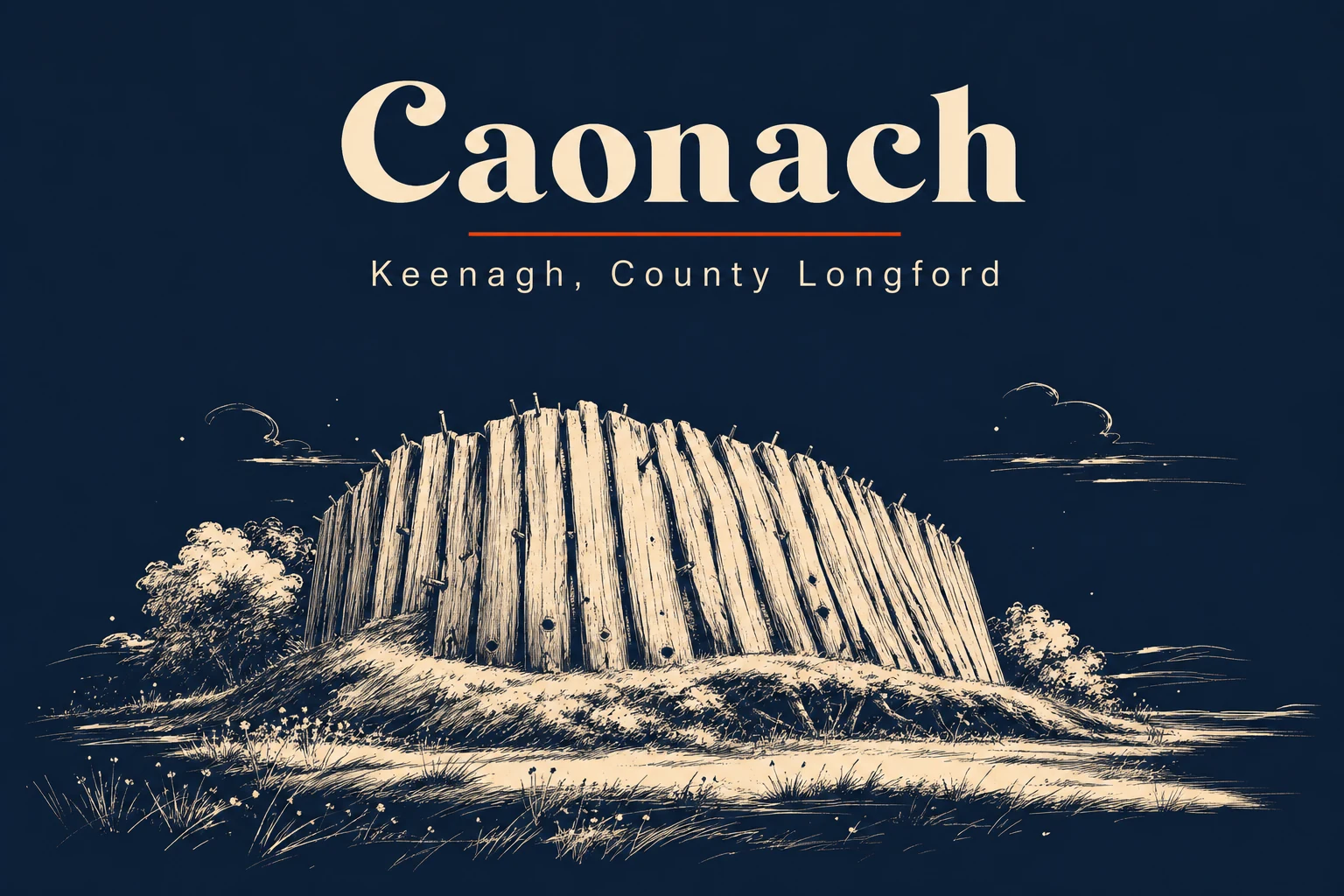
Caonach · Co. Longford
A small bog village guarding a 2,000-year-old wooden road built in the Iron Age.
Keenagh is a small village about 15 kilometres south of Longford town, on the R397, near the Royal Canal. Fewer than 600 people live here. Two churches, three pubs, a couple of shops, a community centre. A village that exists because of where it sits, not because of a single reason to visit. Except the reason is underground.
Beneath the bog three kilometres away lies the Corlea Trackway - a wooden road built in 148-147 BC from heavy oak planks, laid on rails. It was built for something. Historians argue: a ceremonial highway connecting the ritual centre of Ireland at the Hill of Uisneach to the royal site of Rathcroghan. A peat bog preserved the timber perfectly. When it was uncovered, it was the largest Iron Age roadway of its kind ever found in Europe. An 18-metre section now sits in the Visitor Centre, in a hall designed to keep it alive.
Keenagh sits at a useful point on the Royal Canal Greenway - the walking and cycling path that follows the canal. Longford is 15 kilometres north. Fanore and the bog beyond are south. A shop and toilets at the canal access point; the village itself is a short walk away. Stop for a pint. Walk the canal. Visit the trackway. Then leave, the way most people do. You will think about that wooden road for longer than you spend here.