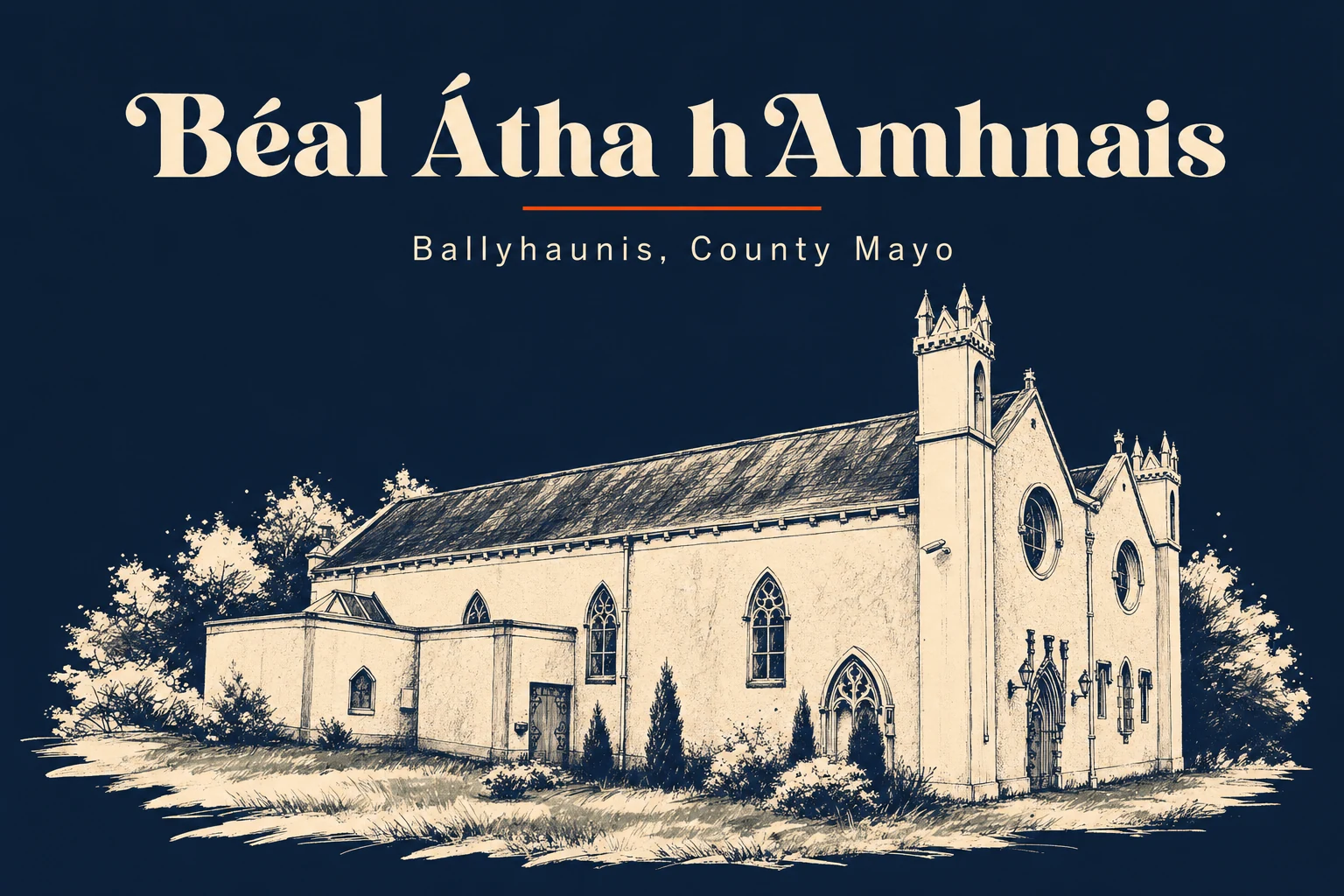
Béal Átha hAmhnais · Co. Mayo
Ireland's most ethnically diverse small town, by accident, in east Mayo.
Ballyhaunis is a market town in the flat east of Mayo, twenty kilometres from Claremorris on the N60, with a railway station and a friary ruin and a main street that functions like any other small Irish town. It appears, on first pass, unremarkable. It is not.
In the early 1980s a halal meat processing plant - Western Halal, later part of the Dawn Meats group - set up outside town. Islamic dietary law requires Muslim slaughtermen. Workers arrived from Pakistan. They brought families. More followed. By the 1990s Ballyhaunis had a Pakistani-run cricket club, halal butchers on the main street, and a Muslim population large enough to need a place of worship. The Islamic Cultural Centre opened in 1986 in a converted premises on Bridge Street. It was the first mosque in Ireland. Not the first in Dublin, or in a university city. Here. In east Mayo. Population two and a half thousand.
The town's ethnic mix - at its peak around 40% non-Irish nationals - is not a policy result or a resettlement programme. It is a consequence of one factory decision in one decade, compounding. Pakistani families, Syrian families, Libyan families put down roots. Children went to the local schools, learned Irish, played GAA. The cricket club folded and reformed more than once. The mosque is still open. The halal butchers are still trading. And the Augustinian friars who built the other notable structure in town did so in 1348, which gives Ballyhaunis a longer memory than most places that claim one.