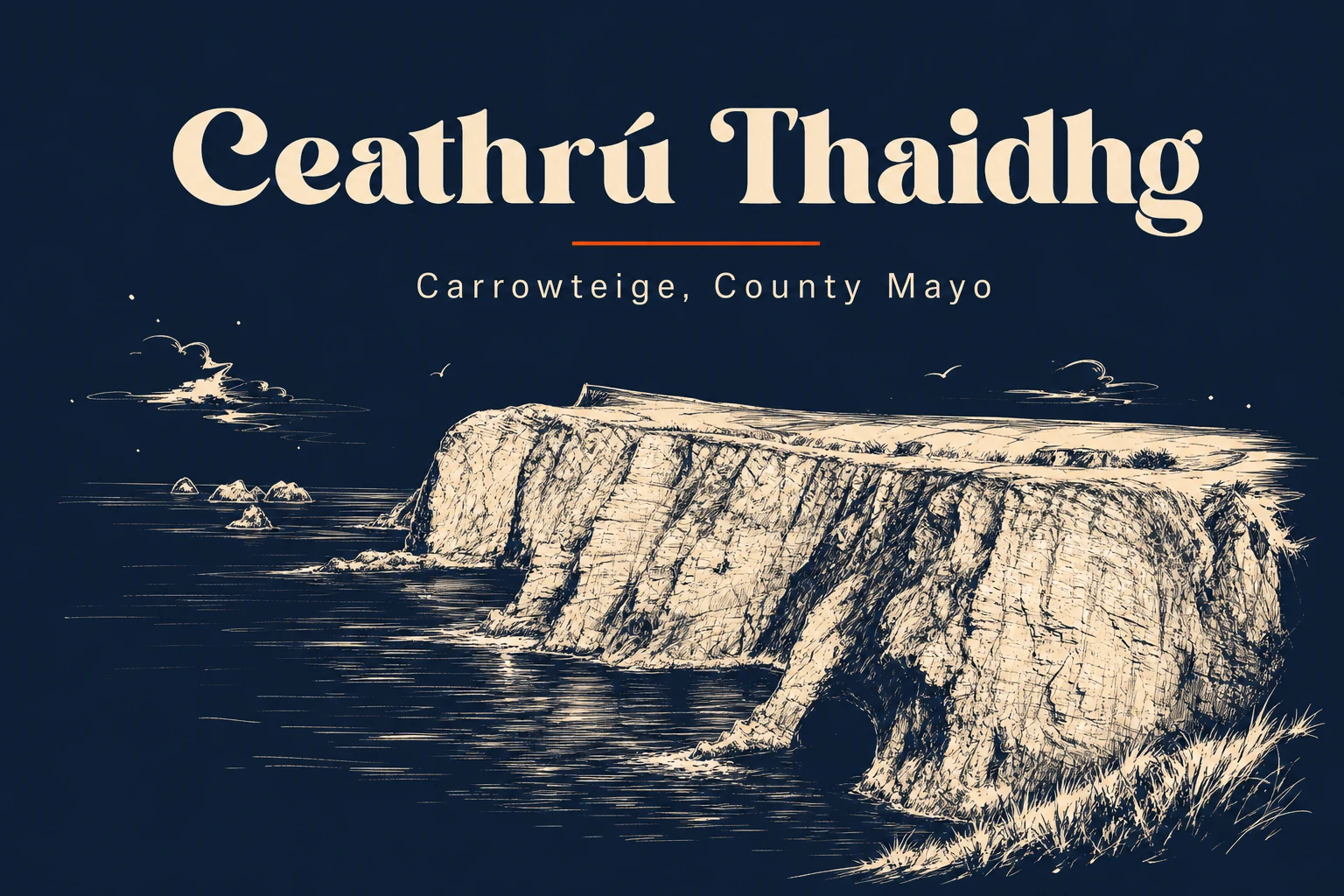
Ceathrú Thaidhg · Co. Mayo
The cliff edge, the old language, and not much else. That's enough.
Carrowteige is a small Irish-speaking village on the Dún Chaocháin Peninsula, north Mayo coast. The name means Tadhg's quarter - a reference to the medieval land division that once carved this headland into holdings. There is one shop. No pub. No hotel. The road comes in from Glenamoy and keeps going to the cliff edge, where it stops.
What you come here for is the coast and the quiet. The Children of Lir loop walk runs along precipitous cliffs above caves, sea arches, and the Stags of Broadhaven - four rock towers rising from the Atlantic that are somewhere between 650 and 950 million years old. The geology is not a selling point; it is just an astonishing fact that the rock under your boots predates complex animal life. Walk the ten kilometres and you will know you were somewhere.
The Gaeltacht context is not decorative. Carrowteige has a summer school where students from around the country come to learn Irish in a place where Irish is actually spoken. The oral traditions here connect to the legend of the Children of Lir directly - Inishglora Island, where the mythological swans spent their final 300 years and where they were eventually buried, is visible from the coast on clear days.
Honest assessment: this is a place for people who do not need facilities. There is no comfortable base here. You drive out from Belmullet or Bangor Erris, walk the cliffs, stand in the wind for a while, and drive back. That is the right way to do it.