Inis Caoin · Co. Monaghan
Patrick Kavanagh's village. The stony grey soil made famous - and a round tower older than the poems.
Patrick Kavanagh was born in Inniskeen in 1904 and spent most of his life here, though he moved to Dublin as a young man. Dublin never took him - he stayed a Monaghan man. The "stony grey soil" of Inniskeen runs through almost everything he wrote. The place held him even when he wasn't in it.
The Patrick Kavanagh Centre occupies St Mary's, the deconsecrated church where he was baptised. The exhibition is literary rather than tourist-level - photographs, letters, editions of the poems, the connection between the man and the place made visible. He died in Dublin but wanted to be buried here, and he is, with his wife Katherine, in the graveyard outside.
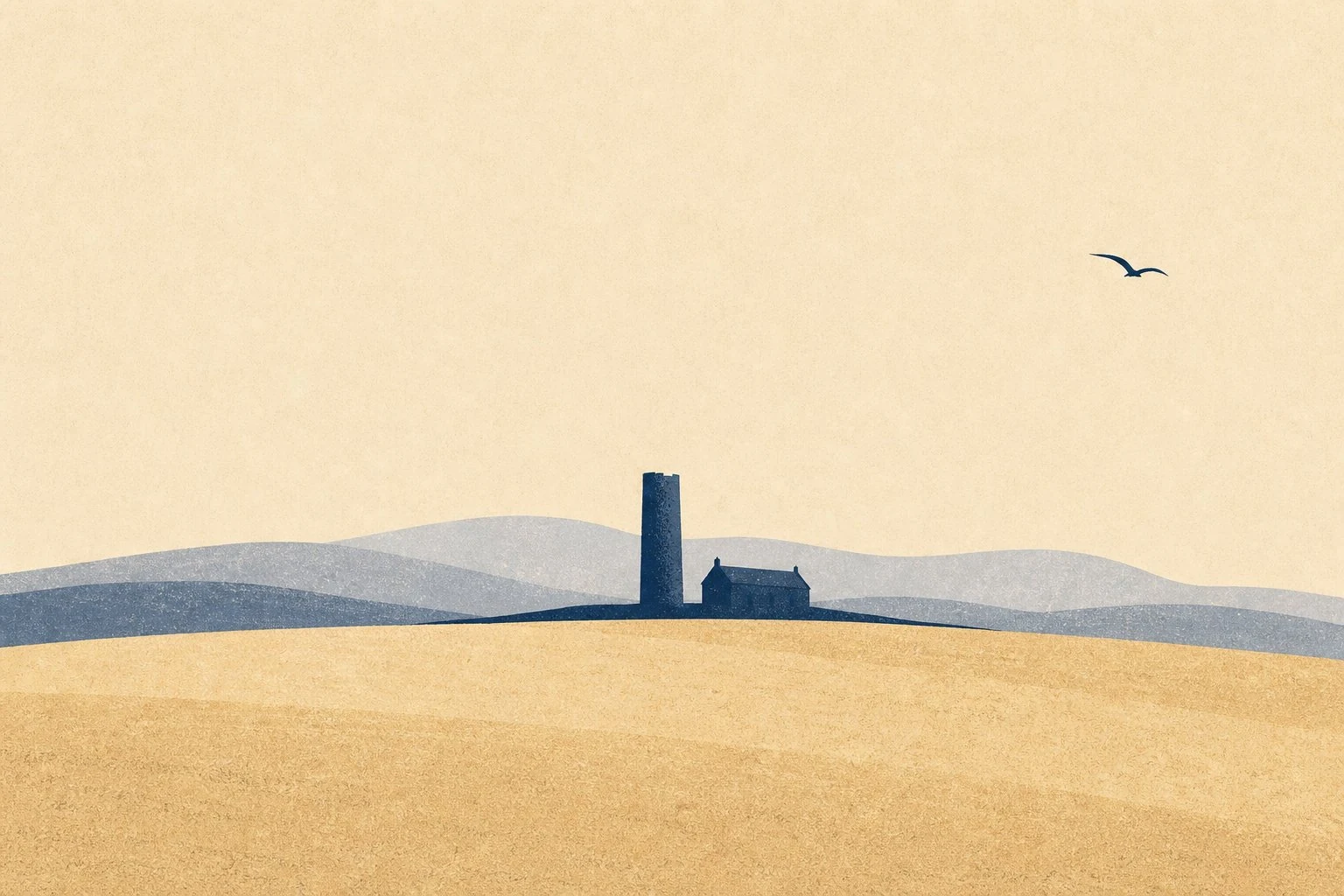
Inniskeen is older than its poet. The village grew around a monastery founded by St Daig in the seventh century; its round tower still stands in the graveyard and the McMahon chieftains who ruled this country are buried beside it. The River Fane runs through, good for trout, with a riverside walk, a pitch and putt and the Raglan Road tea rooms on the green. And Kavanagh's own pub, Daniel McNello's - reckoned over three hundred years old - is still pouring.
The Kavanagh Trail connects the significant places - the homestead, Billy Brennan's barn, the roads named in the poems - through drumlin country that is gentle and specific rather than dramatic. That is the point. Kavanagh wrote the drama of small places: a man working a small farm, the way the light changes. Walk it slowly, have the pint after, and the village makes its quiet sense.