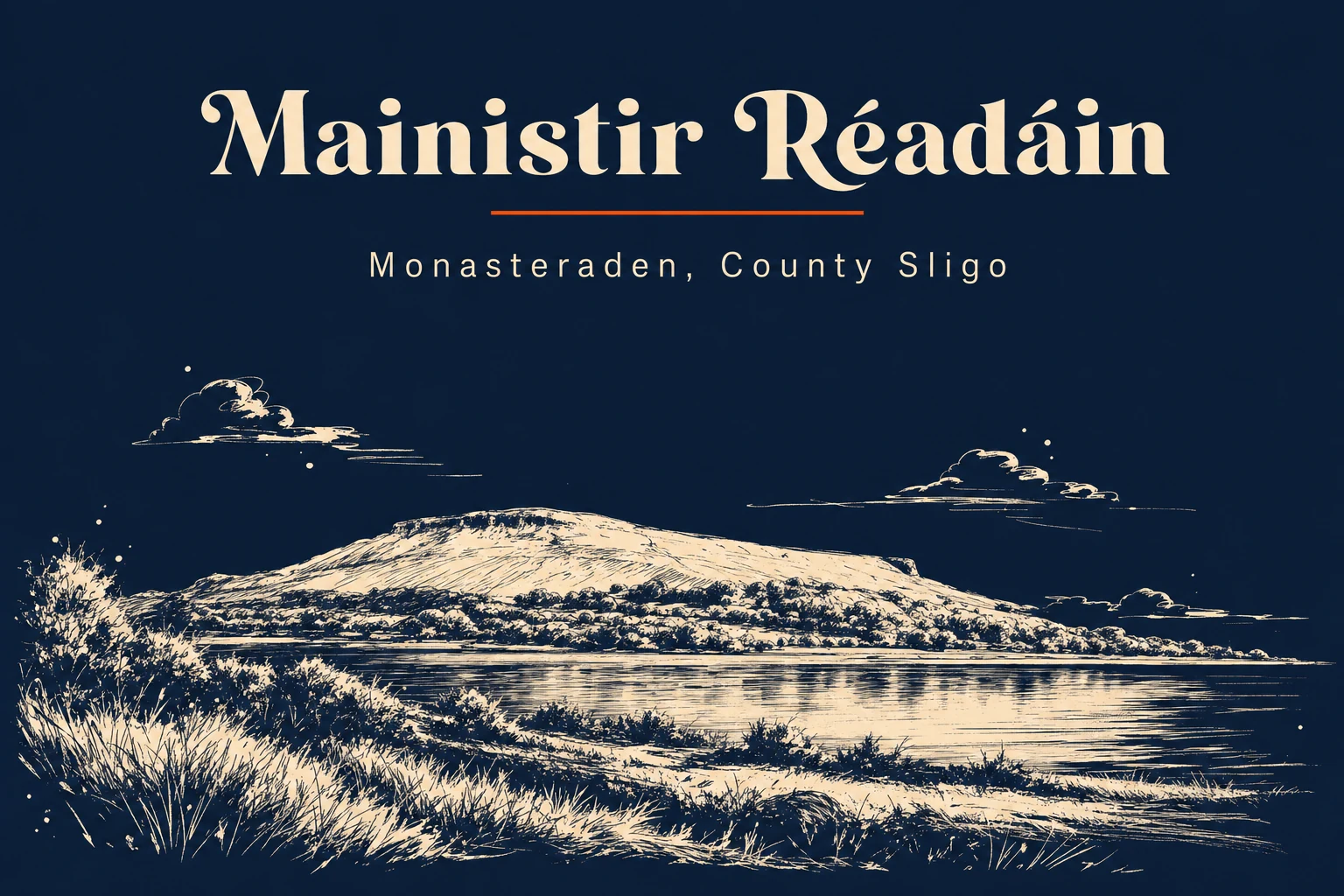
Mainistir Réadáin · Co. Sligo
On the shore of Lough Gara, in the old O'Gara country.
Monasteraden - Mainistir Réadáin, the monastery of Réadán - is a small village on the north shore of Lough Gara, in the south-west corner of Sligo against the Roscommon border. The lake gives the village its setting and most of its draws: shallow, limestone, dotted with crannógs in the shallows and with a long human story underwater and on the shore.
The most-recorded family of the area is the Ó Gadhras - anglicised O'Gara - who gave the lake its name and held the lakeshore through the medieval period. The first documented mention of the surname is in 964 AD in the Annals of the Four Masters. Their principal seat was the castle at Moygara on the north-west corner of the lake, with smaller fortifications on outlying ground. Fergal O'Gara lost the lot to Cromwellian confiscation in 1650 - a familiar story in this part of Connacht. Fergal's other claim to literary fame is that he commissioned the Annals of the Four Masters from the Franciscan friars in the 1630s.
The village itself is small - a pub, a church, a few houses, a school. Use Monasteraden as a base for the lake and the wider Lough Gara archaeology. The Lough Gara Lakes and Legends visitor trail covers the local sites. Boyle is twenty minutes east, Ballaghaderreen fifteen minutes south.