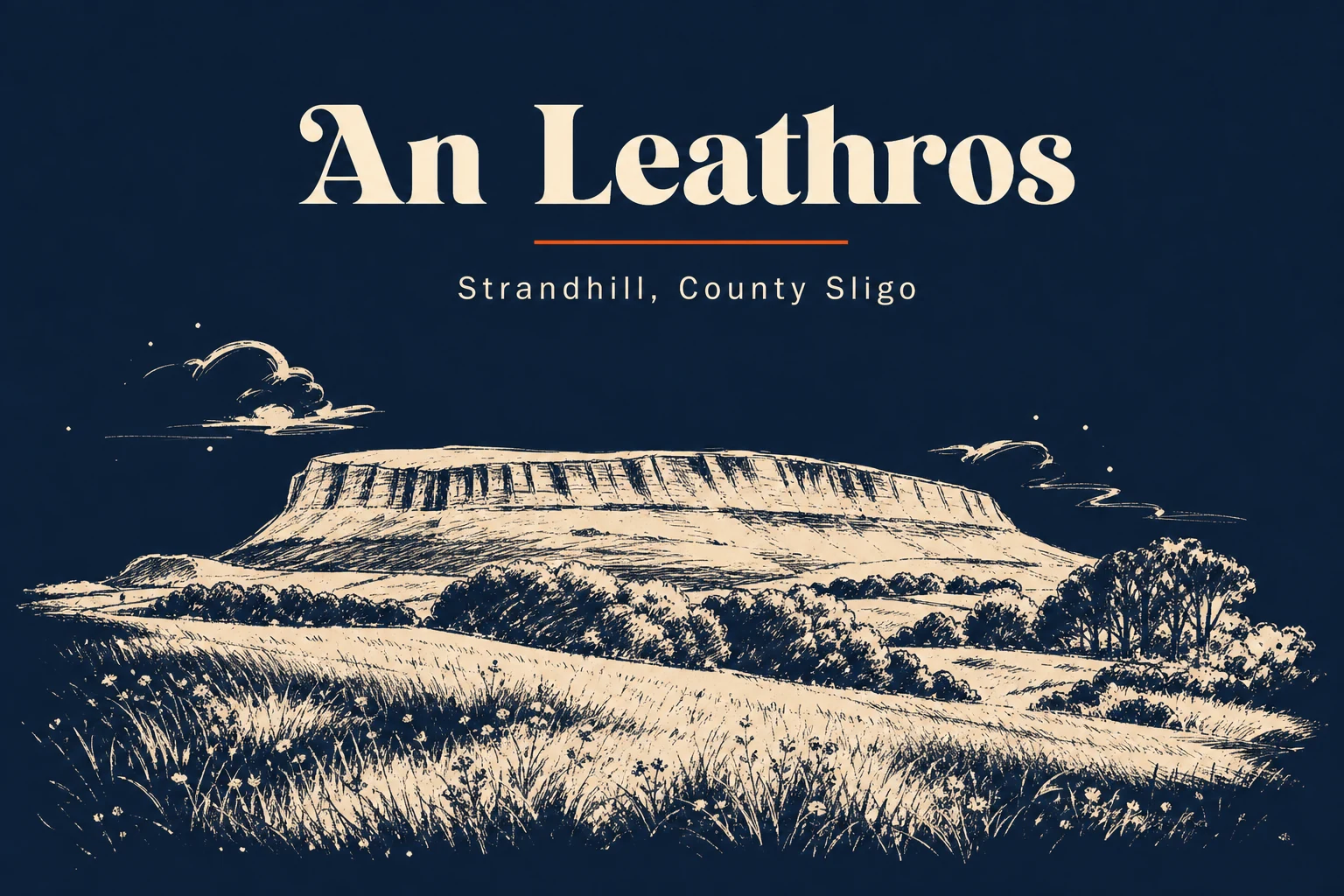
An Leathros · Co. Sligo
A surf town under a mountain that is also a grave.
Strandhill sits at the end of the Cúil Irra peninsula, seven kilometres west of Sligo town, with the Atlantic on one side and Knocknarea on the other. The village proper is about two streets, a prom, a golf links and a beach you cannot swim at. That last bit matters. People drive here in togs and a towel, see the red flag, and look annoyed. The red flag is not a suggestion. The break is the break because the rips are the rips.
What it is, instead, is a surf town. The Byrne brothers grew up surfing the beach and now run the Strand Bar in the middle of it. There are four schools on the prom that will put you in a wetsuit and walk you out to the whitewater. There is a seaweed bath at the end of the day that fixes most of what the Atlantic did to you. There is an ice cream parlour the same family has run since the 1930s. The order is: lesson, bath, ice cream, dinner, pint. Done in that order, the day works.
Above the village, Knocknarea is the thing you keep looking at. The Queen Maeve Trail goes up the back of it and onto the cairn in about an hour. Below the village, on the north shore, the ruin of Killaspugbrone marks the spot where a sixth-century bishop and a relic of St Patrick's tooth used to be - the tooth is in the National Museum now, the church is in the dunes. The peninsula is older than anything you brought with you. Stand on the prom at sunset and the cairn on the hill goes pink. That, more than the surf, is what gets people back.