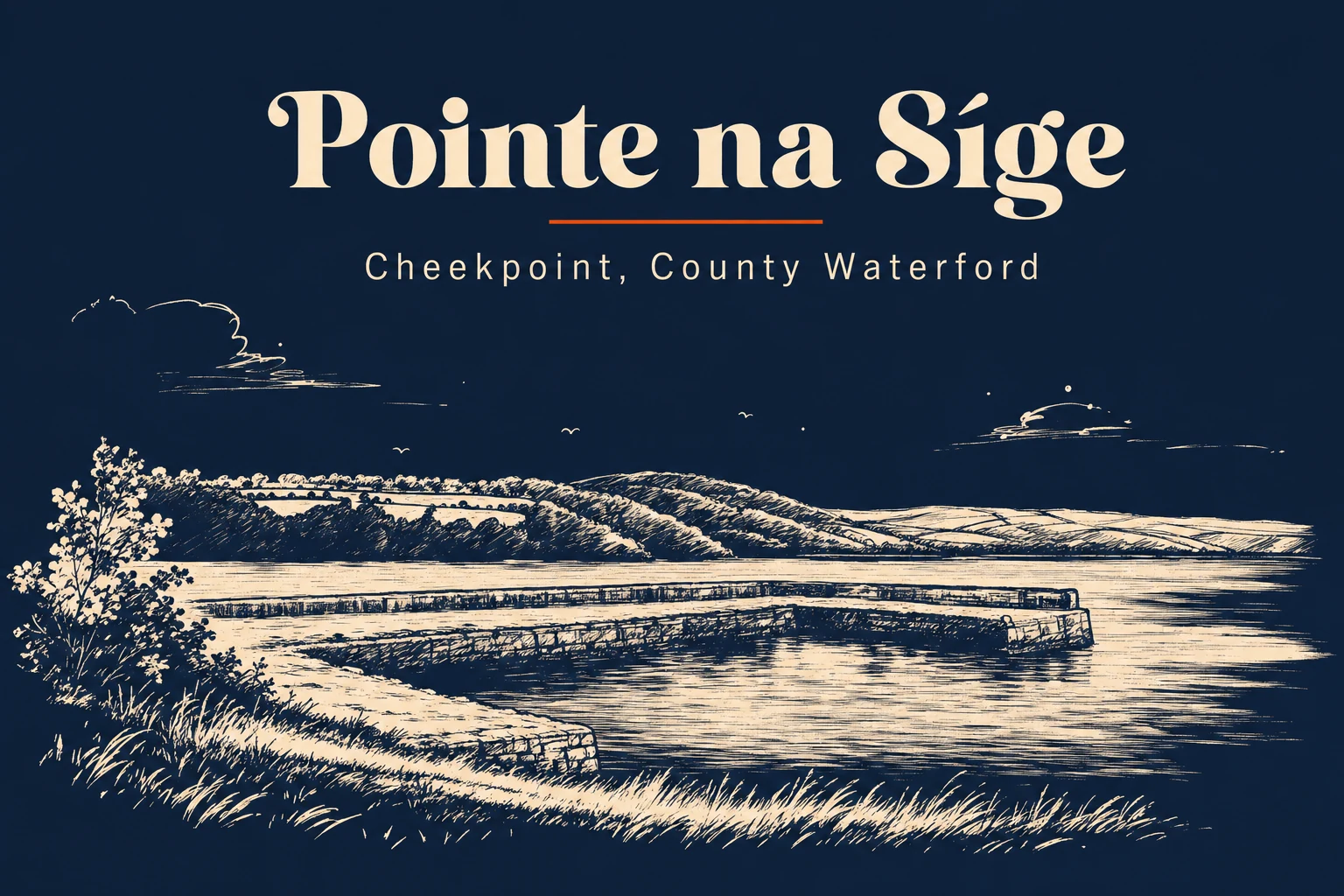
Pointe na Síge · Co. Waterford
A fishing village at the meeting of three rivers, with a view across to the oldest working lighthouse in the world.
Cheekpoint sits at the bend where the Suir, having run the length of Tipperary and along the back of Waterford city, meets the combined Barrow and Nore coming down from Kilkenny and Carlow. The Irish call them An Triúr Deirfiúr, the Three Sisters. From the pier the rivers stop being three things and start being one - the long estuary that runs east past the Hook Lighthouse and out into the Celtic Sea. It is one of the great quiet views in the country, and almost nobody is here.
The Suir Inn is the reason most outsiders make the drive. The McAlpin family bought a pub from Kate Doherty in 1971, started serving salmon rolls, then dinners, and ended up with a kitchen that food critics called Ireland's first gastropub. Fifty-one years later, in September 2022, they served their last sit-down meal and sold up. The new owners, Amy and Lonnie Cunningham, reopened the dining room and kept the seafood-and-chowder backbone. The building itself is older than any of them - 17th-century walls, an inn for nearly three hundred years, sitting at the corner of the village square where the road meets the river.
What you are standing in is the wreckage of a much busier place. In the 1780s and 1790s, Cornelius Bolton - local landlord, MP, improver - built Cheekpoint into a planned industrial village with looms, a hotel, and a packet station for the Royal Mail boats from Milford Haven in Wales. For thirty-odd years this was the front door of southeast Ireland. Then in 1818 the British Government moved the mail packet to Dunmore East, the boats stopped coming, and Cheekpoint went quietly back to fishing. The square is still here. The pub is still here. The view across to the Hook still works.