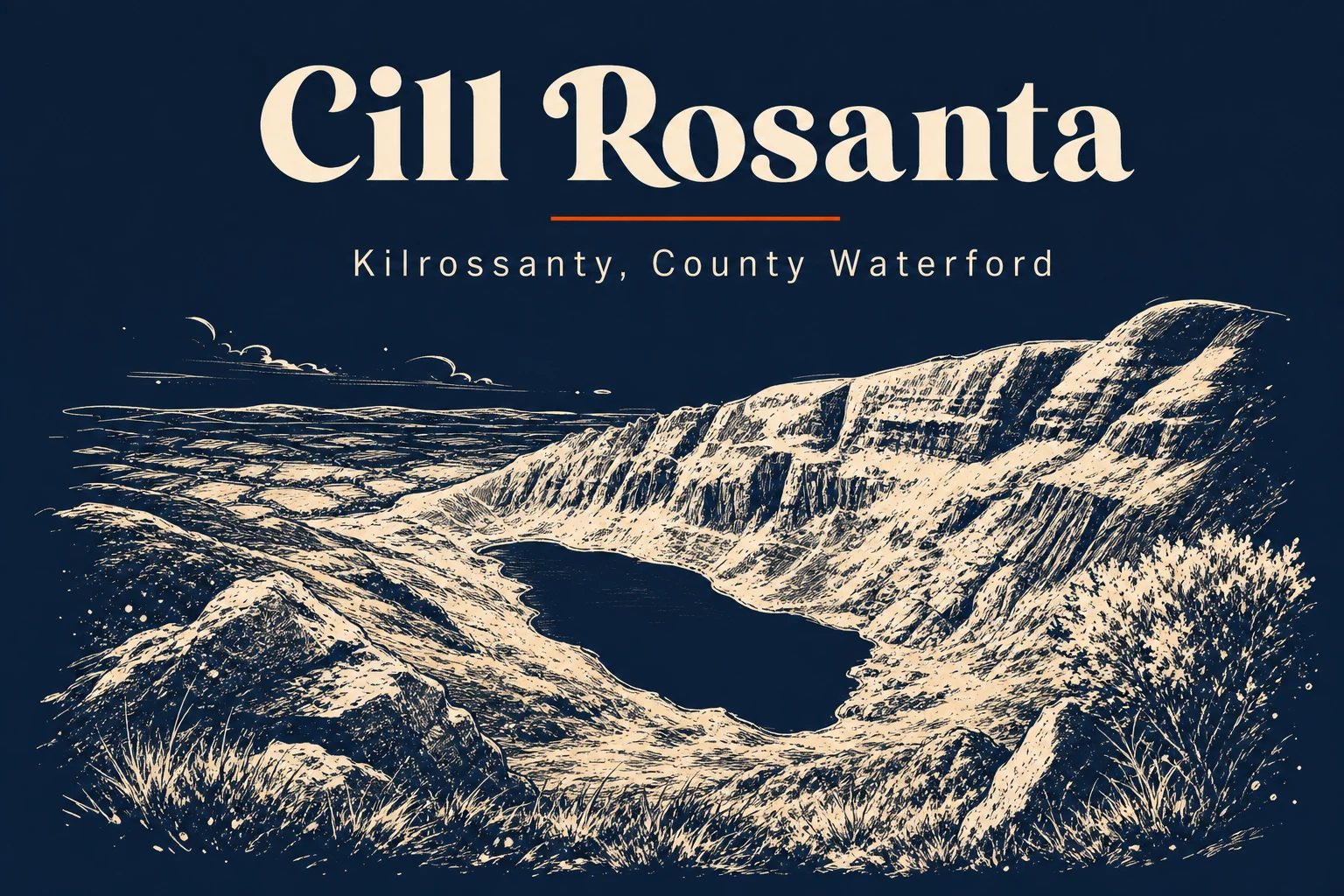
Cill Rosanta · Co. Waterford
A Comeragh-foothills parish that punches above its weight at football and once hid a hanged highwayman.
Kilrossanty is a parish first and a village second. The village proper - a church, a graveyard, three holy wells dedicated to St. Brigid, and Micilin's Bar at the crossroads - would fit on a postcard. The parish runs from the R676 up into the eastern flank of the Comeragh Mountains and takes in farms, forestry, and a corrie lake that an 18th-century highwayman used as a hideout. The road through it is the Comeragh Drive coming down from Mahon Falls toward Dungarvan, and most cars are passing through on the way to somewhere else.
What makes Kilrossanty worth a stop rather than a passing glance is that the things attached to it are bigger than it is. Crotty's Rock - the lookout above Coumshingaun Lough - is a serious mountain scramble that starts from the Kilclooney Wood car park on the parish road. The GAA club has carried senior football here since 1937, even though it plays its home games at a pitch on the N25 in Lemybrien. And Comeragh House, the big landed mansion outside the village, was occupied from 1964 until his 1976 arrest by a Dutch art collector later convicted as a World War 2 war criminal. None of it is on a brochure. All of it is here.