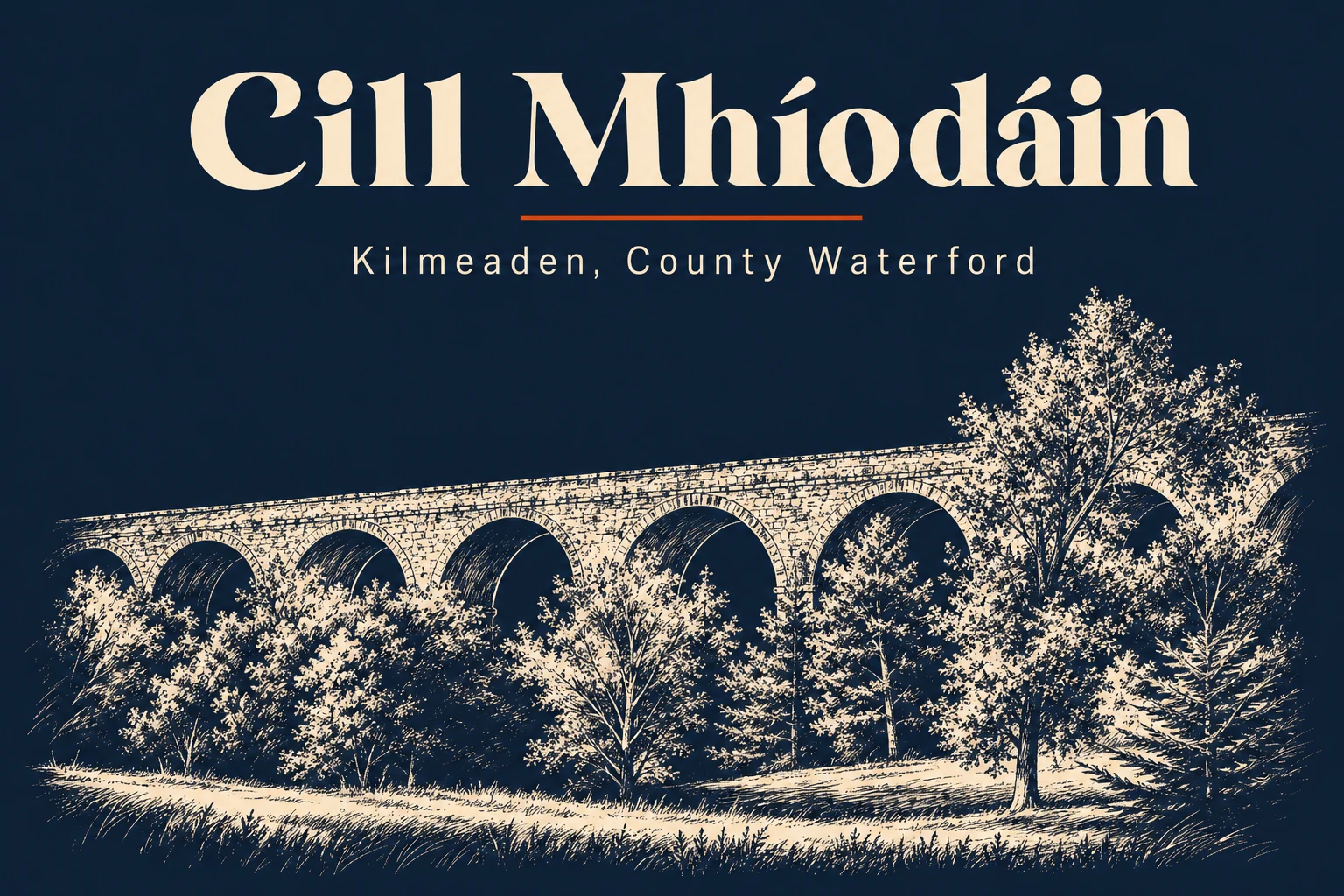
Coill Mhic Thomáisín · Co. Waterford
The midpoint of the Greenway, a Famine workhouse, and a highwayman in the hills above.
Kilmacthomas is the village in the middle of the Greenway. Twenty-two kilometres east of it is Waterford City; twenty-four west of it is Dungarvan. People who set out to do the whole 46 km in a day stop here for coffee and a sit-down whether they meant to or not. The Mahon river runs under the eight-arch viaduct that carried the old Mallow line; the village climbs the hill above it; the Comeraghs sit behind, blue on a clear day.
The set-piece is the Famine Workhouse on the south-eastern edge of the village. George Wilkinson designed it for the Poor Law Commissioners; the new Kilmacthomas Union came into existence in June 1850; the first admissions were in 1853. It closed in 1919 and the buildings drifted through other uses. When the Greenway opened in 2017 the Workhouse complex was reborn as a hub - Coach House Coffee, Waterford Greenway Bike Hire, Mayfield Birds of Prey - with a car park and seventy people working on a site that once existed to manage destitution. The history is not buried under a plaque. You can still read the building.
The other thing here is Crotty. William Crotty, the Comeragh highwayman, ran a gang out of these mountains from 1738 until he was betrayed, captured and hanged on 18 March 1742. His head went up over the gate of Waterford jail. His wife Mary, the local story goes, jumped from Crotty's Rock into the lake below rather than be taken - though the duller record suggests she was transported. Either way the lake is up there, an hour's walk off the Comeragh Drive, and the silence around it is the same silence Crotty knew. It is the kind of detail that makes Kilmacthomas more than a coffee stop on a bike trail.