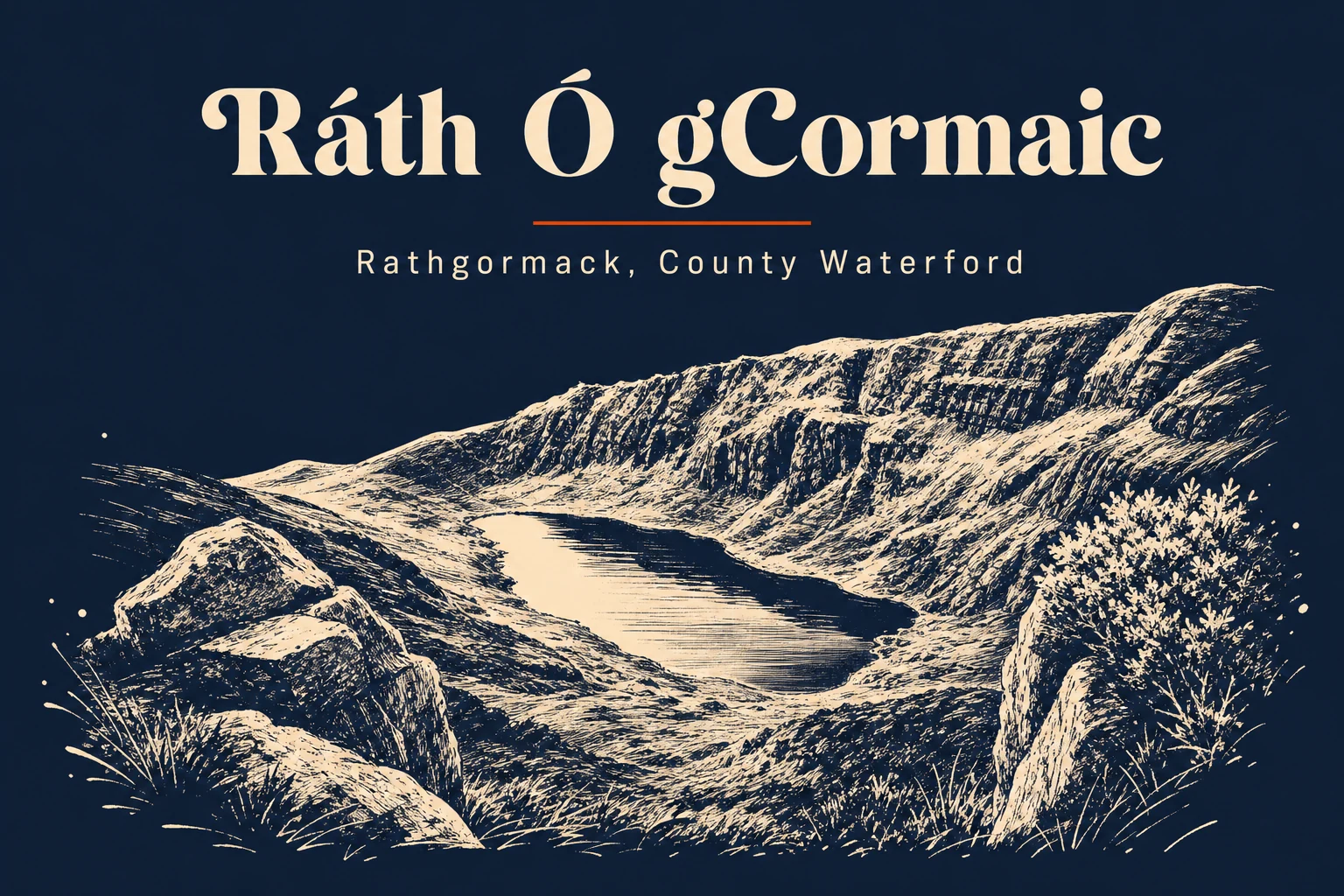
Ráth Ó gCormaic · Co. Waterford
Closest village to Coumshingaun Lake. Also a football village, which surprises people.
Rathgormack is a small village in the northern foothills of the Comeraghs, twenty-seven kilometres west of Waterford city, on the road between Carrick-on-Suir and Mahon Bridge. A church, a primary school, a GAA pitch, one pub, a few rows of houses. You drive through it without realising - most people do. The reason you come back is the mountain behind it.
Five minutes up the road, in Kilclooney Wood, is the car park for Coumshingaun. The lake is one of the best-preserved glacial corries in Europe - a near-perfect amphitheatre carved out of Old Red Sandstone twelve thousand years ago, with cliffs that rise four hundred metres straight off the water. The loop around the rim is the headline walk in the county, and it is genuinely steep. People who have done Carrauntoohil have come back off Coumshingaun saying it was harder.
The other thing that has happened to Rathgormack lately is the football. The local club has won the last three Waterford Senior Football Championships in a row - 2023, 2024, 2025 - and twelve county titles in total going back to a legendary side that won six between 1909 and 1918. The Conway Cup has lived in the village three winters running. In a parish of a few hundred people that is the only news worth knowing, and they know it.