County Westmeath Ireland · Co. Westmeath · Finnea Save · Share
POSTED FROM
FINNEA
CO. WESTMEATH · IE

Finnea
Fiodh an Átha

The Ireland's Hidden Heartlands
STOP 03 / 03
Fiodh an Átha · Co. Westmeath

A bridge between two lakes, and one of the loudest small stories of the Confederate Wars.

Finnea is a bridge with a village attached. The River Inny runs out of Lough Sheelin a couple of fields upstream, ducks under the arches in the centre of the village, and carries on west toward Lough Kinale. The bridge is the reason the place exists. The Westmeath–Cavan county line runs through the middle of the river, so the southern, larger half of the village is in Westmeath and the northern end, once you cross, is in Cavan.

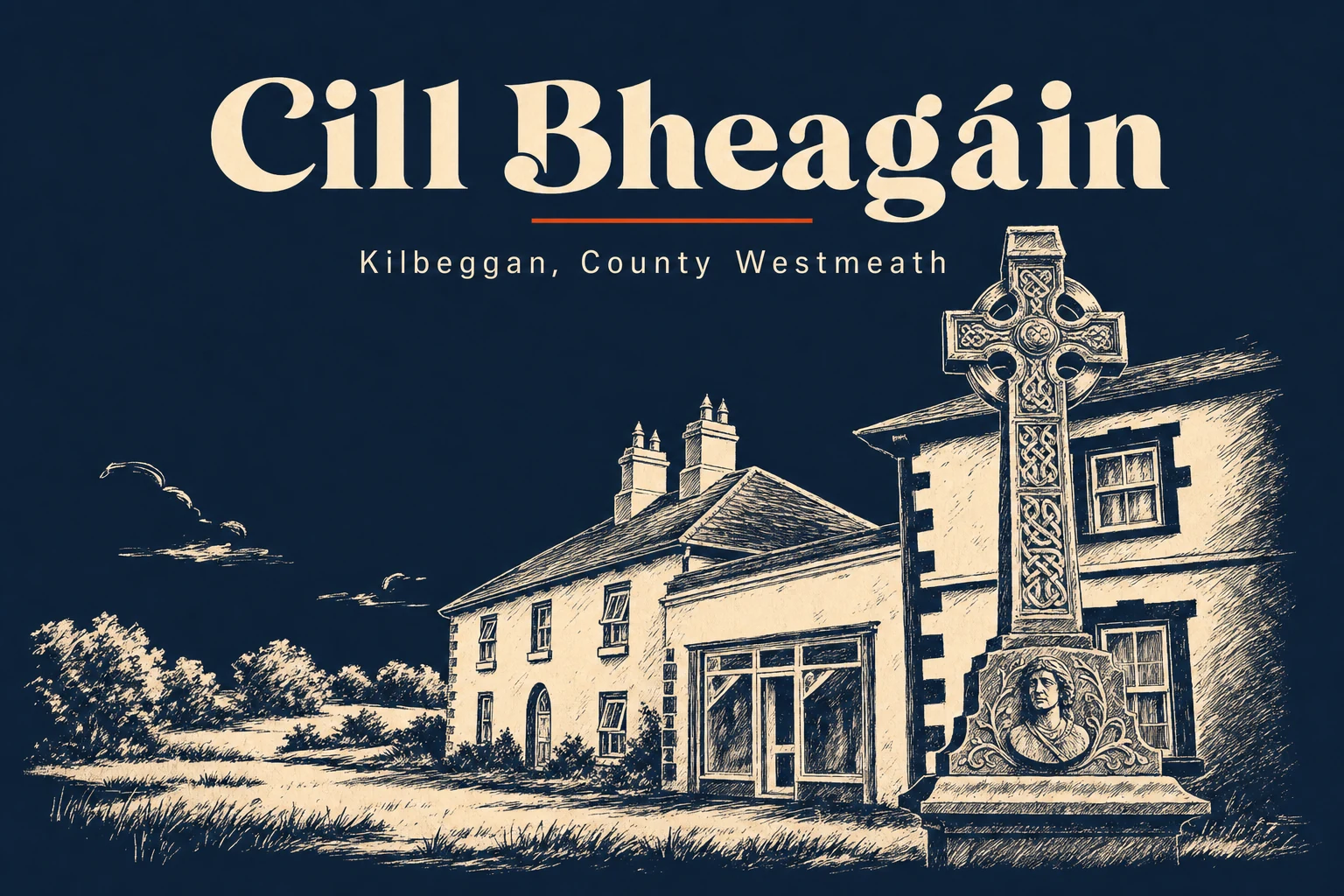
On 5 August 1646 the bridge became the story. A Scottish Covenanter force under General Robert Monro pushed south out of Ulster, looking for a way across the Inny and into Confederate territory. Myles "the Slasher" O'Reilly — a colonel of horse in the Earl of Castlehaven's Confederate army — stood at the bridge with about a hundred men against a thousand. He held it. He did not survive it. The monument in the centre of the village is for him, and the inscription tells the legend in the unhurried way a country roadside stone tells a story.

The rest of Finnea is St Mary's Church, a couple of houses, the bridge, and the lake roads going off in three directions. Come for the bridge and the stone. Stay for an hour, walk to the water, drive on to Lough Sheelin or Granard. It is a place that says one thing very clearly and does not pretend to say more.

Population
~150
Walk score
Bridge to bridge in three minutes
Coords
53.7733° N, 7.3886° W
01 / 03

At a glance.

Three things every local will eventually mention. Read these and you've already understood more than most day-trippers do.

02 / 03

Stories & lore.

The reason to come back. The things every local will eventually tell you about, usually after the second pint.

5 August 1646

The stand at the bridge

The Confederate Wars had been running five years when General Robert Monro brought a Scottish Covenanter force south out of Ulster looking for a crossing of the Inny. Myles "the Slasher" O'Reilly, a colonel of horse in the Earl of Castlehaven's army, met him at the bridge of Finea with roughly one hundred men. The fight lasted most of the day. By the end the Scots had turned back north and O'Reilly was dead on the bridge. Six weeks earlier Owen Roe O'Neill had broken Monro at Benburb in Tyrone; the Finea stand was a smaller, costlier echo. The story in the village adds the detail that a giant Scotsman ran a sword through the Slasher's cheek and the Slasher locked his jaw on the blade and killed the man with one cut before falling himself. Whether that is exactly what happened is a question historians have argued about for nearly four hundred years. The monument prefers the legend, and so, mostly, does the village.

Why the bridge mattered

The crossing

Finnea sits where the Inny is at its narrowest between Lough Sheelin and Lough Kinale. North of it is Cavan and the road to Ulster; south of it is Westmeath and the road to the midlands. In the 1640s, holding the bridge meant controlling whether an army from one side could move on the other. The same logic had built earlier crossings here and the same logic kept the village on the map after the war ended. The stone bridge you cross today is a later structure, but it sits on the line the Slasher fought for.

+

Getting there.

By car

Mullingar to Finnea is 30 km on the R394 via Castlepollard, about 35 minutes. Cavan town is 25 minutes north. Granard, in Longford, is 15 minutes west. Dublin is roughly 1h 45m via the M3 and N55.

By bus

Bus Éireann route 111 runs Mullingar–Cavan via Castlepollard and Finnea, several times daily. It stops at the bridge.

By train

No train. Nearest stations are Mullingar (30 km, Dublin–Sligo line) and Edgeworthstown (20 km, same line), then bus or taxi.

By air

Dublin (DUB) is the obvious airport, about 1h 45m by road. Knock (NOC) is 2h.