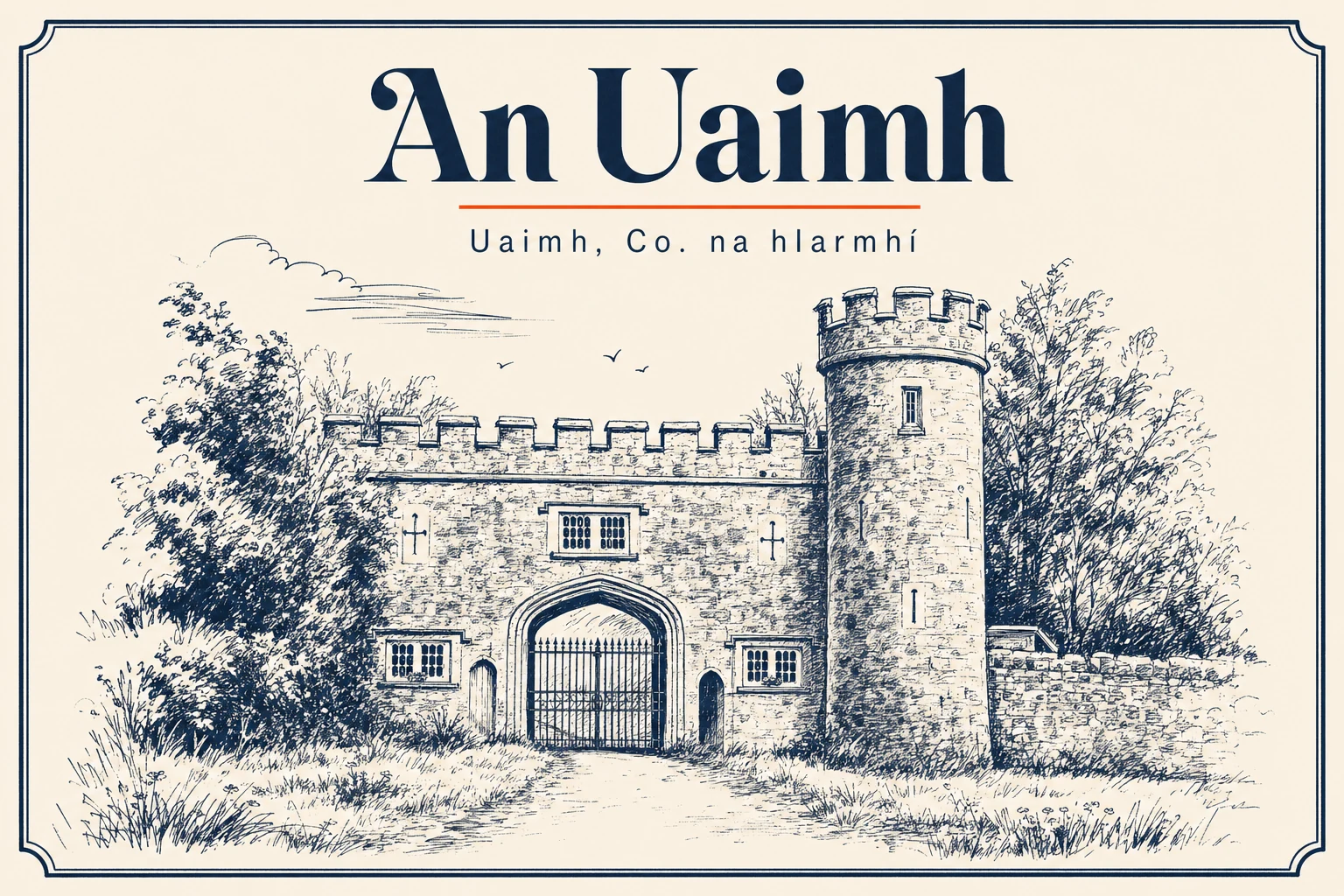
Baile na gCros · Co. Westmeath
A triangular green, a Pakenham castle up the road, and a swimming lake worth the walk.
Castlepollard is a triangle of grass with a town built around it. The plantation surveyors who laid it out under a charter from Charles II didn't draw a square - they drew a wedge, narrow at one end and broad at the other, and the Georgian shopfronts followed the line. Stand at the wide end by the Children of Lir sculpture, look down toward St Michael's at the narrow end, and you are looking at four hundred years of unaltered geometry.
What gives the town its weight is what's around it rather than what's on it. Two kilometres out the road, Tullynally Castle has been the seat of the Pakenhams - the Earls of Longford - since 1655. The historian Thomas Pakenham still lives in it, still writes books in it, and still opens the gardens to visitors from late March until September. It is a working family home, not a museum, and it shows.
The other reason to come is Lough Lene, five kilometres east toward Collinstown. When Ireland joined the EU, Lough Lene became the first freshwater lake on the island to fly a Blue Flag for clean water, and it has done so most years since. The Cut - a limestone-fringed swimming spot at the south-east corner - is where the town actually goes on a hot Sunday.
Stay an hour, walk the green, drive to the gardens, finish at the lake. That is the day. Castlepollard is not a place that hides anything; it just sits quietly in north Westmeath and waits for you to notice the three things it has, all of which are worth the trip.