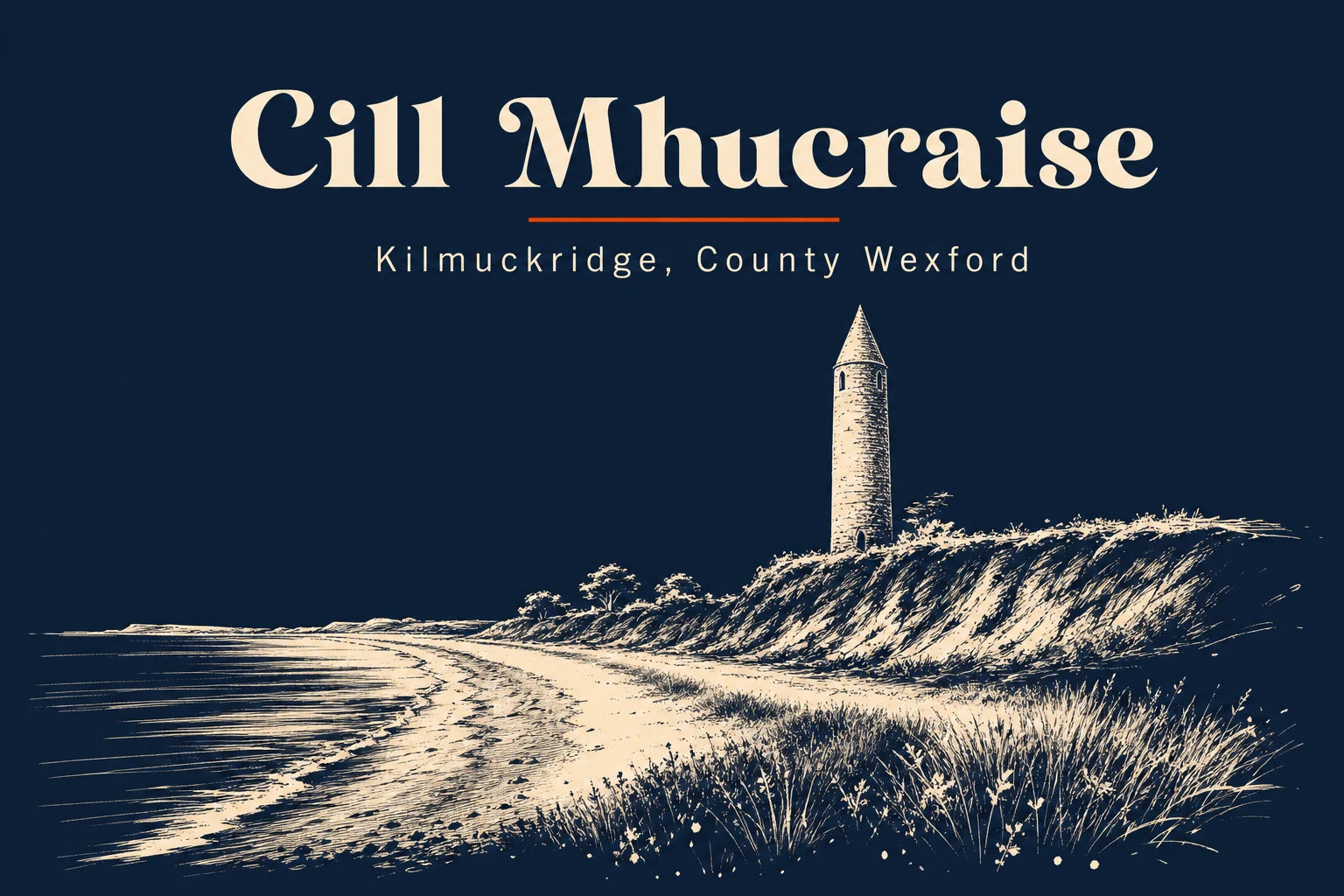
Cill Mhucraise · Co. Wexford
A road-junction village on the east Wexford coast. The point of it is the beach two kilometres away.
Kilmuckridge is a road-junction village on the east Wexford coast, about twenty-five kilometres north of Wexford town and the same distance south of Gorey. It sits a kilometre or two back from the sea on rising ground, with one main street, a Church of Ireland church on the rise above the village, a Catholic church, a primary school, a shop or two and a handful of pubs. There is no harbour, no pier, no sea view from the street. The village is not the point. The point is two kilometres east.
Morriscastle Strand is the reason most people know the name Kilmuckridge. The Darcy family have been running a caravan and camping park on the dunes there since 1969; they now have around 145 holiday homes on site along with touring pitches, glamping pods and a strip of Blue Flag sand running for kilometres south toward Ballyconnigar and north toward Cahore. The strand has its own ruined castle - the Morris family tower house that gave the place its name - sitting in the dunes as part of the protected Kilmuckridge-Tinnaberna Sandhills. The local year-round population is well under a thousand. By the second week of July it is well over five.
The village itself has grown up around that summer trade and a working farming hinterland - barley, dairy, a strong GAA club, a parish hall that does most of the social heavy lifting. The 1798 Rebellion ran straight through here too: the next parish west is Boolavogue, Father John Murphy's home ground, and local men gathered at a spot called Hatter's Bridge before walking to the Battle of Oulart Hill on 27 May. Two hundred and twenty-eight years on, the road north out of the village still runs past the line of that march. What Kilmuckridge does well, the rest of the year, is be a quiet east-coast village with a famous strand at the end of a short road.