Maroon and white, born twice
St Martin's GAA
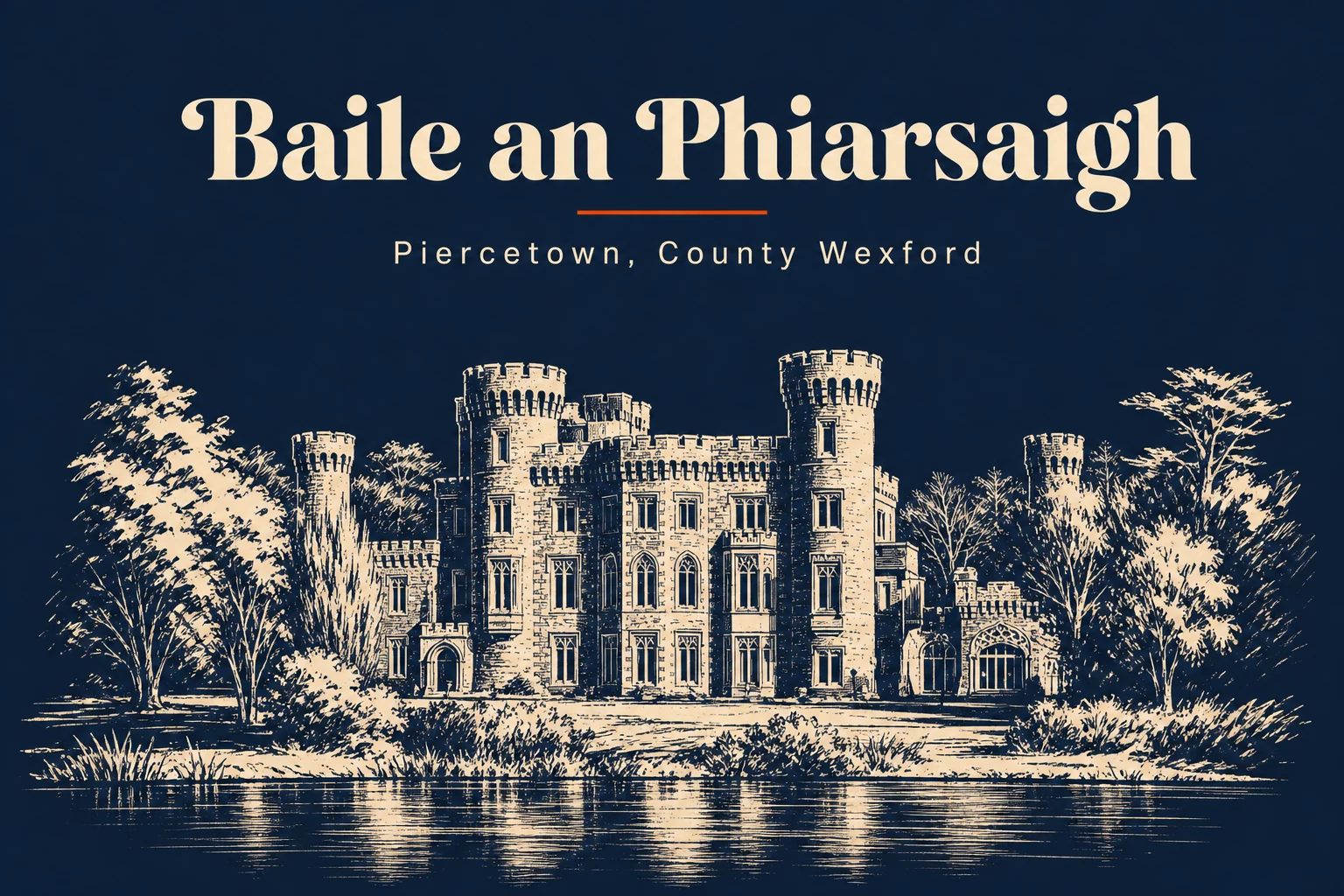
The current club was founded in 1932, but a first St Martin's existed in Murrintown from 1912 - black and white, lost the 1913 county junior football final, and a year later changed both jersey and name to Michael Dwyers. The 1932 revival took the same saint's name and a different colour scheme, maroon and white, and spent thirty years renting fields off whoever would give them one. In 1962 the Johnstown Castle estate handed over a piece of ground in the centre of the parish; the clubhouse followed in 1963. The first county senior hurling title came in October 1999, captained by Mark Murphy, beating Rathnure in the final. They did it again in 2008, won their first senior football in 2013, and added senior hurling titles in 2017 and 2019. The club office address is Piercestown; the pitch is on castle land; the players come from Murrintown too. The parish is the unit, not the village.
Barn-type, 1828, central by design
St Martin's Church
St Martin's was built in 1828-29 - Catholic Emancipation was a year away, and the site at Pollsallagh was chosen because it sat central to six united parishes that had been amalgamated under one priest. The building is a 'barn-type' Catholic church: high, rectangular, plain, with a large gallery for the numbers it had to seat. The cut-granite belfry that gives the church its silhouette went up later, in 1908. The pre-Reformation parish church it replaced was dedicated to St Davin, and stood in the old cemetery at the Deerpark - the place that gave the civil parish its name, Kildavin. The dedication shifted to St Martin of Tours when the new church went up. The grave names in the older cemetery, where they survive, are still worth a slow walk.
Stage 3 ends here. Stage 4 begins here.
The Pilgrim Way
The Wexford-Pembrokeshire Pilgrim Way is a nine-day walking route - opened in the last few years - tracing the journey of St Aidan from Ferns to study with St David in Wales. The third stage starts at St David's Well in Oilgate, runs in past Carrigfoyle Quarry and through the Johnstown Castle estate, and finishes in Piercetown. The fourth stage leaves Piercetown for Our Lady's Island, where Christian pilgrimage has been documented for at least 1,500 years and pagan worship long before that. The route is the only reason a particular kind of walker stops here at all. The village does not have a pilgrim hostel; most people stay in Wexford town and taxi out to pick the trail up again.