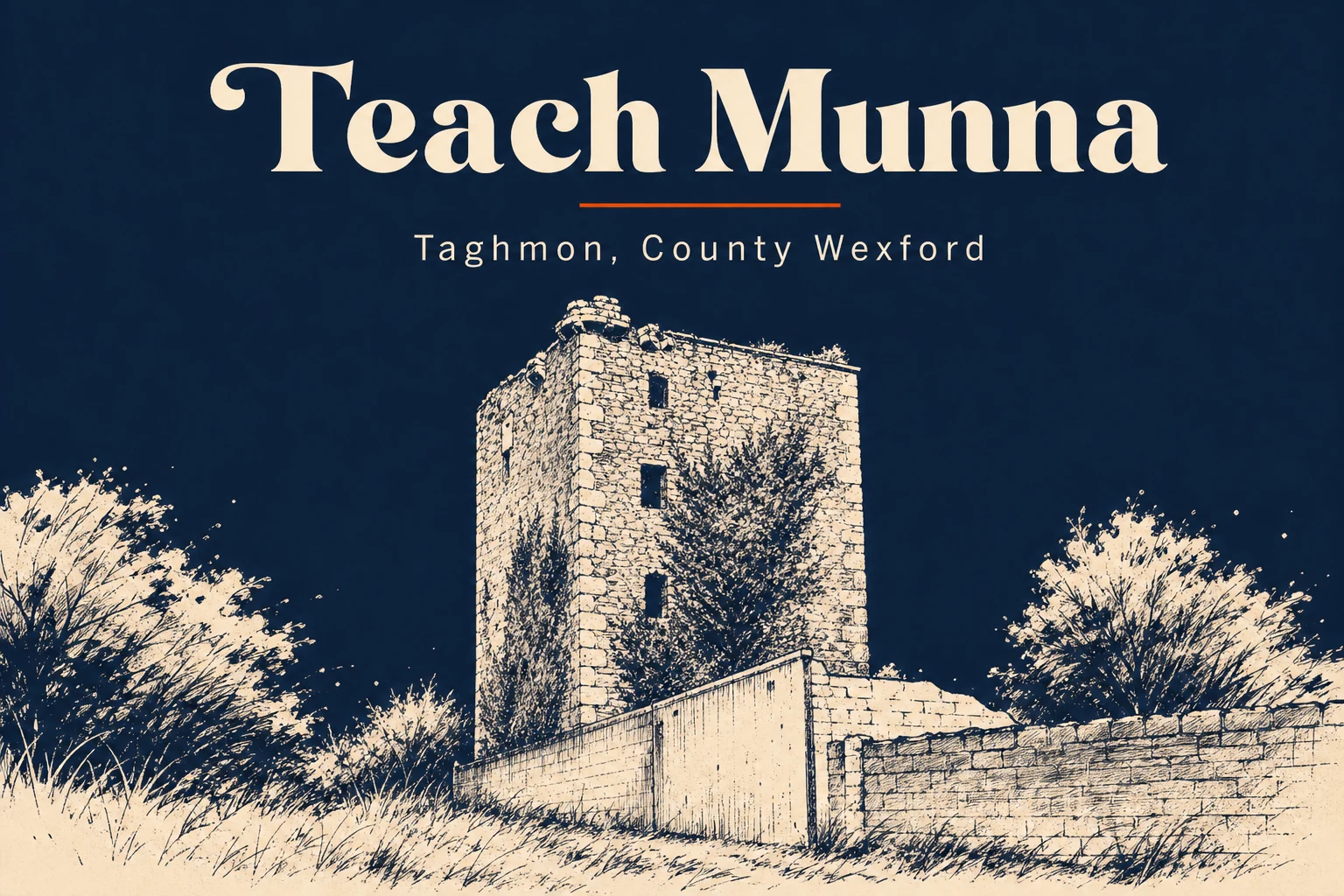
Teach Munna · Co. Wexford
The house of Munn. A monk, a fortified church, and the road the rebels marched.
Taghmon is an inland village in South Wexford, fourteen kilometres west of Wexford town on the road to New Ross. The road was the point. In 1798 it put the village in the middle of a war it didn't ask for, with both armies sleeping in the same houses on consecutive nights. Today the N25 takes the through traffic and Taghmon gets to be itself again.
What's left from the monastery is older than most of Ireland's surviving buildings - Saint Munn founded it around 597, the fortified church went up nine hundred years later, and the Romanesque doorway has outlasted everything that came at it. You can walk around the ruin without a guide and without a ticket. Most days you'll have the place to yourself.
Beyond the church and the history, it's a working South Wexford village. One main street, a pub or two, a primary school, the GAA grounds. Nobody is selling you anything. That's most of the appeal.