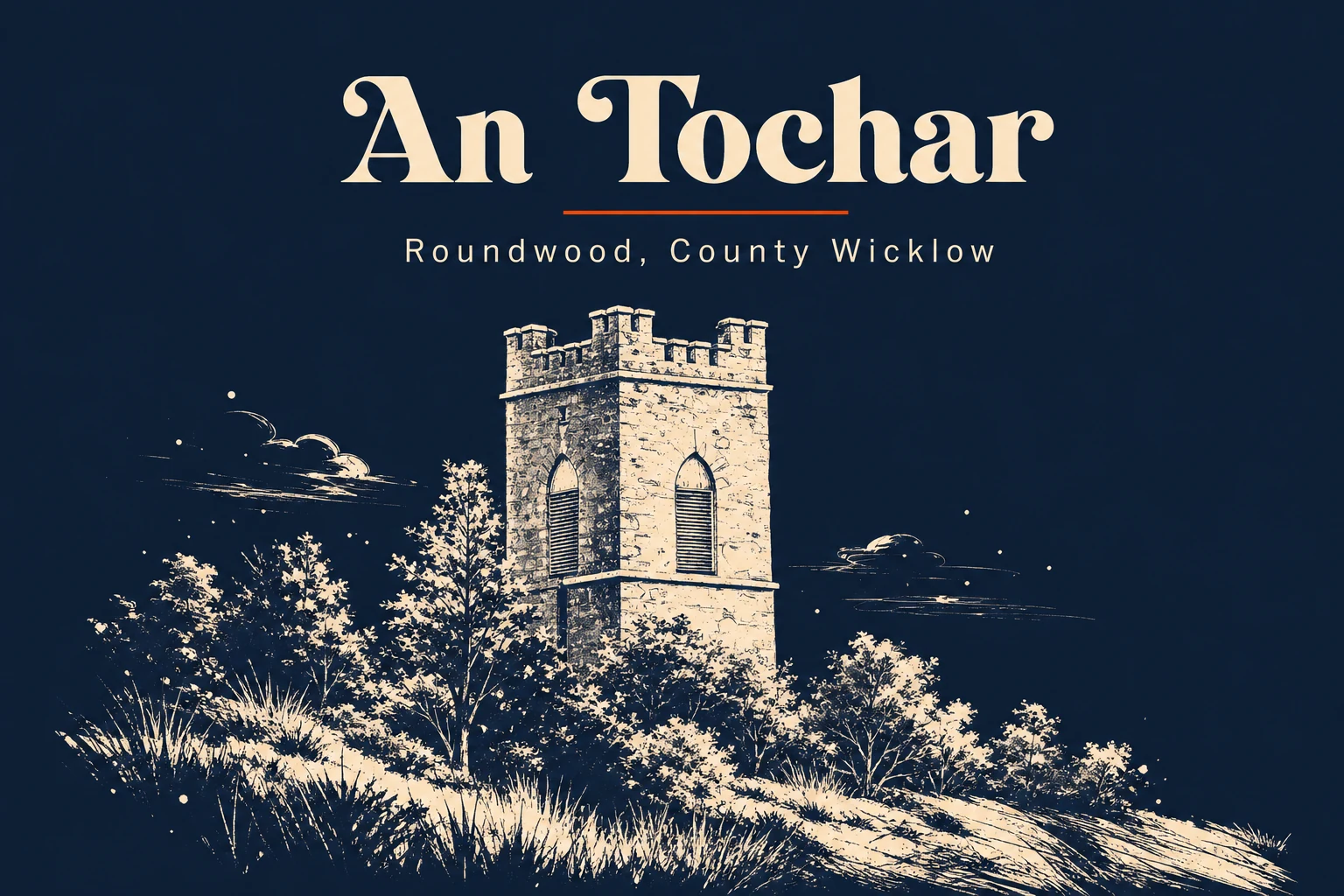
An Tochar · Co. Wicklow
Officially the highest village in Ireland. One good inn. A reservoir behind it. That's the deal.
Roundwood sits on the R755 between Glendalough and the Dublin mountains, high enough in the hills that the air is different and the wind has an opinion about it. A single main street, two pubs, a reservoir behind the village, and the Military Road crossing the top of the ridge above it. Most people pass through on the way somewhere else. Stopping is the better move.
The Roundwood Inn is the reason the village appears in food guides. The Schwalm and Ahearne families took over in 1980 and kept the character of the 17th-century coaching inn - the fire, the dark timber, the menu built around what the Wicklow hills produce. Hungarian goulash has been on the menu since the Schwalm era and remains. The Coach House across the street has been in the Michelin Guide since August 2024, which is a considerable thing for a village of 907 people. Both places require a booking at weekends.
The Vartry Reservoir, immediately south-east of the village, is one of the quieter Dublin Water assets: walking trails around the lower reservoir, birch and Scots pine on the banks, a dam that was considered an engineering marvel in 1863 and still holds. The Military Road passes through the upper hills above the village - built by the British Army in 1800-1809 to pursue insurgents in the mountains after 1798 - and connects Roundwood to the Sally Gap and Laragh. Drive it south in autumn; the bog and the mountain are worth the slow road.