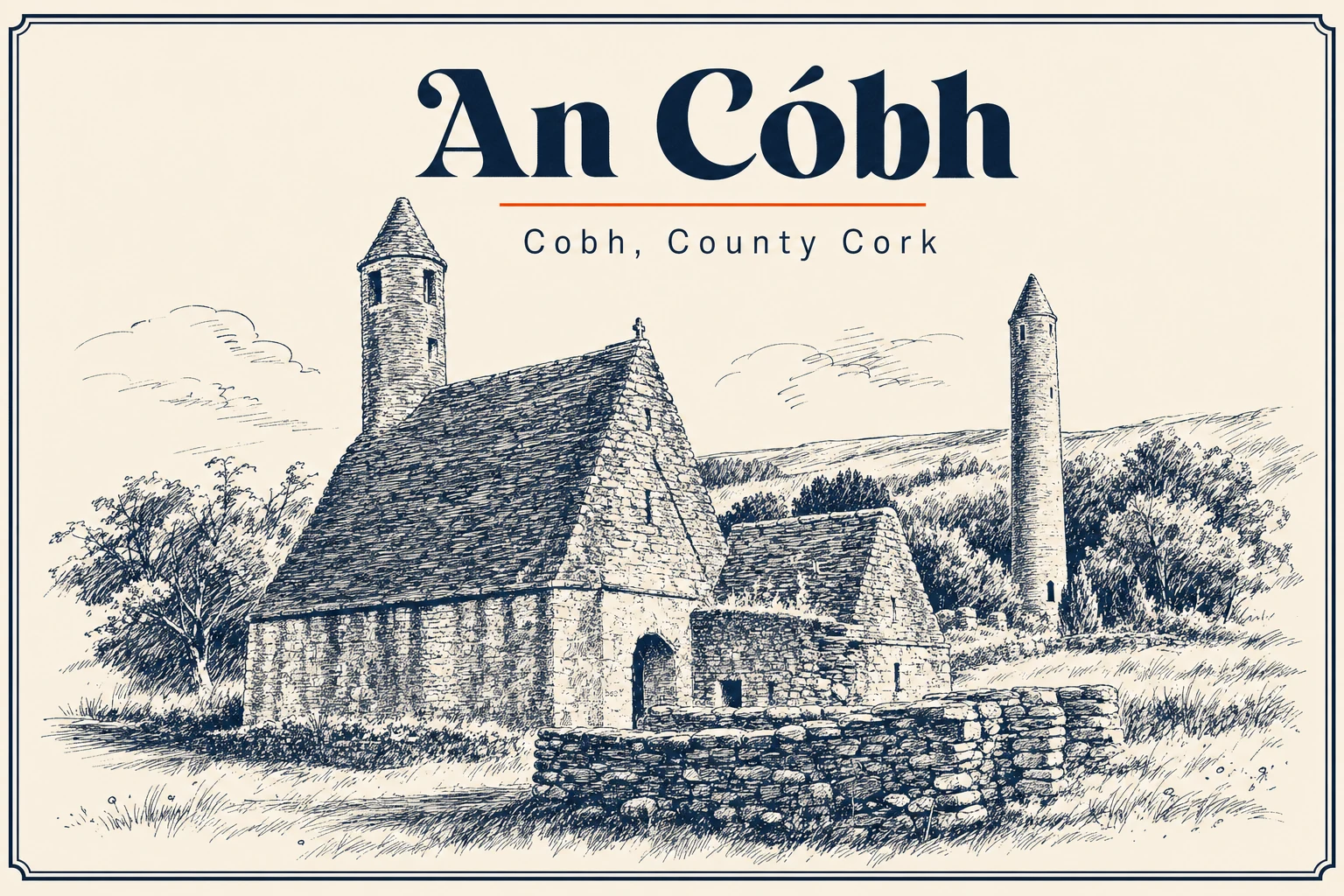
Gleann Dá Loch · Co. Wicklow
A 6th-century monastic city at the bottom of two lakes. The village is up the road.
Glendalough isn't a village. It's a graveyard with a round tower in it, at the bottom of a glacial valley with two lakes lying end to end. Saint Kevin came here in the 6th century to get away from people, and people followed him, and he built a monastery, and they kept following, and now a thousand-and-something years later the coaches arrive at half ten and leave at noon. If you're here at half ten, you've got the wrong day.
The actual village is Laragh, a kilometre and a half east, where three mountain roads meet and Lynham's has been pouring pints since long before the visitor centre was thought of. That's where you sleep, eat, and end the evening. Glendalough proper has a hotel, a car park, a café you can skip, and the ruins. Go down to the ruins at eight in the morning or four in the afternoon, when the day-trippers are somewhere else, and you'll see why Kevin came in the first place.
Don't make this a Dublin day-trip. The bus from town gives you ninety minutes between two queues for the toilet, and you'll see the round tower and miss the valley. Stay a night. Walk the Spinc above the Upper Lake and look down on it. Do the lower path at dusk when the deer come out of the woods. Sit in Lynham's afterwards and let someone tell you about Michael Dwyer hiding in St Kevin's Bed. Then drive home tomorrow.