County Wicklow Ireland · Co. Wicklow · Enniskerry Save · Share
POSTED FROM
ENNISKERRY
CO. WICKLOW · IE

Enniskerry
Áth na Sceire, Co. Wicklow

The Ireland's Ancient East
STOP 09 / 09
Áth na Sceire · Co. Wicklow

The estate is the reason. The village square is why you stay for coffee.

Enniskerry exists because of the Wingfield family and Powerscourt estate. The village was laid out to house the estate workers and give visitors somewhere to pause on their way up the avenue. It has evolved since but hasn't entirely changed: a small, carefully maintained place on the edge of the Wicklow Mountains, 40 minutes from Dublin, that the day-tripper coaches reach by eleven and leave by four.

The gardens at Powerscourt are the main event, and they earn it. Richard Cassels designed the Palladian house between 1731 and 1741; the terraced gardens were built out over the following century by successive Viscounts Powerscourt. National Geographic put them third in the world. A fire gutted the house on 4 November 1974 - the week after a long restoration was finally completed - and the shell has been stabilised and opened since 1996. The house now contains shops and a café. The gardens go on regardless.

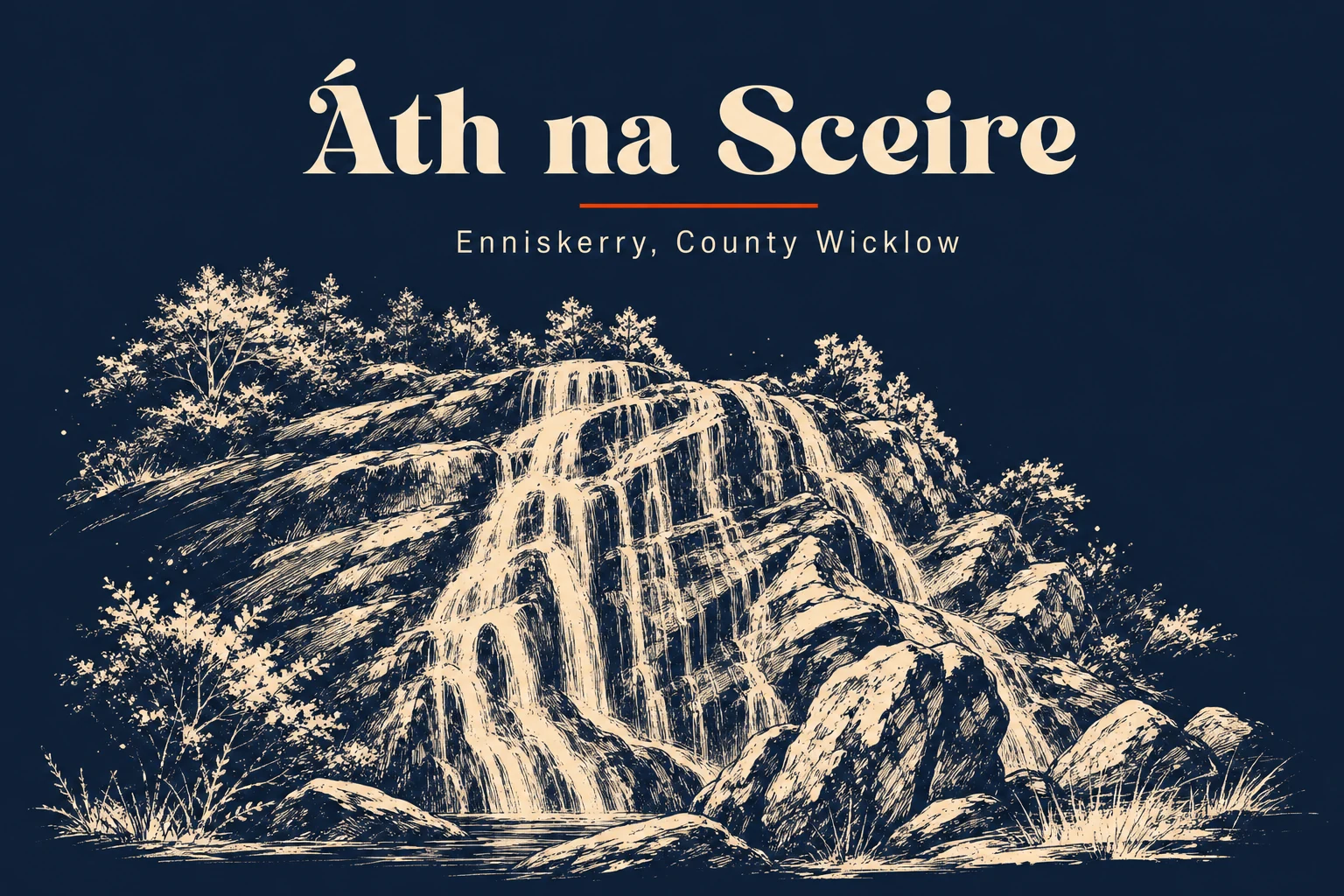
The waterfall is 6km away by road - a separate drive, a separate ticket, a different character. A hundred and twenty-one metres of the Dargle River dropping over granite into a pool. Tallest continuous-flow waterfall in the Republic of Ireland. Busier in summer; quieter and more dramatic in autumn. The walk around the base takes twenty minutes. Bring a layer - it generates its own weather.
Population
2,008
Walk score
Village square in 5 minutes; waterfall 6km by car
Founded
Estate village, c.1760
Coords
53.1882° N, 6.1693° W
01 / 09

At a glance.

Three things every local will eventually mention. Read these and you've already understood more than most day-trippers do.

02 / 09

The pubs.

None of these are themed Irish pubs, because they don't need to be. A few that earn the trip:

The Enniskerry Inn

Village square local
Pub & rooms, formerly Leicester Arms

Run by the Lawlor family since 2016. On the square, where it has been a pub under various names for a long time. A reliable pint and a place to sit when the estate has done its work.

The Coach House

Same family, second bar
Pub

Also on the square, run by the same family as the Inn. Live music at weekends. The square isn't large; having two pubs on it is optimistic but seems to work.

03 / 09

Where to eat.

PlaceTypeLocal note
Poppies Café On the square since 1982. Open 8.30am to 6pm daily. Proper soup, sandwiches, home baking. The sort of place that has outlasted every food trend by not following any of them.
Powerscourt House café Estate café €€ Inside the restored shell of the house. Decent food for an estate café - better than you'd expect given the footfall. Worth using as a break mid-garden rather than as a destination.
04 / 09

Where to sleep.

PlaceTypeLocal note
Powerscourt Hotel Five-star hotel A Marriott Autograph Collection hotel, 200 rooms, spa, and two restaurants on the estate grounds. Views of the Sugar Loaf, access to the gardens. If the budget stretches, this is the setting for it.
Summerhill House Hotel Country house hotel A 4-star country house hotel above the village. 85 rooms. Quieter than the Powerscourt Hotel and significantly cheaper. Good base for a night.
05 / 09

Stories & lore.

The reason to come back. The things every local will eventually tell you about, usually after the second pint.

The week after the restoration finished

The fire of 1974

Powerscourt House was gutted by fire on 4 November 1974. The 9th Viscount had sold the estate to the Slazenger family in 1961, and the Slazengers had spent years restoring the house. The fire broke out the week after the restoration was finally complete. The shell stood open to the sky for twenty years before another restoration made it safe for visitors. The gardens survived intact. They always looked better than the house anyway.

Third in the world

The gardens' pedigree

Richard Cassels built the house 1731-1741. The formal gardens were developed across the 18th and 19th centuries - the Italian terraces, the Japanese garden, the Triton Lake. National Geographic ranked them third in the world, behind Versailles and Kew Gardens. They are 47 acres. The Sugar Loaf frames the southern view. On a clear autumn morning before the tour buses arrive, this is defensible.

A pointed quartzite hill that survived the ice

The Sugar Loaf

The Great Sugar Loaf (501m) is the most recognisable mountain in north Wicklow - a perfect cone above the Enniskerry valley. The shape comes from Cambrian quartzite, approximately 500 million years old, hard enough that the last ice age couldn't grind it flat. The scree on the slopes is freeze-thaw erosion; the peak just stood there while the glaciers went around it. The walk from the GAA car park takes two to two-and-a-half hours return.

06 / 09

Things to do outside.

Wear waterproofs. Bring a sandwich. Tell someone where you're going if it's the mountain.

Powerscourt Gardens Allow at least two hours to do the terraces, the walled garden, and the Triton Lake properly. The tower folly and the Japanese garden take extra time if you want them. A separate paid entry from the house.
47 acres to exploredistance
1.5-2 hourstime
Powerscourt Waterfall 6km from the estate by road - follow the signs, separate car park, separate entry fee. The waterfall is 121m; the pool at the base is worth the twenty-minute walk. Better in autumn when the flow is highest after rain.
1 km loop at the basedistance
20-30 min plus drivingtime
Great Sugar Loaf From the GAA car park on the R116 below the mountain. A straightforward but steep climb on a clear path. No technical difficulty; good footwear needed. The view from the top on a clear day covers Dublin Bay to the south Wicklow mountains.
5 km returndistance
2-2.5 hourstime
07 / 09

When to go.

There is no bad time. There are different times.

Spring
Mar-May

The gardens are at their best from late April - azaleas, magnolias, the walled garden planting. Crowds build through May but the mornings are still manageable.

◉ Go
Summer
Jun-Aug

Coach traffic from Dublin is real by ten. Book the hotel well ahead. The waterfall is lower in summer but the light is long and the walks are at their most accessible.

◐ Mind yourself
Autumn
Sep-Oct

The best season for the waterfall and the Sugar Loaf. The formal gardens change in character. The tour buses thin out after August.

◉ Go
Winter
Nov-Feb

The gardens have reduced hours in winter; the waterfall is excellent after heavy rain. Poppies on the square is open. The hotel bar is warmer than the mountain.

◐ Mind yourself
08 / 09

What to skip.

Honestly? Don't bother.

If a local was sitting beside you, this is the bit where they'd lean in.

×
Arriving on the bus at 11am in July

You'll be in the thick of the coach traffic for the gardens. Go early - the estate opens at 9.30am - and have the terraces to yourself for an hour before the crowd lands.

×
Treating the waterfall as an afterthought

Most visitors do the gardens and skip the waterfall because it requires a separate drive and a separate ticket. This is a mistake. The waterfall is a different experience from the gardens - wilder, louder, more honest. Budget for both.

×
The café in the house as a destination lunch

It is fine for a break mid-garden. It is not a lunch destination. Poppies on the square is better and cheaper, or drive the 5 minutes into Enniskerry village.

×
Assuming the cliff walk from Bray is the walk

The Bray cliff walk is closed (2021 landslides). The Sugar Loaf and the gardens are the walks to plan around Enniskerry.

+

Getting there.

By car

Dublin city to Enniskerry is about 35 minutes via the N11 and R117. Powerscourt estate has its own car park; the waterfall has a separate car park.

By bus

Go-Ahead Ireland route 185 runs from Bray DART station to Enniskerry, approximately 28 minutes. Several daily services.

By train

No train to Enniskerry. Take the DART to Bray, then route 185 bus.