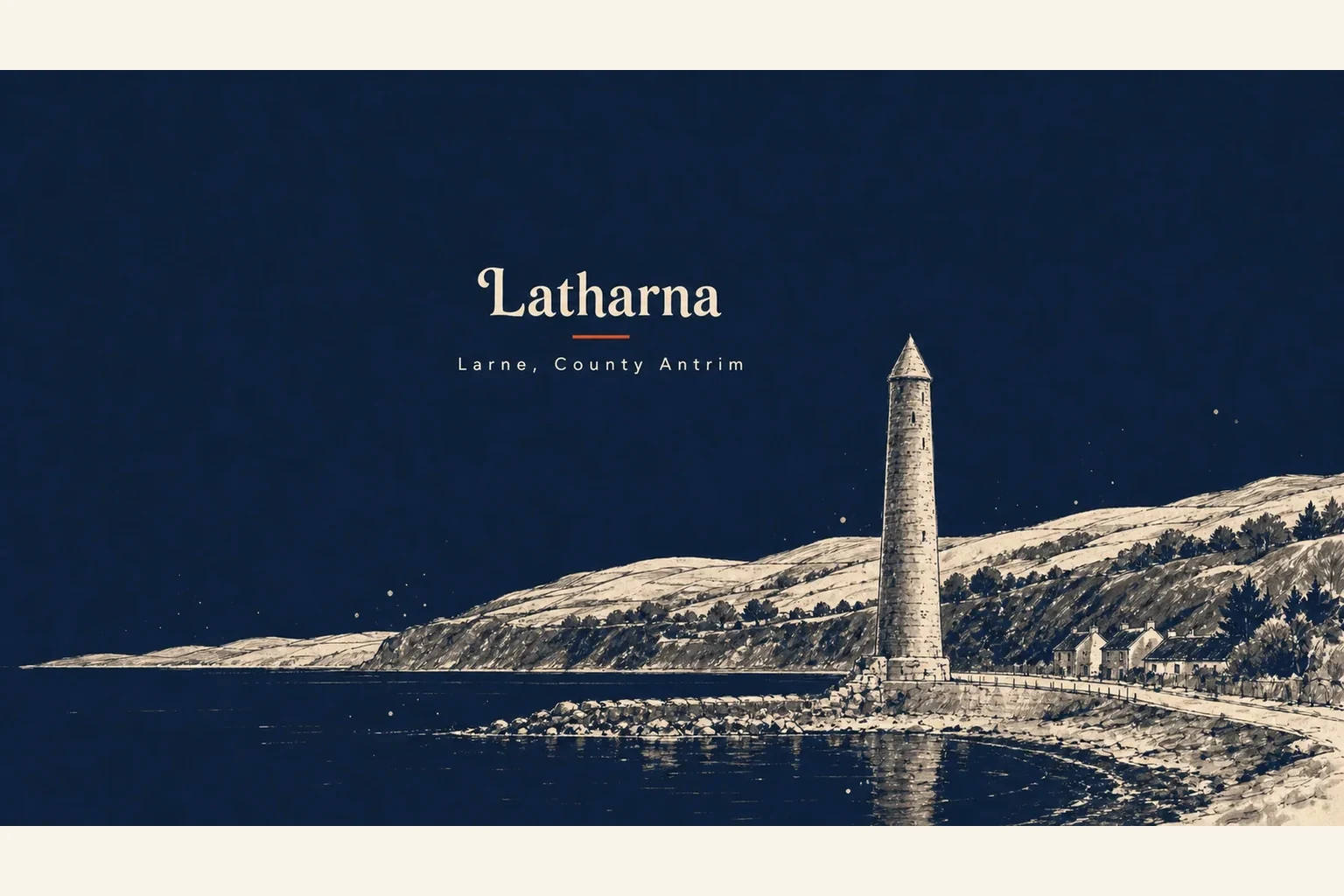
Latharna · Co. Antrim
Working ferry port at the foot of the Antrim Coast Road. Honest about what it is.
Larne is a town that most visitors to the Antrim coast see for about forty minutes - the queue at the ferry terminal, the roundabout out of town, and the moment the coast road opens up north of the Black Arch. That's a fair summary of how Larne presents itself, and it's also why anyone who slows down for an afternoon ends up with a more interesting town than they expected.
It's a port first. Has been for a thousand years - the Vikings used the lough as a base, the Anglo-Norman Bissetts built Olderfleet Castle on Curran Point around 1250, and the deep-water harbour has been carrying freight and emigrants and rifles ever since. Twenty-five thousand of those rifles came in one night in April 1914, when Major Crawford ran guns through this harbour for the UVF. The Jackson family sailed from this port in 1765 with two infant sons; their third son was born on the other side and became the seventh President of the United States.
It is not a heritage village. The town centre is a working high street with the wins and losses of any working high street. The interesting things are at the edges - the Chaine Tower at the harbour mouth, the Olderfleet ruin on Curran Point, Carnfunnock Country Park up the coast road, and Ballygally Castle two miles further on. Stay one night to break a coast-road trip, eat at the Olderfleet Bar, walk to the tower at sunset, and you'll have done Larne about right.