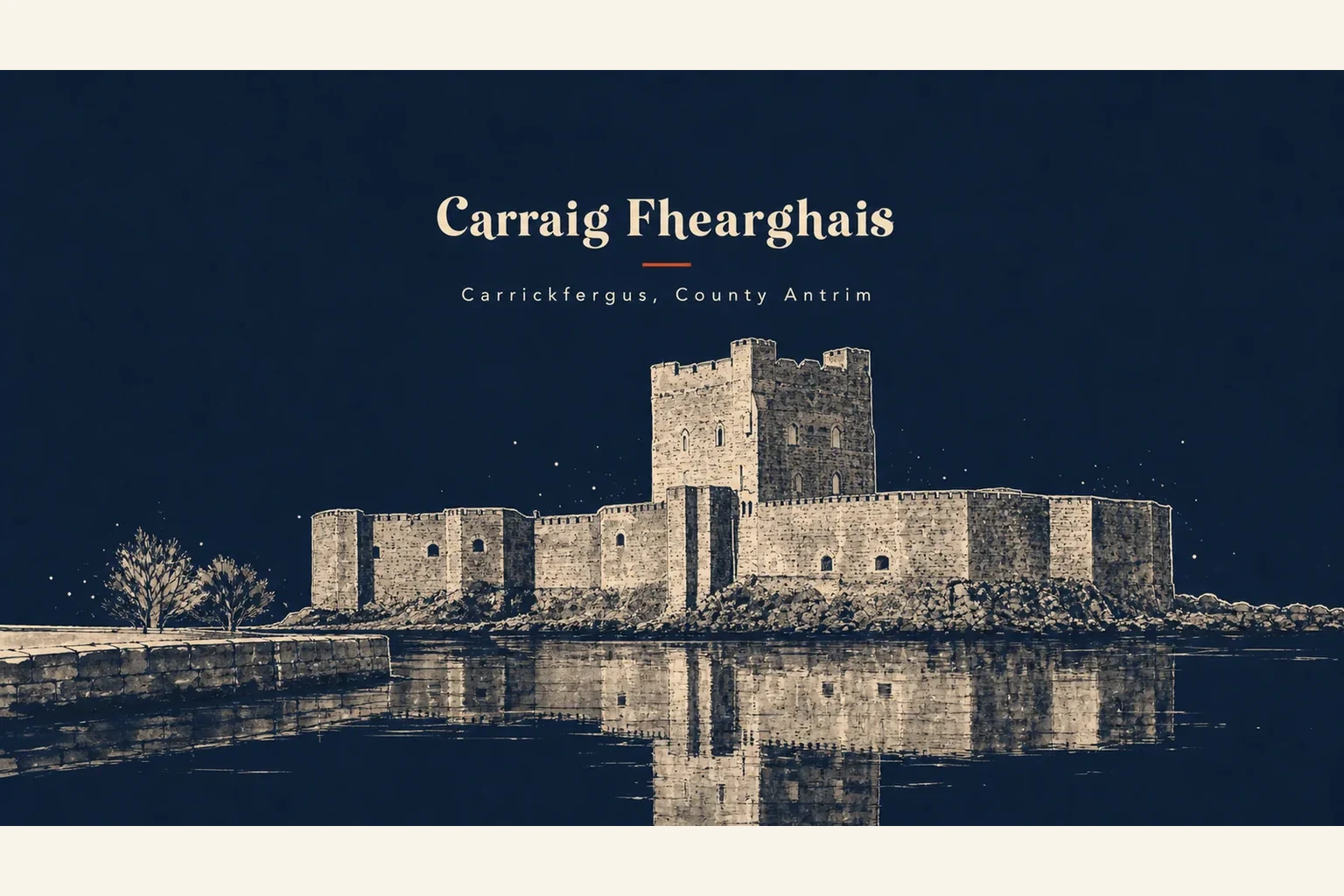
Carraig Fhearghais · Co. Antrim
A Norman castle on the lough, a king who landed here, and a song everyone half-knows.
Carrickfergus is a town that pre-dates Belfast and never quite forgave it. For most of the medieval period this was the principal town on the lough - castle, garrison, port, county courts. Then Belfast got the linen, the shipyards, and the runway. Carrickfergus kept the castle.
What's here now: a working harbour, a long waterfront walk, a Norman keep you can climb, and a commuter town pace that's quieter than its history suggests. You can do the castle and the Andrew Jackson Cottage in a morning. Stay for lunch by the marina and you've had a day out.
Don't expect Belfast energy. Don't expect Causeway-Coast drama either - the road north to Larne is workmanlike. Carrickfergus is what it is: a Norman town on the north shore of Belfast Lough, with a castle that has watched everyone who matters sail past for 850 years.