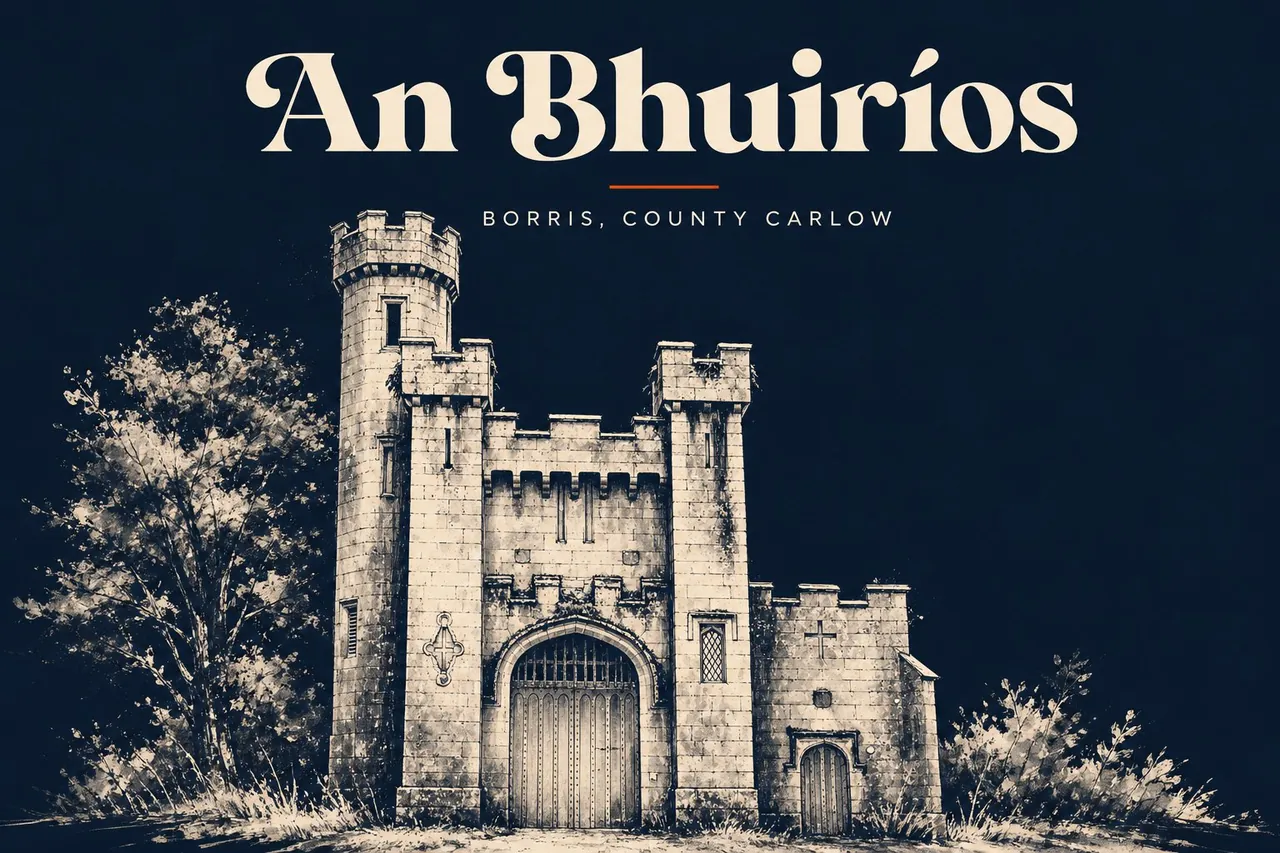
An Bhuiríos · Co. Carlow
An estate town built by the heirs of the last King of Leinster. They still live in the house.
Borris is one long Main Street running north-south between Mt Leinster and the River Barrow, and most of what matters here happens behind the granite gates at the top of it. Borris House - the seat of the MacMurrough Kavanaghs - sits on the site of an older castle, rebuilt in Tudor-revival style in the 1810s. The family who live there are direct descendants of Diarmait Mac Murchada, the man who in 1169 invited the Normans into Ireland and changed everything that followed. They are still there. That is the story of this town.
The most extraordinary of them was Arthur MacMurrough Kavanagh, born in 1831 without arms or legs. He was strapped onto a horse as a child and went on to hunt, fish, sail to India, become a magistrate, and sit as MP for Carlow and then Wexford. The portraits in the house show a man with a beard and a hard, unbothered stare. The story is so unlikely that visitors arrive expecting a Victorian myth and leave realising it is all documented.
Below the house, the village does its work. A handful of pubs along Main Street, a Georgian hotel halfway down, the granite viaduct walking you out of the village to the south. The South Leinster Way and the Barrow Way both pass through, which means a steady summer trade in walkers and not much in the way of coaches. It is a quieter Carlow than people expect - Carlow being a county people don't expect much from at all, which is part of the appeal.
Come for a weekend in late spring, ideally not the festival weekend unless you booked months ago. Walk the viaduct before breakfast. Get into the house if it is open. Eat in the Step House. Drink in the Green Drake. Drive out to St Mullins on a Sunday for the round tower and the river. That is Borris, and it is enough.