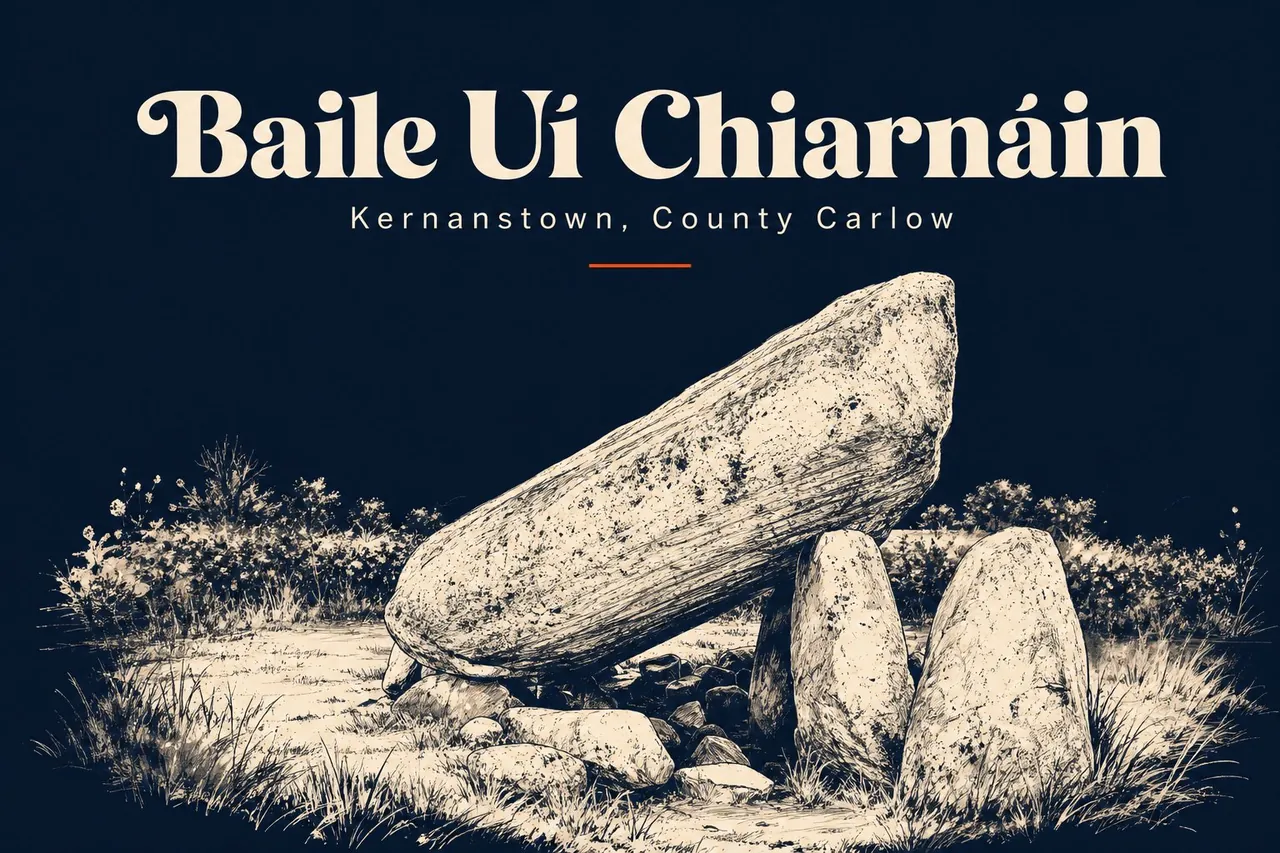
Baile Uí Chiarnáin · Co. Carlow
A granite capstone of up to 150 tonnes sitting in a Carlow field for 5,000 years.
Kernanstown is a townland east of Carlow town, and there is no real reason to come to it except for the stone in the field. The stone is called Brownshill Dolmen, or in Irish Dolmain Chnoc an Bhrúnaigh, and it has been here for somewhere between five and six thousand years. A portal tomb from the Neolithic, when the people of this island were still working out farming and had not yet met bronze.
What makes Brownshill different from the other portal tombs scattered across Ireland - and there are dozens - is the capstone. A single block of granite, tilted at an angle, weighing between 100 and 150 tonnes depending on which archaeologist you ask. The claim, made often and rarely contested, is that it is the heaviest capstone of any megalithic tomb in Europe. Some go further and say the world. Either way: a hundred tonnes of granite, on three uprights, with no metal tools, no wheels, no draught animals worth the name. How they did it is the question. Nobody really knows.
The visit is short and honest. You park in a layby on the R726, you climb a stile, and you walk a field path for about five minutes - sometimes through stubble, sometimes through mud, depending on the season and what the farmer has the field doing. There is an OPW information board. There is the dolmen. There is no fence around it, no rope, no audio guide. You can walk right up and put your hand on the granite. Allow twenty minutes. Then drive back into Carlow town for lunch.