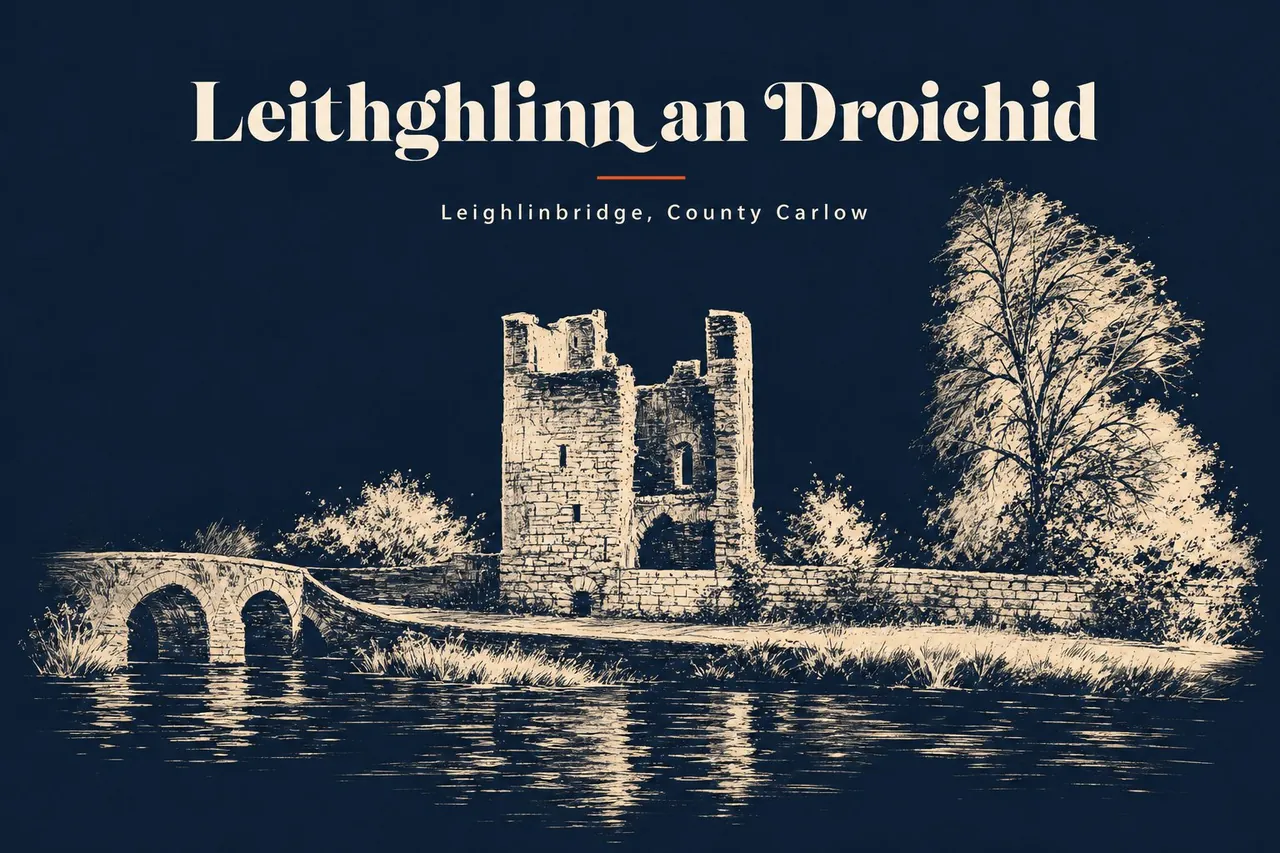
Leithghlinn an Droichid · Co. Carlow
A nine-arch bridge from 1320, two world figures, and a river that does the heavy lifting.
Leighlinbridge is a roadside village that the M9 motorway bypassed in the 2000s. That is, depending on your mood, either a tragedy or the thing that saved it. The main street is quiet now - the through-traffic that defined it for centuries takes the fast road - and the village sits on the Barrow doing what it has done since 1320, which is hold a bridge.
The bridge is the reason the village exists. Canon Maurice Jakis put nine stone arches across the Barrow in 1320 and controlled everything that moved between Dublin and the southeast for the next few centuries. The Norman Black Castle went up 140 years earlier for the same reason - whoever held the crossing held the county. Walk across the bridge at dusk and the logic of it is still obvious: no other place to cross for miles in either direction.
What you don't expect is the intellectual history. A 600-person village on a slow river in Co. Carlow produced Cardinal Patrick Francis Moran, who became Australia's first Cardinal and a central figure in that country's Catholic institutional life, and John Tyndall, who became one of the nineteenth century's major physicists - the man who explained the Tyndall effect, established that CO2 traps heat in the atmosphere, and walked off a mountain in the Alps to come home and give a lecture at the Royal Institution. The two facts sit together awkwardly, the way remarkable things do when they happen in small places.
The Lord Bagenal Inn on the river is the reason most people stop overnight rather than drive through. Good restaurant, rooms on the water, breakfast that sends you out ready for the towpath. The village doesn't have much beyond that and the history. It doesn't need much more.