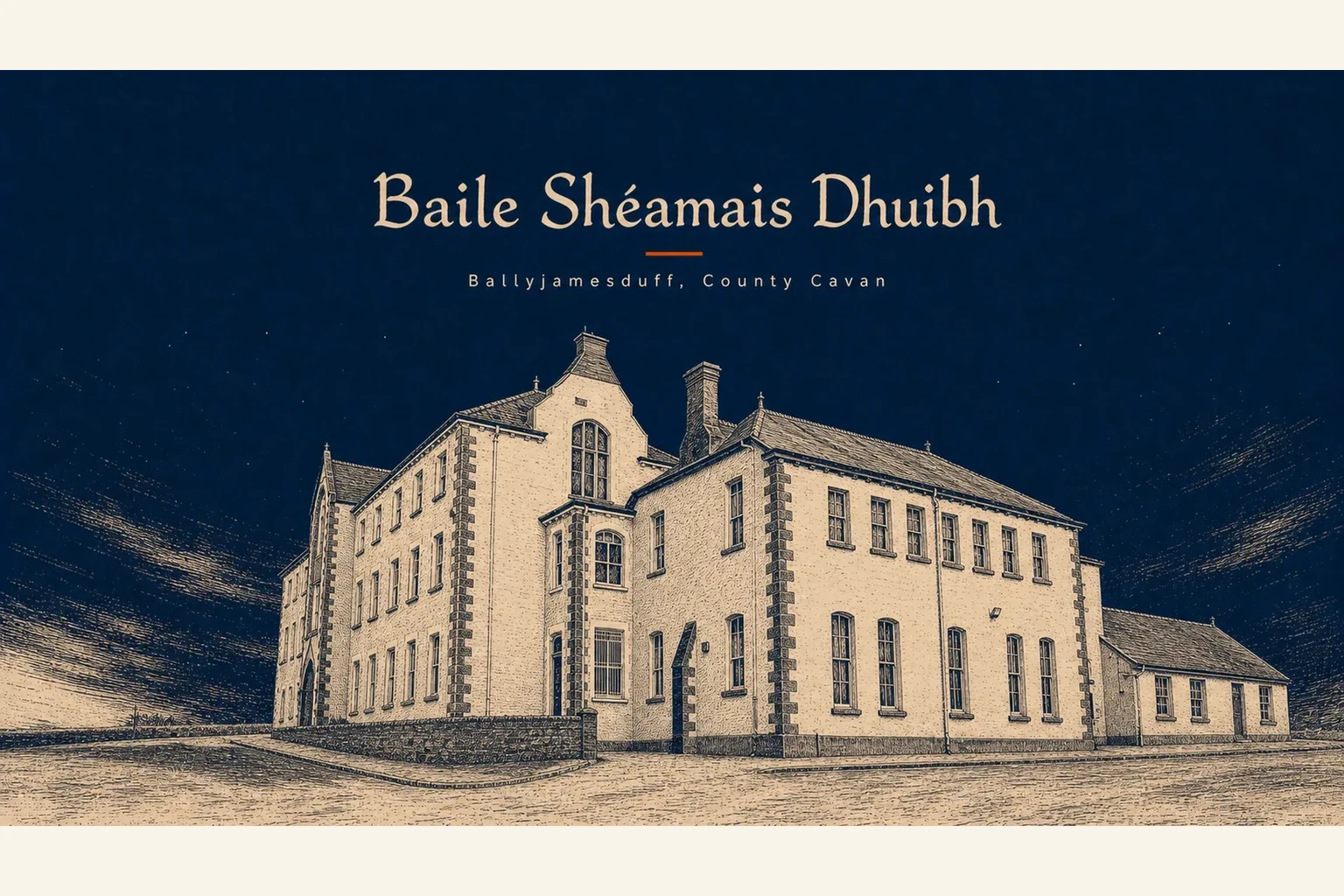
Baile Shéamais Dhuibh · Co. Cavan
The town in the song. Percy French wrote it; the museum keeps the rest.
Ballyjamesduff sits in south Cavan on the old road from Dublin to Cavan town, around a Plantation-era square that is wider than the town that grew up around it. It is named, depending on which source you trust, for an English officer in Cumberland's army or for a local Duff who happened to own the land. Either way the name stuck, and a hundred and fifty years later Percy French wrote a song about it that put the place into the mouth of every Irish bar singer from Boston to Brisbane.
The song is the thing most people know. "Come Back Paddy Reilly to Ballyjamesduff" is a homesick emigrant's ballad written in 1912, and it did the work that homesick emigrant ballads do - it made a small market town a fixed point in the imagination of people who would never see it. There's a statue of Percy French on the square, sitting on a bench with the song's words and music on a paper in his hand.
The other thing the town has, and the reason it punches above its weight, is the Cavan County Museum. It lives in the former St Clare's convent at the top of the hill, three floors of properly curated stuff - a 1798 pike, three medieval Sheela-na-gigs, the costumes from the 1916 Rising, every Cavan GAA jersey of consequence, and out the back a replica WWI trench system that opened in 2014 and has been swallowing school groups ever since. It is the best regional museum in the north midlands, and most visitors are people from Cavan bringing their grandchildren.
Beyond that, Ballyjamesduff is an old creamery town getting on with itself. It is not a destination in the brochure sense. You come for the museum, you stand on the square for ten minutes thinking about Paddy Reilly, you have a pint, and you drive on to Virginia or Cavan or wherever you were going. Which is, if you think about it, exactly what the song is about.