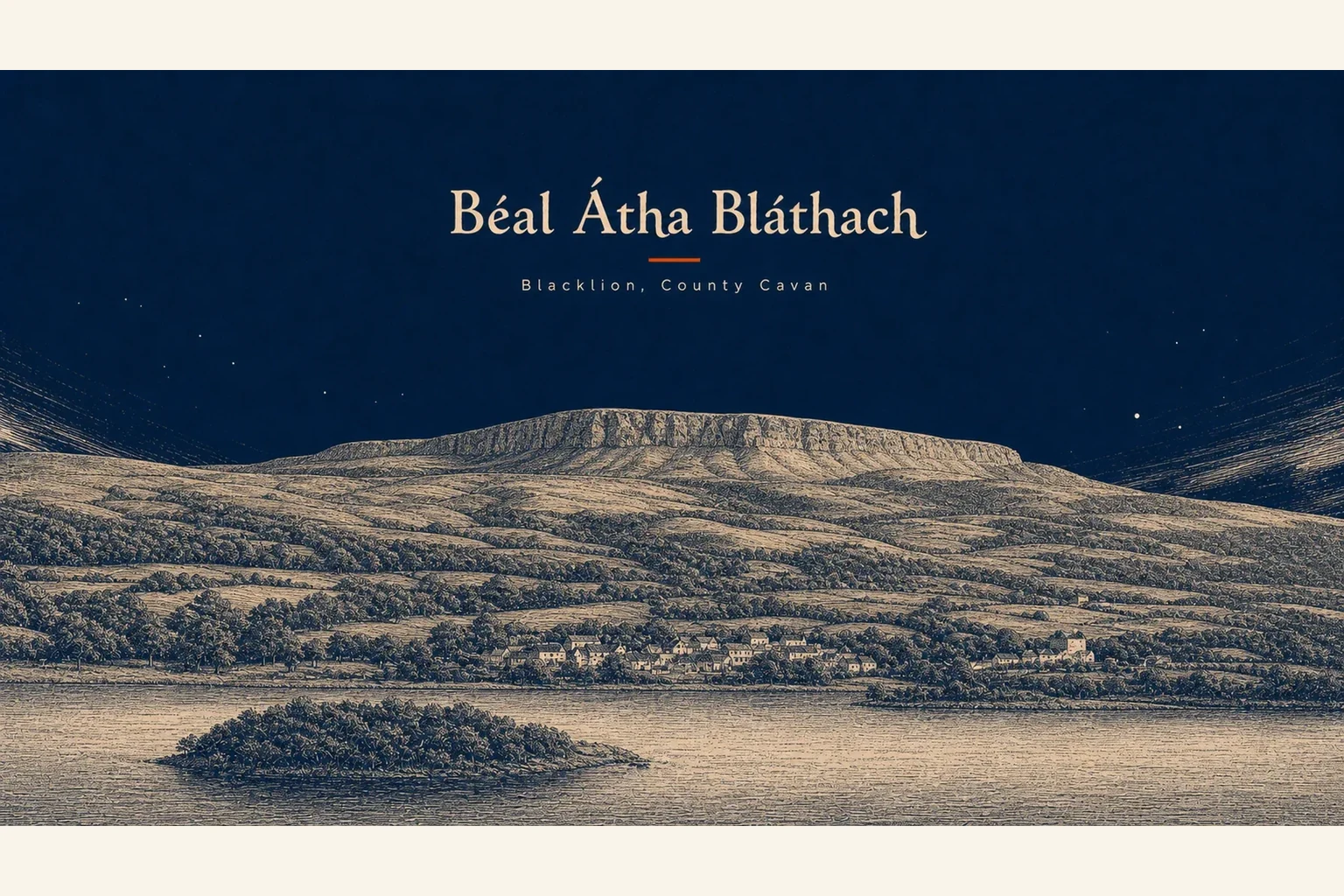
Béal Átha Bláthach · Co. Cavan
One restaurant, one mountain, one border. All of them serious.
Blacklion is a village of about three hundred people in the north-west corner of Cavan, on the border with Fermanagh, with a mountain behind it and a bridge in front of it that leads directly into Northern Ireland. Under normal circumstances this combination of facts would describe a quiet place that people pass through. The MacNean House makes it something else.
Neven Maguire took over the restaurant from his mother Vera in the 1990s and built it into one of the most consistently awarded dining rooms in Ireland. The waiting list runs months ahead. People drive from Dublin, from Belfast, from further. The village has no traffic lights, no supermarket, no bus service to speak of - and a restaurant that seats eighty and has been full almost every night for the better part of thirty years. That particular inversion of scale is the thing about Blacklion.
Cuilcagh Mountain rises behind the village on the Cavan-Fermanagh border. The boardwalk trail - 7.5 km of timber planking through bog and up the mountain flank - was built to protect the surface while letting people reach the summit plateau at 665 metres. It has been photographed so many times from the air that the image of the straight line climbing into the cloud has become its own kind of shorthand for the Irish uplands. Walk it on a weekday in September and you will have long stretches to yourself.
The border is everywhere and nowhere. Belcoo is fifty metres from Blacklion across a bridge. The same street effectively runs through two countries. The checkpoint that stood here during the Troubles was a physical interruption in the landscape for decades - a place where people were stopped, questioned, and sometimes worse. What it means now to cross the bridge in either direction without stopping is something the locals understand differently than visitors do.