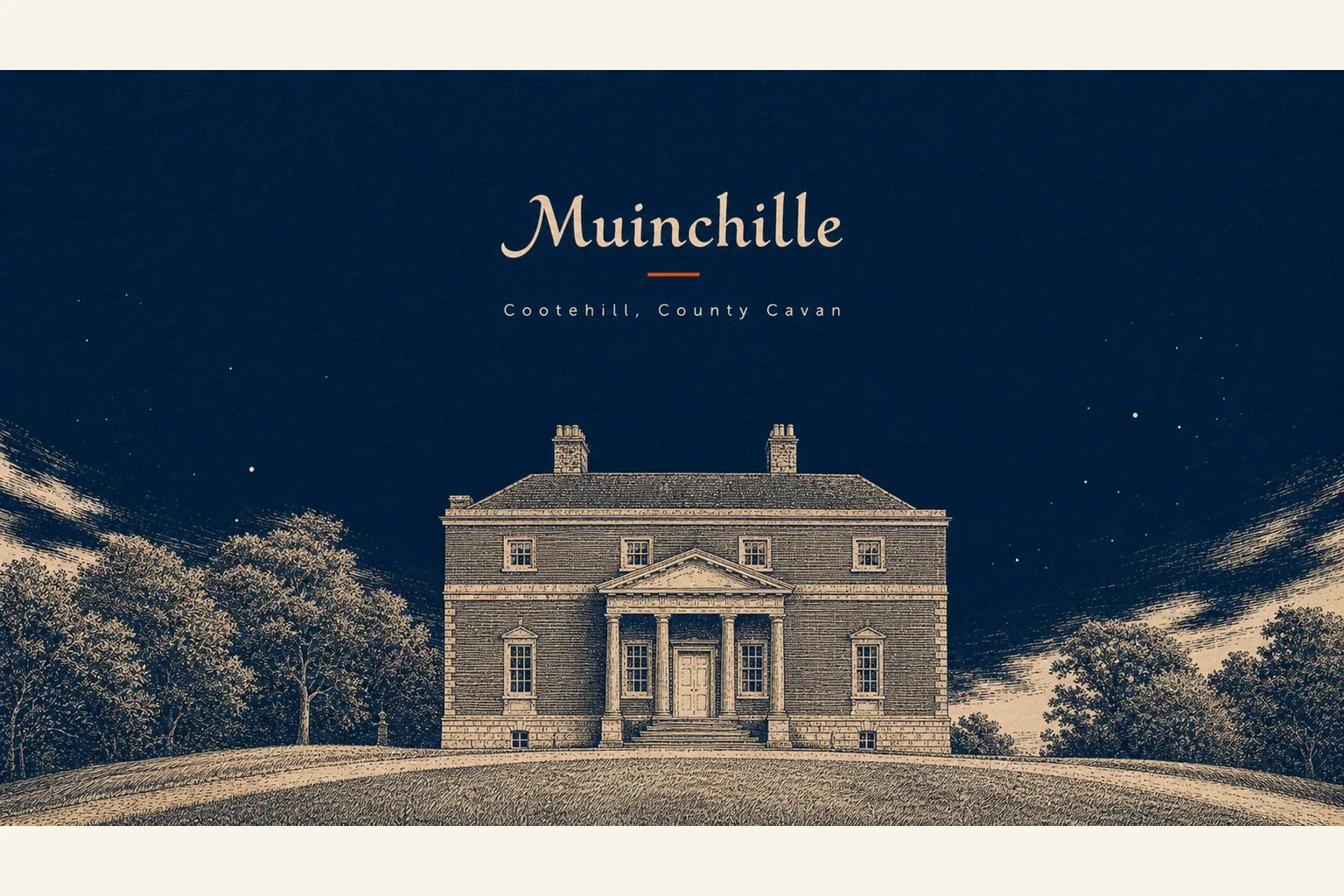
Muinchille · Co. Cavan
A Plantation town on the Annalee with one of Ireland's finest Palladian houses hiding in the trees.
Cootehill is a wide-streeted Plantation town in east Cavan, dropped onto a hill above the River Annalee in the 1660s by a family called Coote. The name is exactly what it sounds like - Coote plus hill. They got the land off Cromwell. The town got their name. Most of Ireland's awkward names work the same way if you scratch them.
What makes Cootehill worth a stop is what is hidden in the woods half a mile north. Bellamont Forest is a small Palladian villa designed by Edward Lovett Pearce in 1730, and it is reckoned by people who care about these things to be among the finest houses in Ireland. Pearce's other building was the Old Parliament House on College Green in Dublin. The villa is privately owned and not open to walk-ins, which is its own quiet thing - you go for the demesne, the lake, the avenue, and the glimpse through the trees.
The town itself is honest enough. A long main street, a wide market square that remembers when linen was the work, a few good pubs, and the Annalee curling around the bottom of the hill. Lough Sillan two miles south has been handing out record pike for a century - and, allegedly, the bones of the largest red deer ever found in Ireland, dredged up by an angler in the 19th century. Stay an evening, walk the demesne in the morning, and put Bellamont and the linen and the lake together yourself. It adds up to more than the road sign suggests.