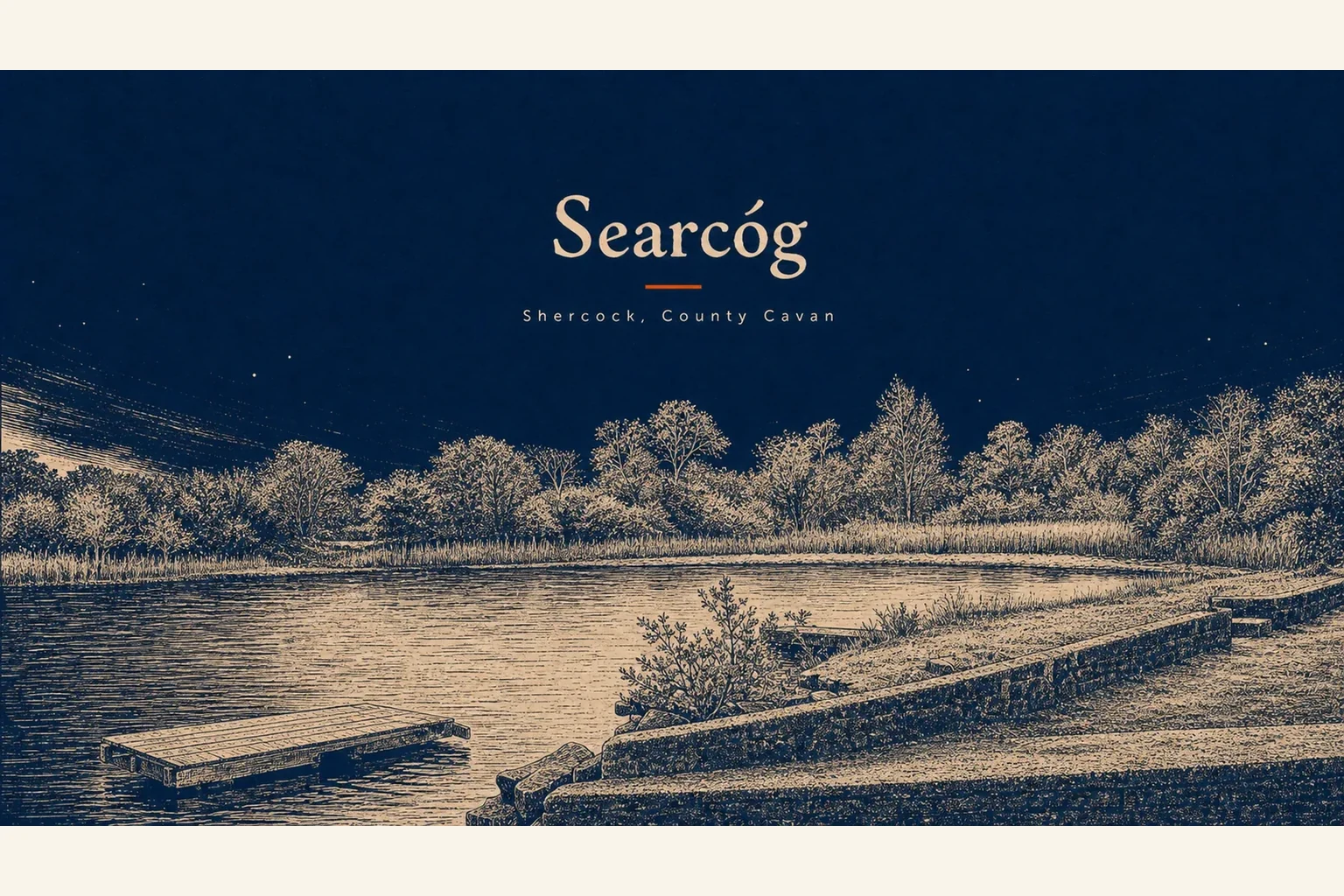
Searcóg · Co. Cavan
A lake-edge village where the ground once gave up an Ice Age giant.
Shercock is a small east-Cavan village on the southern shore of Lough Sillan, and most things about it are explained by the lake. The street runs down to the water. The people who visit come to fish. The thing that made the place briefly famous was hauled out of the same lake in 1947: a complete skeleton of Megaloceros giganteus, the Giant Irish Elk, with an antler span of more than 3.6 metres. It had lain in the silt for roughly 11,000 years. It is one of the finest specimens ever recovered on the island.
Sillan is a coarse-fishing lake, known first and longest for pike. Big pike - the kind that attracts anglers from the midlands and across the border, who arrive on Thursday evening and leave on Sunday with a specific look on their face whether they caught anything or not. The lake is shared in practice with Cootehill to the north-west, which takes most of the through-traffic. Shercock takes the people who know where they are going.
The village itself is small and honest about it. A church, a few houses, a pub, the lake. The drumlins close in on all sides - those smooth glacial hills that make every road in east Cavan bend twice before it gets anywhere. If you want scenery that explains itself, Shercock does that. The lake at the bottom of the street, the hills behind it, the same landscape that preserved an Ice Age skeleton for eleven millennia without being asked. There is something in that if you come looking for it.