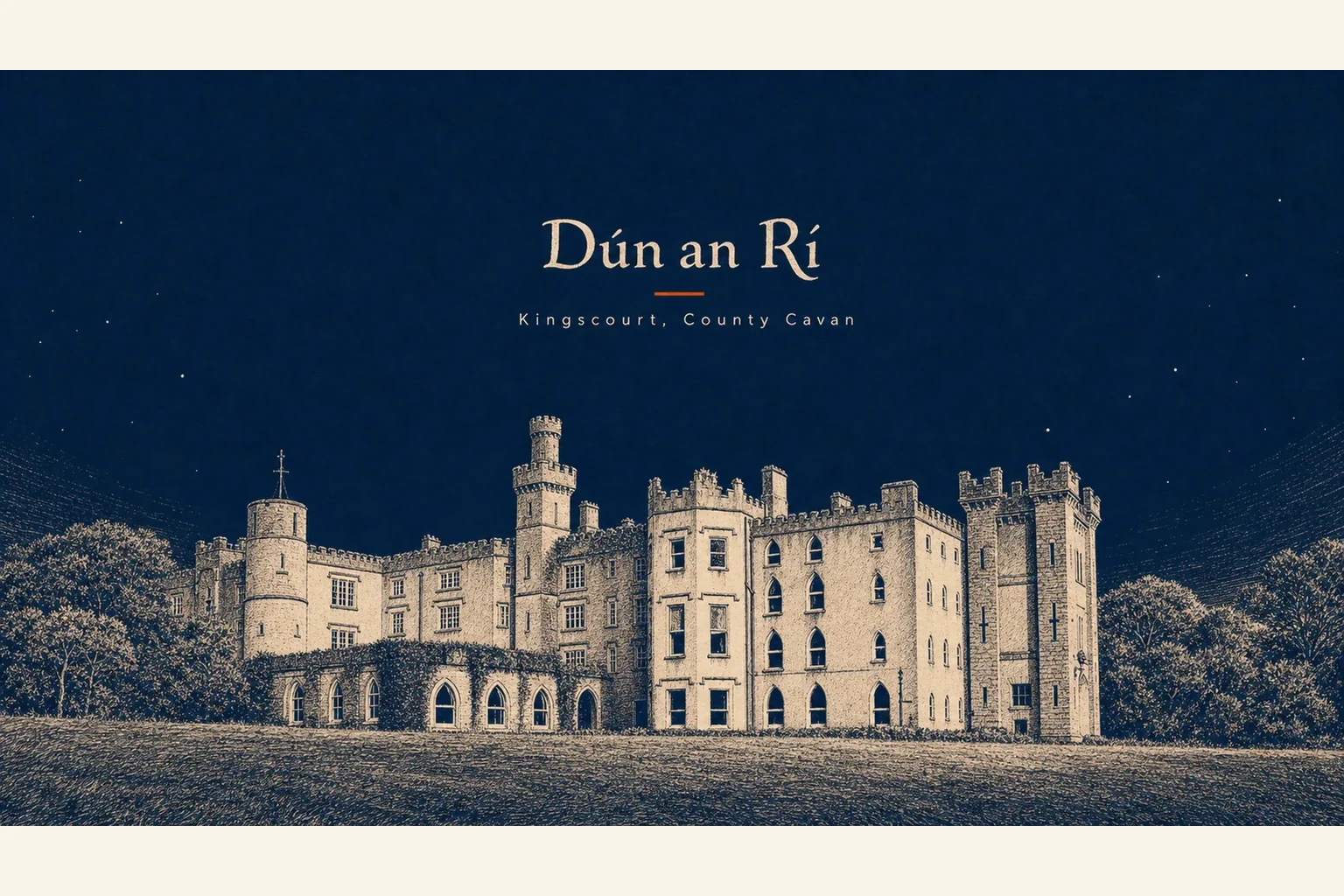
Dún an Rí · Co. Cavan
Forest park up the road, gypsum mine under the road, Evie Hone glass in the church.
Kingscourt sits in the south-east corner of Cavan with one foot in Meath, on the road from Carrickmacross to Nobber. It's an estate town - laid out by the Pratt family of Cabra Castle in the late 1700s - and the long main street, the wide market square, the alignment of the church and the demesne all still tell you that.
The headline is Dún a' Rí Forest Park. Five hundred and sixty acres of the old Cabra woods, opened to the public in 1959 when the estate was sold off. The Cabra River runs through it, the bridges and follies are still where the Pratts left them, and four named loops carry you through beech, oak and conifer. It's a national-park-grade walk hiding behind a modest sign on the R165.
The other half of the story is underneath. Kingscourt is built on one of the largest gypsum deposits in Europe. The Drummond mine has been pulling rock out of the ground here since 1936, the plasterboard plant has been running since the late 1940s, and Saint-Gobain owns the lot now under the Gyproc name. The trucks crossing the square are not a nuisance - they are the town's other engine, and have been for ninety years.
Add Cabra Castle on the hill - Gothic-revival, hotel since the 1960s, supposedly haunted - and a parish church with Evie Hone stained glass, and you have a south-Cavan town that punches well above what the map suggests. Stay a night. Walk the forest in the morning. Eat in the square. Drive on to Bailieborough or Carrickmacross when you're done.