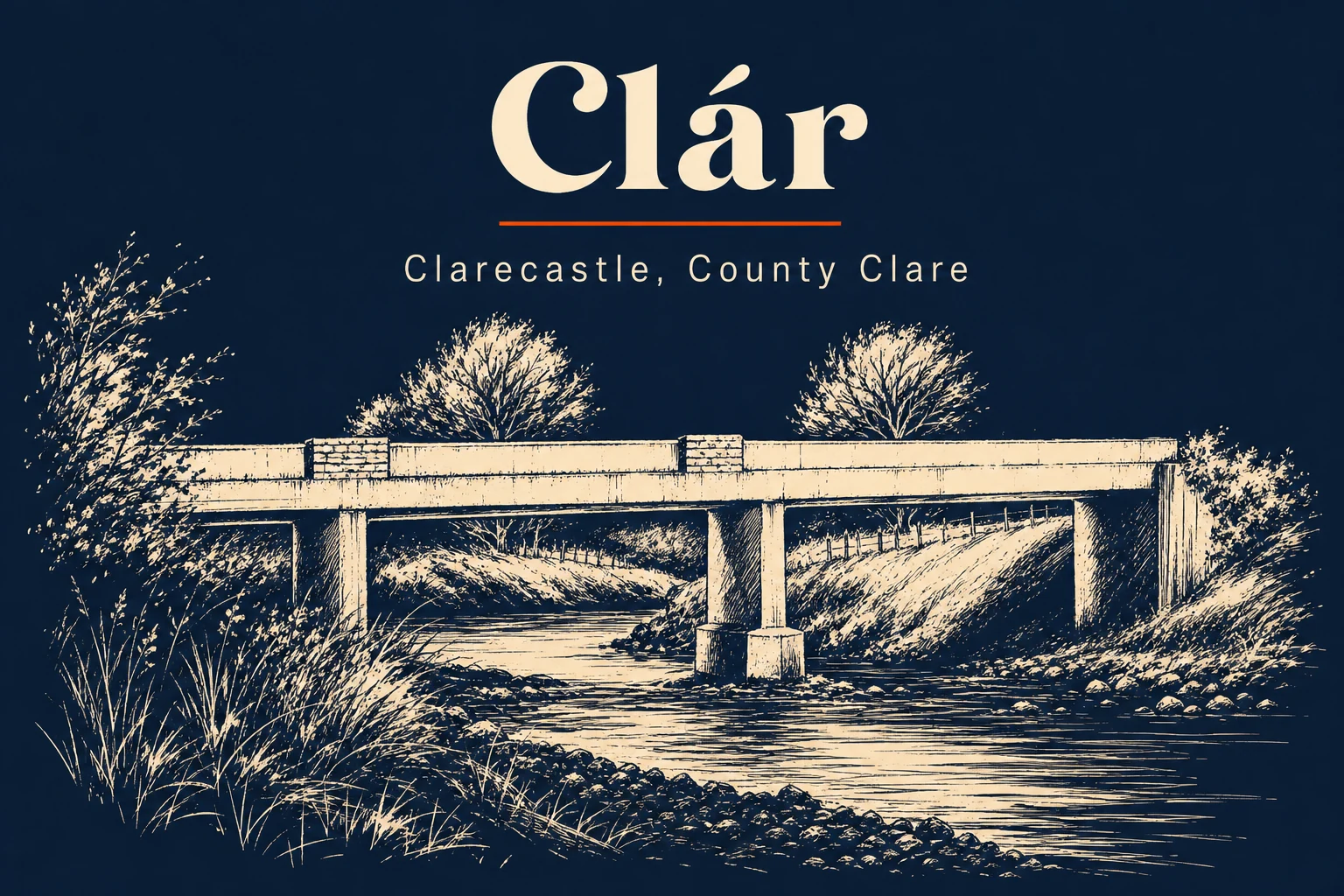
Clár · Co. Clare
Three kilometres south of Ennis, on the River Fergus, and quietly proud of it.
Clarecastle is the kind of place that Ennis overshadows completely, which suits Clarecastle fine. Three kilometres down the road, on the River Fergus - it was the port for mid-Clare before the railway arrived and changed the logic of everything. Boats came up from the Shannon estuary with coal and salt; grain and lead ore went back. The crescent quay that Thomas Rhodes built in 1845 is still there, still shaped like a working structure, still facing the river.
The castle is the oldest thing in the place and the most visible. A tower house on an island in the river - you can see the outline from the road bridge. It changed hands in every war that passed through Clare. Cromwell's commander Henry Ireton fell ill here in 1651 during the siege. After Ireton died, his troops held the castle anyway. That's probably the most famous thing that happened here and it's not even particularly famous.
Clare Abbey sits a mile north of the village, up a rough lane, no signs. The OPW owns it, cuts the grass occasionally, and leaves you to figure out what you're looking at. What you're looking at is an Augustinian foundation from 1189, built by Donal Mor O'Brien, with a fifteenth-century tower and traceried windows still intact. It's the largest Augustinian ruin in Clare. It gets a fraction of the footfall it deserves.
The pharmaceutical company Roche operated a plant on the Fergus here from 1974 - established as Syntex Ireland, absorbed by Roche in 1994, and shut in stages between 2015 and 2020. Two hundred and forty jobs gone. A demolition bill that topped €150 million by 2025. The site is still being decommissioned. The village carries on regardless, as villages do.