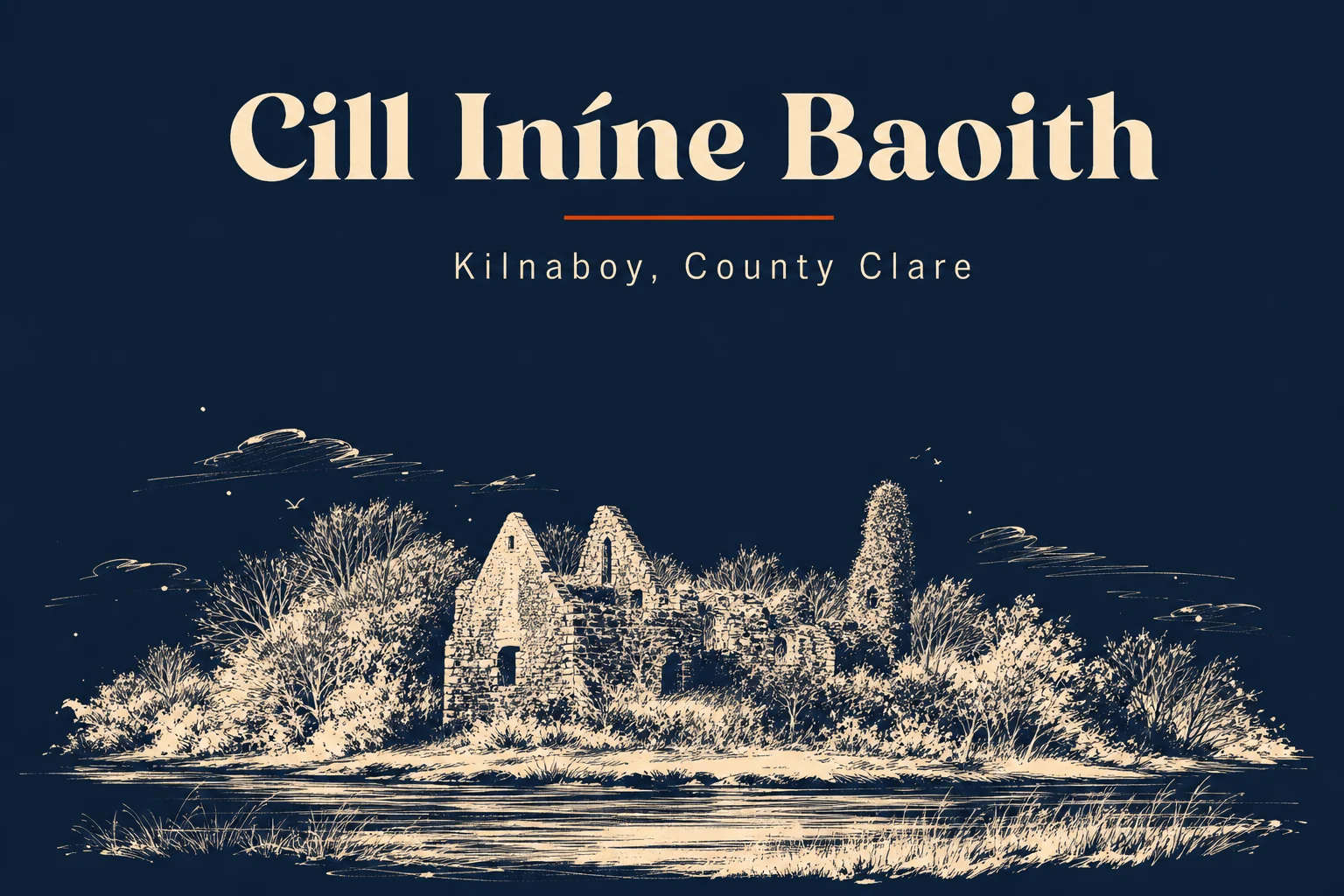
Cill Iníne Baoith · Co. Clare
A sheela-na-gig above the door, a round tower stump in the yard, and a Cross of Lorraine on the gable. One small church, a lot to look at.
Kilnaboy's name means 'Church of Baoith's Daughter' in Irish - the founder of the original monastery here was reportedly a woman named Baoith. The ruined stone church dates to the 11th century in its origins and was repaired in 1715. It was subservient to Corcomroe Abbey from the 12th century, when it was rededicated to St Augustine. The graveyard around it is still in use.
Three things make the church worth stopping for. First, the sheela-na-gig carved above the south door - a medieval stone figure whose meaning is still argued about, but whose presence above a church door suggests an earlier protective function than the Augustinians would have endorsed. Second, a double-armed cross - the Cross of Lorraine - on the west gable. Rare in Ireland; the reason it's here is unclear. Third, the stump of a round tower in the graveyard, which tells you this was a significant monastic site before the stone church existed.
Lough Inchiquin is five minutes' walk west. Corofin is the nearest town, about five kilometres south, with the Clare Heritage Centre and services. This is a place you spend an hour, not a night.