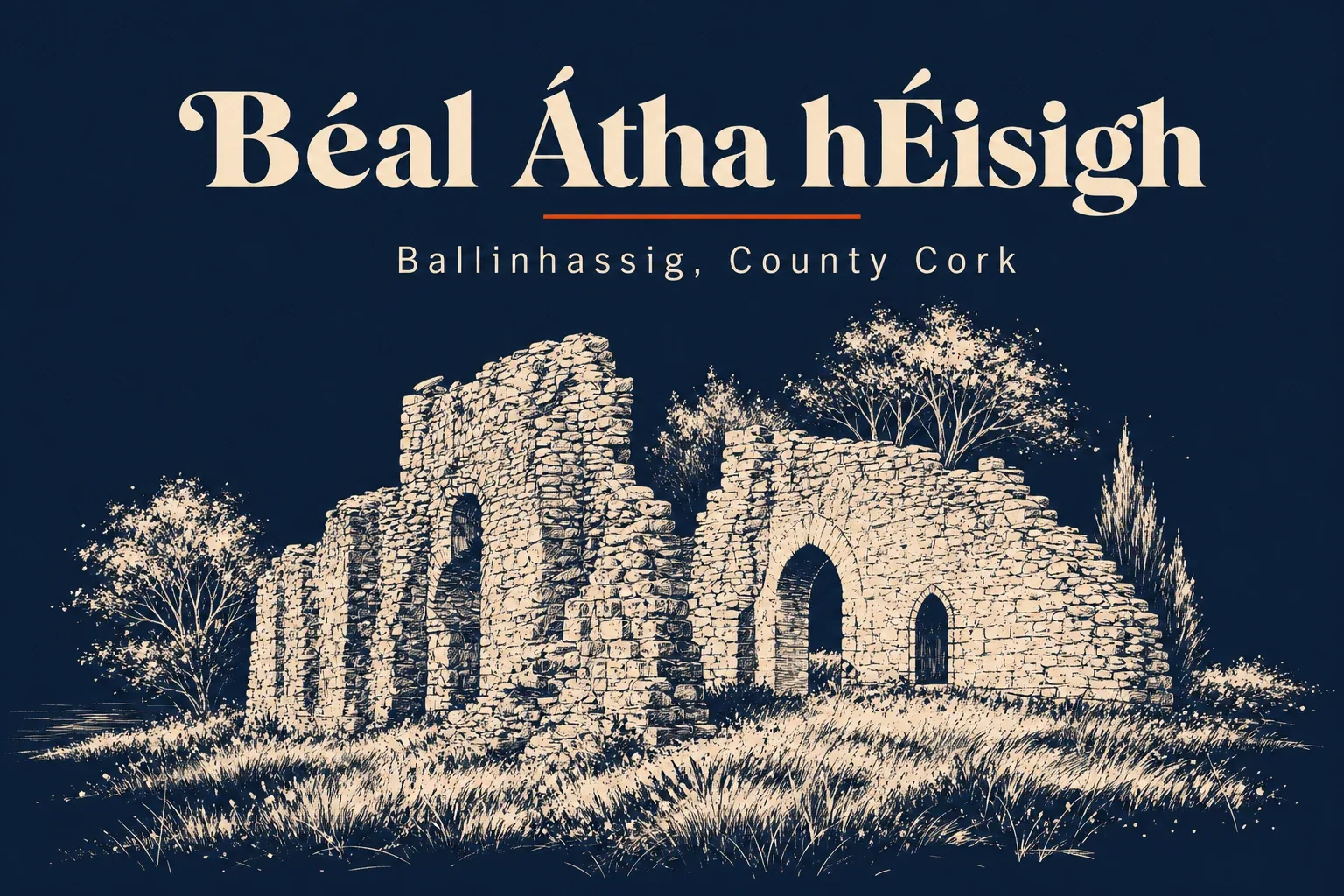
Béal Átha hÉisigh · Co. Cork
A farming parish turned commuter belt south of Cork city, with the longest abandoned railway tunnel in the Republic hidden in the fields above it.
Ballinhassig is a parish, not a postcard. It lies about ten kilometres south of Cork city in good rolling farmland near the source of the Owenabue, the road dividing more or less between the N71 to Bandon and the R600 down to Kinsale. There is no obvious centre to photograph. What there is: a couple of churches, three primary schools across the townlands, a GAA club founded in 1886, a co-op, and the kind of pubs that are social anchors rather than tourist stops.
It was a farming district that grew a commuter coat during the construction years of the early 2000s, when Cork city workers came south for space and a shorter mortgage. The airport is ten minutes up the road, which tells you most of what you need to know about why people live here. It is residential, agricultural, horsey - road bowling and point-to-points are taken seriously - and it does not pretend to be anything else.
The reason to slow down is underground and overgrown. The old Cork, Bandon and South Coast Railway threaded through here from 1849, and the Gogginshill Tunnel above the village is the longest abandoned railway tunnel in the Republic at 906 yards on a curve. It has sat in the dark since the line shut in 1961. A Cork to Kinsale greenway plan has spent years trying to bring it and the nearby viaducts back into use as a walking and cycling route, which would change the place entirely. Until that opens, treat the tunnel as a curiosity to read about rather than a guaranteed walk - much of the old line runs over private ground.
Otherwise, use Ballinhassig the way the locals use the road it sits on: as the bit of country you pass through on the way to Kinsale for the harbour and the food, or back up to Cork city for everything else. Stop for a plate at the pub, look at the church on its rise over the valley, and keep going.