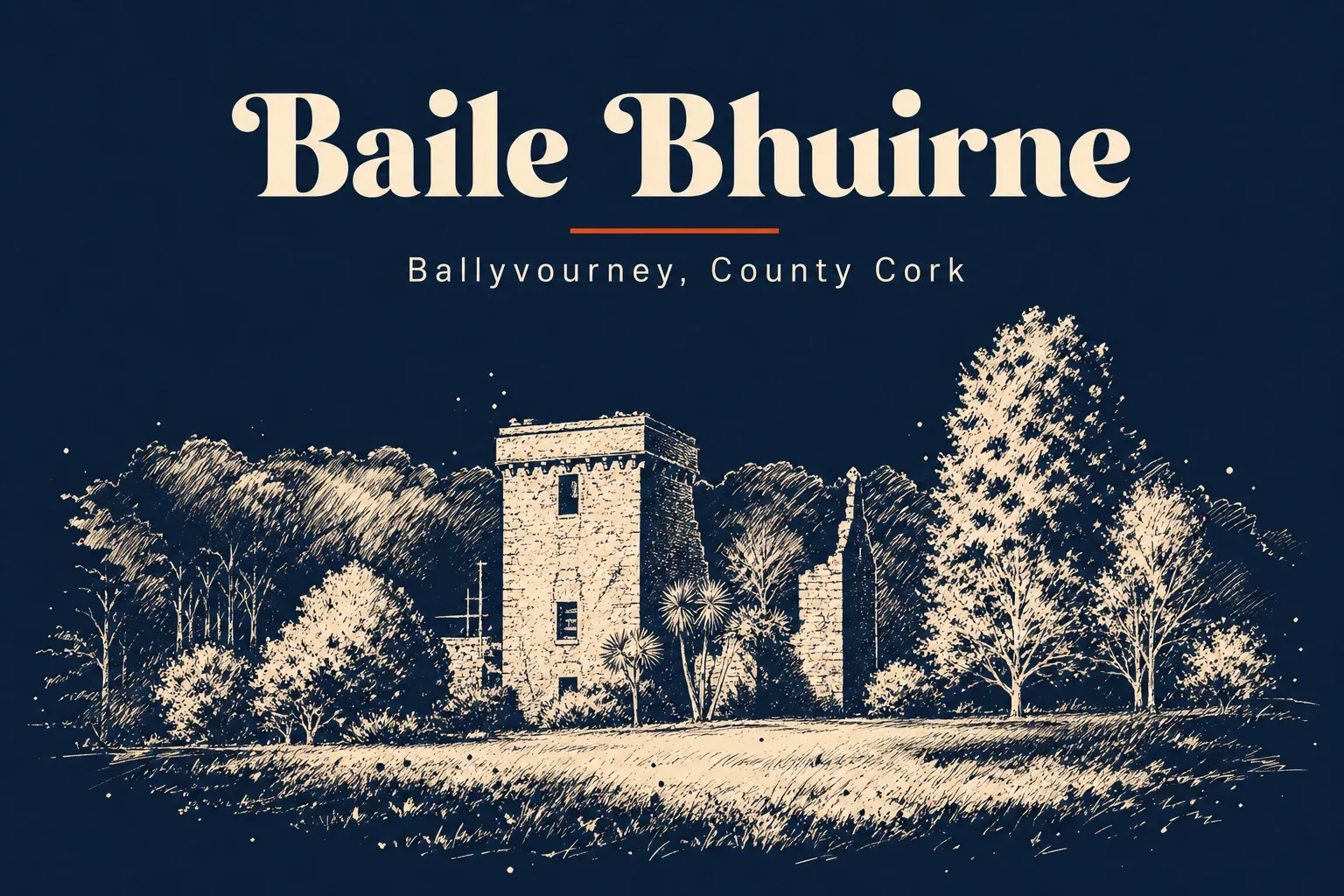
Baile Bhuirne · Co. Cork
A Gaeltacht village in a mountain valley, anchored by a shrine that pilgrims still walk.
Ballyvourney is a small Irish-speaking village on the N22 between Cork and Killarney. The name means "town of Bhuirne". The real reason to come is St Gobnet's shrine - a genuine pilgrimage site where people still walk the Stations on Pattern Day, not because it's on the itinerary, but because they've been doing it for a thousand years.
The shrine sits in the centre of the village. It contains a 15th-century wooden statue of St Gobnet - carved, painted, about 60cm tall, kept in the oratory. She's the patron of beekeeping, though the village is more famous now for the walking. Every year on February 11, pilgrims visit for Pattern Day. On any other day, you might find someone quietly working through the Stations - a holy well, an old graveyard, a pattern stone - asking for what they came to ask for.
You're in the Múscraí Gaeltacht here, one of Cork's Irish-speaking areas. The road signs are still sometimes in Irish only. Listen to the shopkeepers and you'll hear Irish and English switching mid-conversation. The mountains around the valley - the Derrynasaggart range and the Shehy peaks - are real mountains. The village is small enough that you can do it in an afternoon. But the shrine makes it worth staying longer.