County Cork Ireland · Co. Cork · Castlelyons Save · Share
POSTED FROM
CASTLELYONS
CO. CORK · IE

Castlelyons
Caisleán Ó Liatháin

The East Cork
STOP 05 / 05
Caisleán Ó Liatháin · Co. Cork

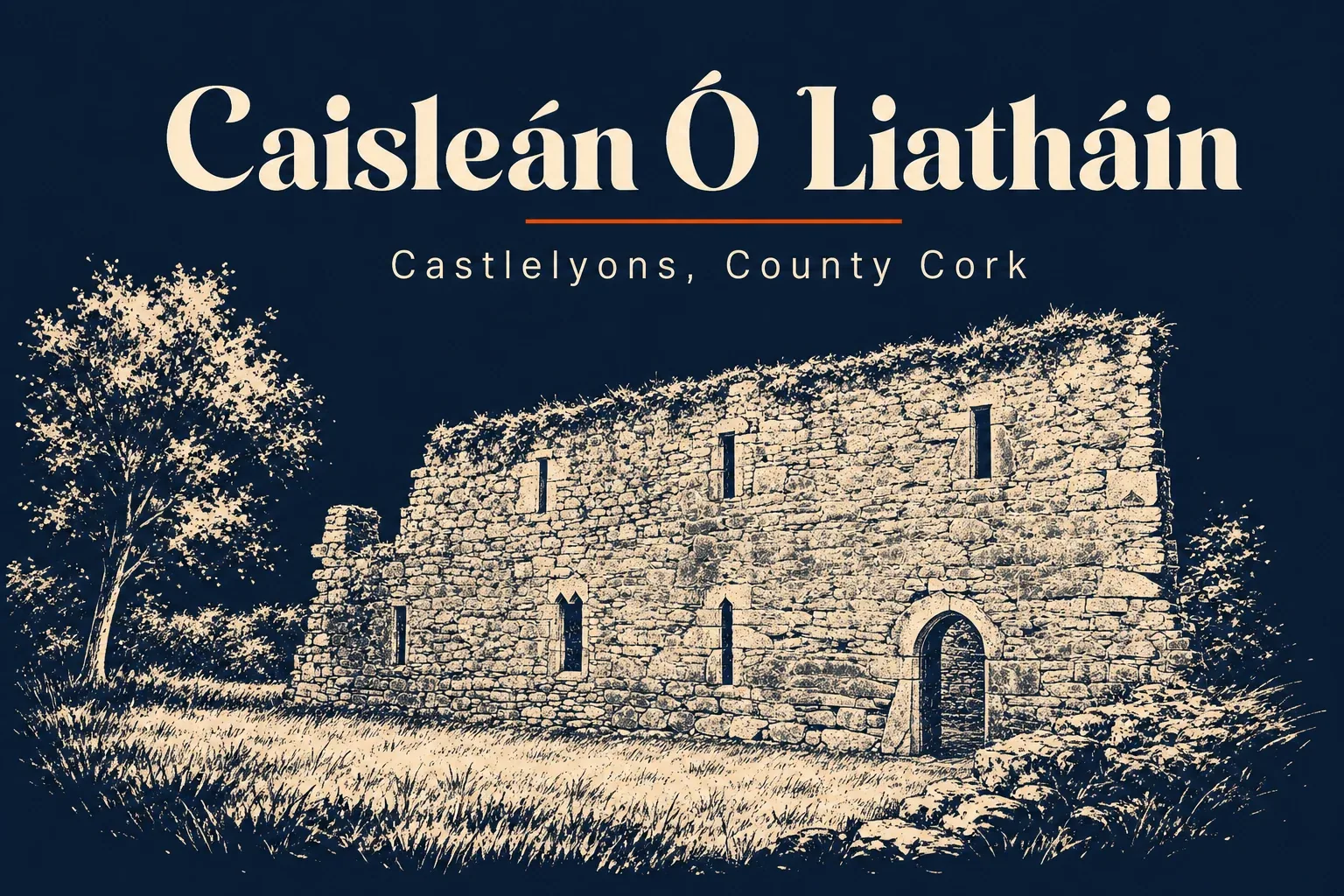
Two medieval ruins in one small village. The Barrys were Munster nobility — their castle is still substantial.

Castlelyons is a small village between Fermoy and Midleton with an outsized share of medieval history. Two substantial ruin sites in one place — that''s not common.

The castle was the seat of the Barry family, Earls of Barrymore. They were Old English nobility from way back — major landowners in Munster, with the castle to prove it. What''s left is still impressive: fortified house, 16th–17th century, substantial stonework. The kind of place that made a statement.

The friary is 14th century. Carmelites. Quieter than the castle but no less real. Stone vaults still standing. No fanfare. Just masonry and time.

The village itself is small and mostly quiet. The ruins are the whole draw — and if that''s what you came for, that''s plenty.
Population
~300
Coords
52.0533° N, 8.2644° W
01 / 05

At a glance.

Three things every local will eventually mention. Read these and you've already understood more than most day-trippers do.

02 / 05

Stories & lore.

The reason to come back. The things every local will eventually tell you about, usually after the second pint.

Old English nobility

The Barrys of Munster

The Barry family were Old English — Anglo-Norman settlers who established themselves in Munster centuries back. By the time this castle was built (16th–17th century), they were Earls of Barrymore, major landowners, major players in the region. Castlelyons was their seat. What''s left is substantial enough to know they meant it.

14th century foundation

The Carmelite Friary

The friars arrived and built stone. They were here for a few centuries. Then they weren''t. The building remains—vaults, decent masonry, careful work. No crowds, no restoration drama. Just a reminder that this place was important enough to put religious infrastructure here.

Medieval concentration

Two sites, one village

Having both a major castle and a friary in one small village is the story. It means this place mattered—matter enough for both temporal and religious power to establish permanent footholds here. That''s not common in a village this size.

03 / 05

When to go.

There is no bad time. There are different times.

Spring
Mar–May

Quiet, green, the ruins don''t look any better than usual but the walk around them is easier.

◉ Go
Summer
Jun–Aug

Warm and gentle. The Bride River is at its friendliest. Small villages are most themselves when tourists aren''t thinking about them.

◉ Go
Autumn
Sep–Oct

Dry enough to walk the ruins, quiet enough to hear yourself think.

◉ Go
Winter
Nov–Feb

Grey. Damp. The ruins are still there. So are you, probably alone.

◐ Mind yourself
04 / 05

What to skip.

Honestly? Don't bother.

If a local was sitting beside you, this is the bit where they'd lean in.

×
Assuming the ruins are open

They''re not always fenced or formally accessible. Respect the ground, ask locally.

×
Visiting on a Saturday afternoon with no plan

The village has nothing else much—no pubs designed for visitors, no cafes. Come expecting quiet, not hospitality.

+

Getting there.

By car

Fermoy is 10km north. Midleton is 15km south. Castlelyons sits between them on minor roads. Nowhere to miss it but easy to.

By bus

Limited service. Check Bus Éireann for Fermoy–Midleton routes.

By train

Midleton has a station (Cork branch line). Fermoy doesn''t anymore.

By air

Cork Airport is 40km south. Dublin is 2 hours.