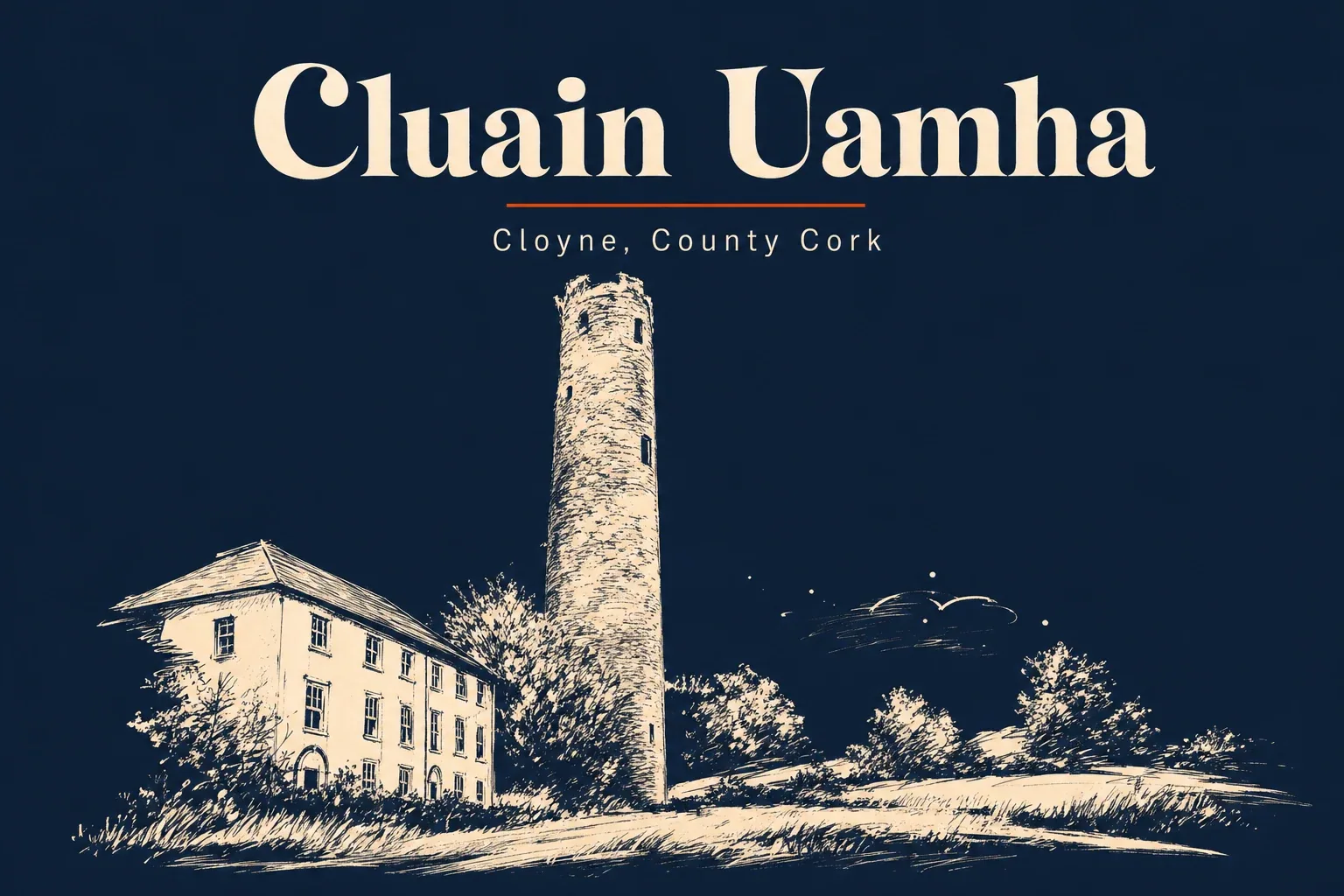
Cluain Uamha · Co. Cork
A round tower, a 13th-century cathedral, and the birthplace of Christy Ring - the greatest hurler that ever lived.
Cloyne is a small village in a fertile East Cork valley, about eight kilometres southeast of Midleton and twenty-five from Cork city. The name is Cluain Uamha, the meadow of the cave - there is a limestone cave system under the ground here that runs for kilometres. Two thousand people, give or take, a quiet main street, and two buildings that have been here longer than the village around them.
The story is older than the village. St Colman mac Lenine founded a monastery here in the sixth century, and it grew important enough that the Vikings sailed up to plunder it three times in the ninth. What survives now is the round tower - thirty metres of dark sandstone, one of only two left standing in the whole of County Cork - and St Colman's Cathedral across from it, founded around 1250. The tower lost its stone roof to a thunderstorm in January 1749, which Bishop Berkeley noted in a letter at the time. The shaft is intact.
Berkeley is the famous resident, but the one Cloyne claims hardest is Christy Ring. Born at Kilboy Cross a mile from the village in 1920, he won eight All-Irelands with Cork and is, by wide agreement, the finest hurler the game has produced. His statue stands on the spot where his childhood home was. This is hurling country first and a heritage stop second, and locals will be clear about the order.
Do not come expecting a tourist village. Cloyne has the tower, the cathedral, a pub or two, and a couple of places to eat at the weekend. It is a working village where the heritage happens to be world-class. Midleton ten minutes north has the distillery and the shops; the coast at Ballycotton is a short run southeast. Cloyne is the quiet bit in between, and better for it.