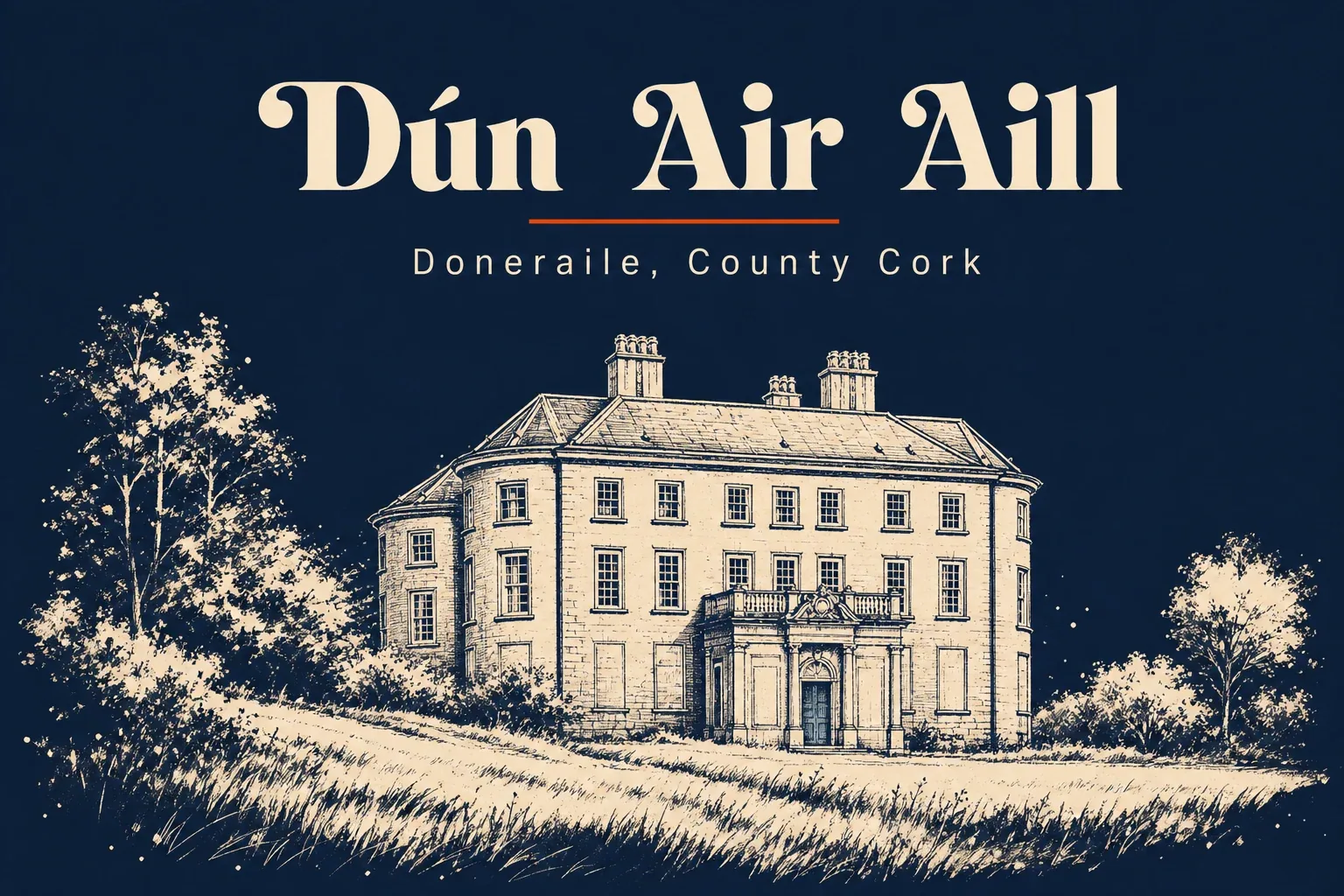
Dún Air Aill · Co. Cork
Walk into the deer park. They don't run. You don't run. Something quiet happens.
Doneraile Court is an 18th-century Palladian house set in grounds that've belonged to the St Leger family for centuries. In 1752, two riders made a bet: race on horseback from Buttevant church to St Mary's Church steeple here - four and a half miles across open country, no roads. They did it. That afternoon invented steeplechase. But here's the real thing: walk into the deer park and there they are. Fallow and sika deer, roaming free in the grounds like they own the place. They do. Which is to say nobody's running, nobody's rushing. It's one of the few places in Ireland where you can just exist among wild animals on foot.
The St Leger name stuck. General Anthony St Leger founded the St Leger Stakes horse race in 1776 - still one of the five English Classics, still run every year at Doncaster. A single family, a single afternoon's madness, a whole sport.
The house and grounds are OPW now. Free entry to the park. The deer come right up to you if you move slowly. Edmund Spenser lived four miles away at Kilcolman Castle and wrote most of "The Faerie Queene" somewhere in these fields. Canon Sheehan, the priest-novelist, set his books here (called it Garristown in the novels). Neither of them mattered as much as the afternoon two riders decided to race toward a church steeple and changed how people think about riding horses forever.