The monk
St. Molaga
He founded a monastery here in the early Christian era. The village name is his - Tigh Molaige, House of Molaga. The Franciscans built their friary in the same place about a thousand years later. Stone knows history.
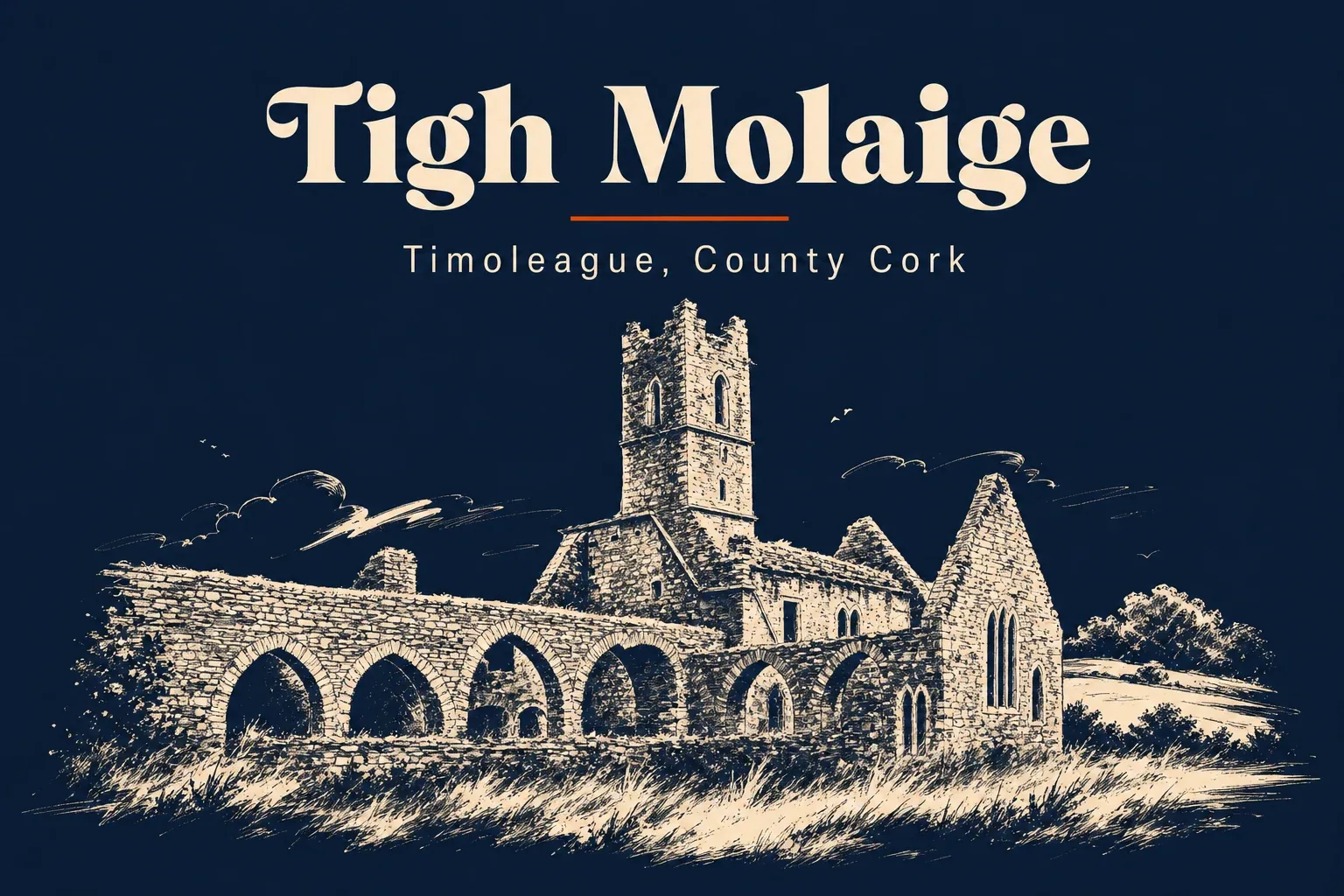
Timoleague is a village that exists for one reason: there's a Franciscan friary at the edge of the Argideen estuary that won't quit being impressive. Founded around 1240, the ruins are the real deal - nave, chancel, tower, cloister walls, all of it still standing. You can read the history in the stone.
The name means "House of Molaga" - St. Molaga had a monastery here in the early days, long before the Franciscans showed up. The ruins sit on the tidal estuary, so you get herons, egrets, waders, the works. There's an Argideen Walk if you want to stretch it out. Mostly though, you come for the friary, walk through it, sit for a bit, and move on.
The village itself is tiny and quiet. Pubs and food are thin on the ground - this isn't a stop for dinner. Clonakilty is eight miles up the road if you need to eat. Courtmacsherry is closer - two miles, with a beach and sailing if you've got time. But come here for the medieval silence and the tidal mudflats.
The reason to come back. The things every local will eventually tell you about, usually after the second pint.
Wear waterproofs. Bring a sandwich. Tell someone where you're going if it's the mountain.
There is no bad time. There are different times.
Quiet, bird migration, the estuary comes alive.
Warm but full. The ruins get day-trippers. Come early.
The best. Golden light, migratory waders, almost no one here.
Cold. Storm skies. The estuary is at its most active.
If a local was sitting beside you, this is the bit where they'd lean in.
There isn't one. The village has a pub but no consistent food. Eat in Clonakilty or Courtmacsherry. Come here to walk, not to sit.
The friary is free and unfenced. No café, no gift shop, no interpretation board. It's just ruins. That's the point.
It's a small place and it does get busy. Spring and autumn are quieter and the light is better.
From Clonakilty, 8 miles south on the R600. From Cork city, 35 miles southwest via R600. Small village, easy to find.
Buses to Clonakilty pass nearby. No direct service into the village. Plan to walk or taxi the last mile.
No station. Nearest is Clonakilty (not on the rail line). Then taxi or walk.
Cork Airport is 35 miles north. Shannon is 1.5 hours.