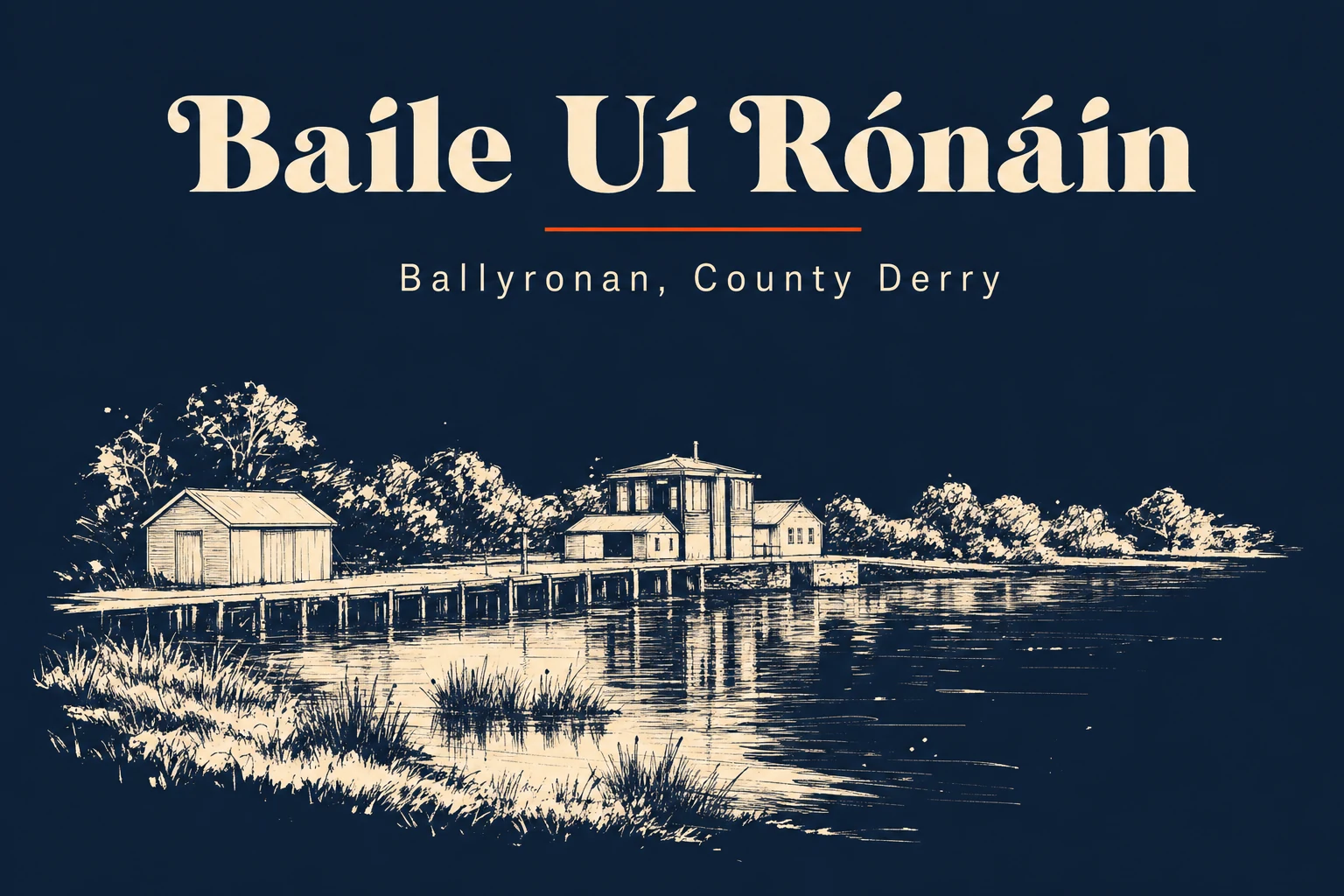
Baile Uí Rónáin · Co. Derry
A west-shore village on the biggest lake in these islands, looking the wrong way at Belfast.
Ballyronan is small. Six hundred people, a main street, a marina, a wood. It sits on the western shore of Lough Neagh in south-east Derry, looking east across the biggest lake in the British Isles toward an Antrim shore you cannot quite see most days. The next town with a train station is Belfast, on the far side of the water, and there is no way to get there directly - the lough is in the way.
The village was made by one family. David Gaussen built a forge and a quay here in 1788, then a distillery, then a brewery, and ran iron paddle steamers from his pier to Belfast and Dublin until the railways killed the trade. By the 1960s the quay was rotting. In 1973 John Hume - yes, that John Hume, before the Nobel Prize - pushed through a marina scheme that gave the village its second act. The berths are full of weekend cruisers now, not coal boats, but the line of the old quay is still there.
What you come for, really, is the water. The lough is shallow and changeable and famously unimpressed with weather forecasts. Locals fish it for pollan and perch and the protected Lough Neagh eel. The fishery proper is up at Toome. The boats here are pleasure craft and the odd old wooden cot pulled up on the grass. Come for a quiet Sunday. Bring a book. Leave when the light goes.