St Murrough O'Heney and a pinch of lucky sand
Banagher Old Church
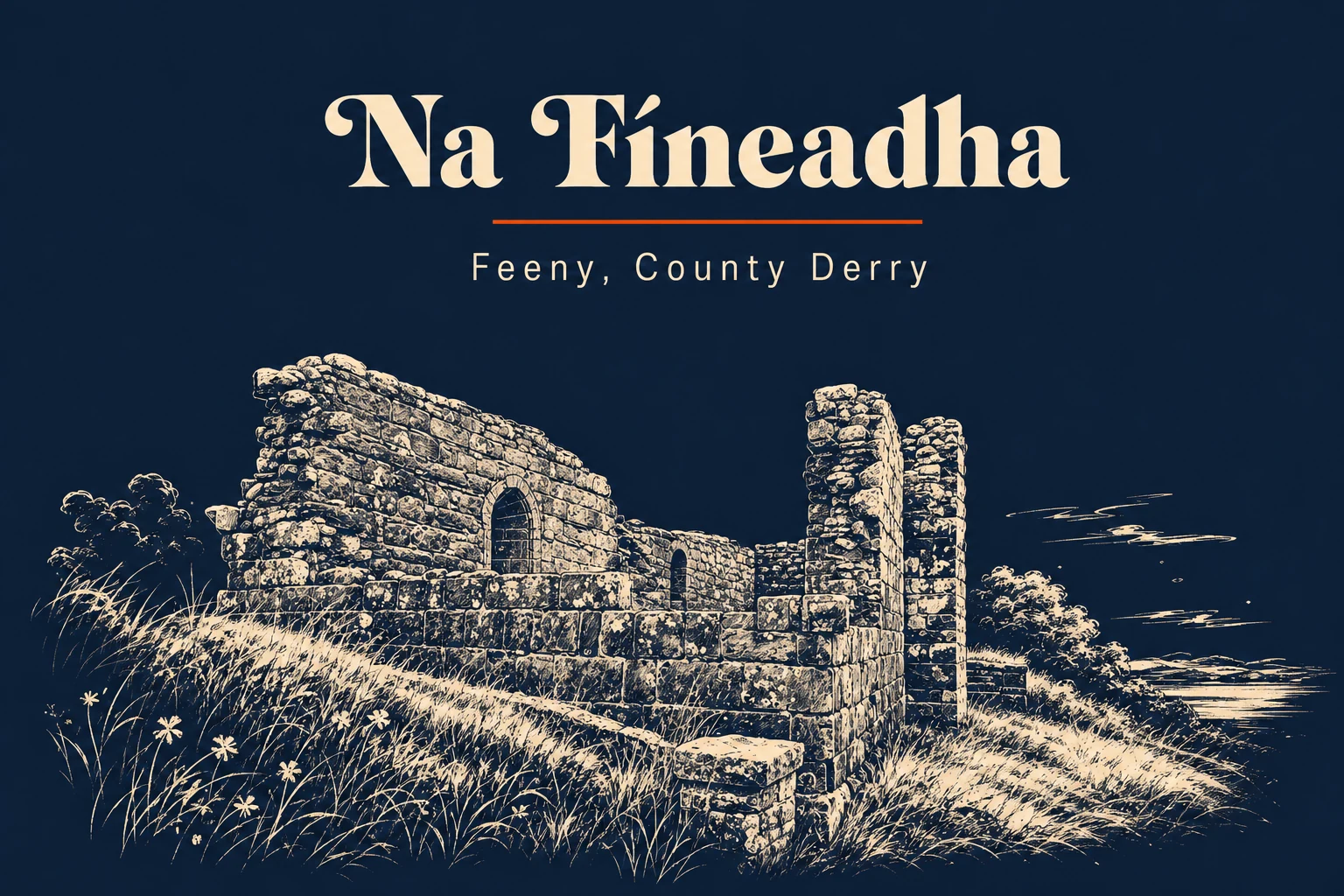
The medieval parish church at Banagher, two miles outside Feeny, was first mentioned in 1121. The nave dates from the early-to-mid 12th century; the chancel was added in the 13th. Archbishop Colton of Armagh used it as his base for his visitation of the diocese of Derry in 1397. It was abandoned in the 17th century and has been a ruin ever since. In the graveyard stands a seven-foot stone mortuary house, said to hold the remains of St Murrough O'Heney, the local founder-saint. The living tradition is that sand taken from beneath the mortuary house brings luck, particularly in sport — Banagher Sand is still occasionally carried in a pocket onto a GAA pitch. The church is a state-care monument; the gate is usually open.
The woodlands the village is named for
Na Fíneadha
The Irish name means the woodlands, and the oak forests it refers to are still partly here. Banagher Glen, on Feeny's doorstep, preserves one of Ireland's oldest surviving oak and ash woodlands — a National Nature Reserve since 1974, a Special Area of Conservation, and a remnant of the great forests that covered most of Ulster before the medieval period. The Aughlish Stone Circles, Bronze Age, sit about three kilometres from the village, which says how long people have been living and worshipping in this valley. The forest came first; the village settled in among what was left of it.
The slow demographic shift
A Catholic village by 2001
In 1911 Feeny was a mixed community — roughly 57% Catholic, 43% Protestant. By 2001 the Protestant population of the village numbered around twenty individuals. The shift mirrors the broader pattern across rural west Derry through the 20th century, accelerated by the Troubles. A UDR soldier, James Hood, was killed by the Provisional IRA near the village on 4 January 1973, the kind of local event that does not get into the national history books but reshaped who stayed and who left. The village today is overwhelmingly Catholic — the 2011 census put it at about 94%. The community has settled into what it became.