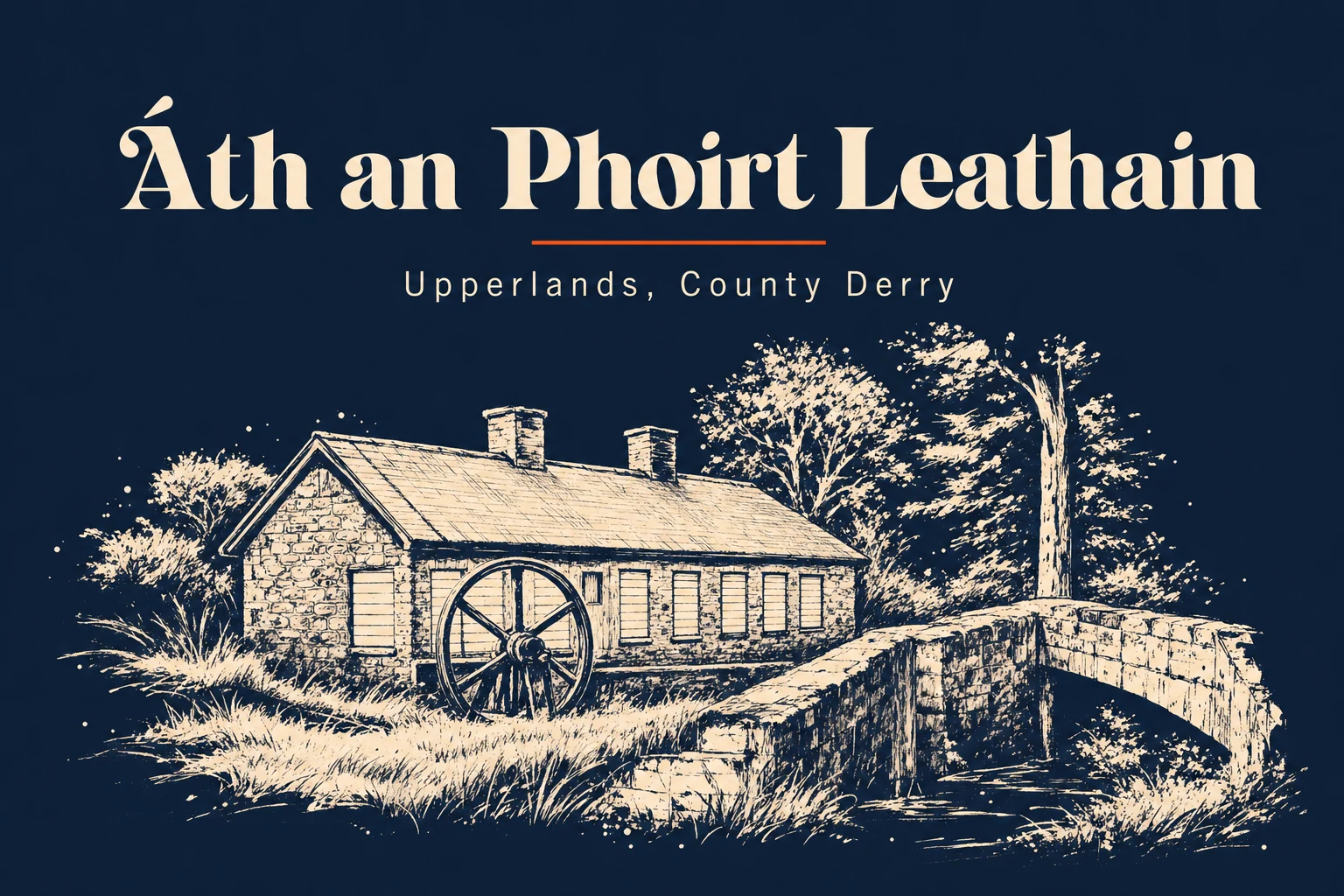
Áth an Phoirt Leathain · Co. Derry
A linen-mill village three miles from Maghera, with the world's last beetling mill at its centre - for nearly three hundred years.
Upperlands is one of those villages where the whole place is the story of one mill and one family. Jackson Clark rode out from Maghera in the 1730s, looked at a narrow stretch of the River Clady, and saw water power for a beetling engine. The mill went up in 1736. The village went up around it. The Clarks ran it for nine generations.
What the Clarks did at Upperlands was beetling - pounding finished linen for up to 140 hours under wooden hammers until the fibres flatten and the cloth takes on a sheen you cannot get any other way. By the time the rest of the world had moved on, William Clark & Sons were the last people doing it commercially anywhere. Savile Row tailors and luxury houses sent their cloth here. The engines ran. The river ran.
Then in December 2024 the company went into liquidation. Demand had fallen off. The mill stopped. For a village whose name is on the postmark because of the mill, that is not a small thing - it is the end of the only story the place had ever had. What happens next is approved heritage-led regeneration plans, a long-discussed scheme to turn the site into housing, a museum and community space. The mill ponds are still there. The worker rows are still there. The chimney is still up. Go now if you want to see it before the next chapter starts.