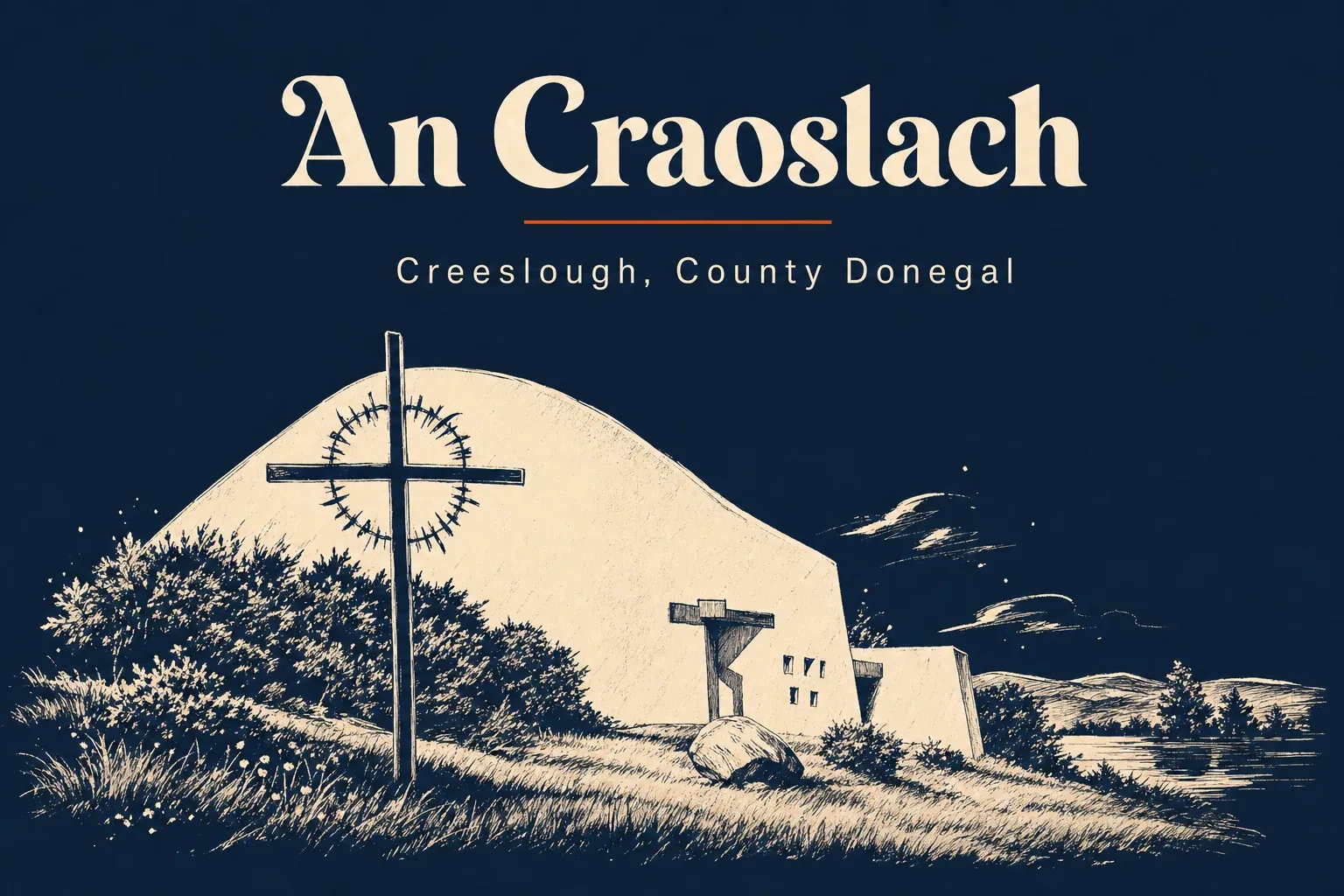
An Craoslach · Co. Donegal
Where a modernist church echoes a mountain, and tragedy forged an entire community anew.
Creeslough is not what its name sounds like. An Craoslach - "crossroads of the lake" - sits at the foot of Muckish Mountain overlooking Sheephaven Bay in northwest Donegal. It's small. The main street can be walked in four minutes. But it holds both a piece of Irish modernist architecture and a very recent wound.
The wound is why you need to know about this place. On October 7, 2022, an explosion at the petrol station killed ten people: a grandmother, a young girl, two boys, teenagers, working people, families incomplete. It was one of Ireland's worst peacetime disasters. The village has spent the last eighteen months not falling apart, but rebuilding itself - properly, collectively, with trauma-informed support, with a community centre under construction, with the kind of careful intention you don't often see anymore.
Before the explosion there was Liam McCormick's church (1971) - a monument to what happens when an architect pays attention to the landscape it's sitting in. The roof line echoes the mountain. The walls curve. Light comes from where you don't expect it. It feels less like a building and more like a conversation between human intention and geological fact.
Come here not because it's convenient or picturesque. Come because a small village demonstrated what it looks like to choose each other over fracture. And stay long enough to climb Muckish, walk Ards Forest Park, or sit in Rose's Bar with a drink and listen. The quiet has things to teach.