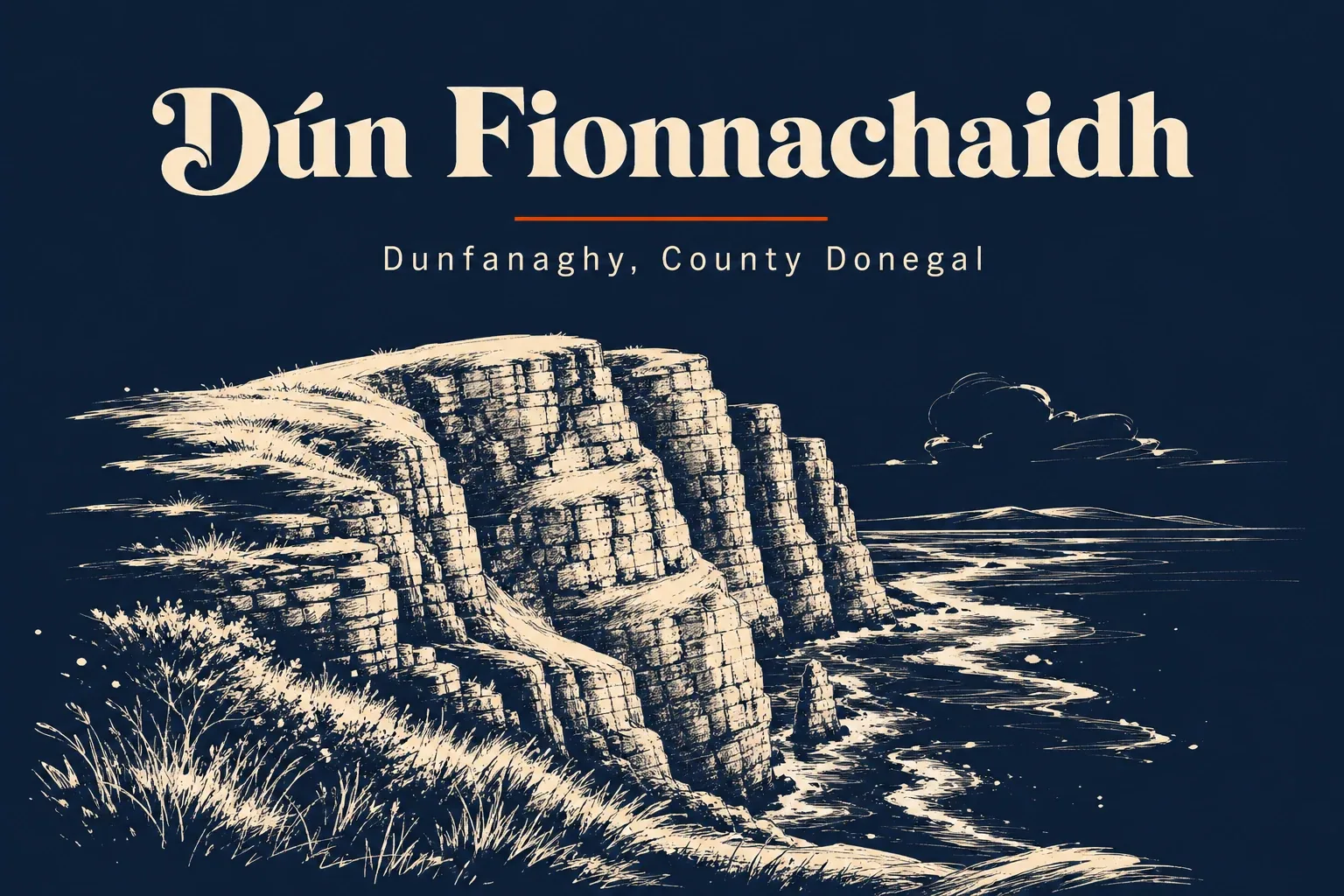
Dún Fionnachaidh · Co. Donegal
Coastal village below 180m cliffs. Puffins in season. Workhouse stories that stay with you.
Dunfanaghy sits on Sheephaven Bay like a place someone remembered perfectly and built again. Three hundred permanent souls, give or take the tourists and the returned emigrants whose properties line the coast. The kind of scale where you eat breakfast and know three stories by lunch.
The village works as a base - Wild Atlantic Way checkpoint, fishing port evolved, pubs where locals still outnumber visitors off-season. But the real draw is what surrounds it. Horn Head looms over everything - those 180-meter cliffs, the puffins, the wind that becomes part of you. New Lake sits inland, trout water that achieves legendary status among anglers. The Workhouse heritage tells famine stories that statistics alone miss. Wee Hannah Herrity spent her worst years there. The museum gives her back her name.
Come for one day. Come back for the weeks you realize you need. Killahoey Beach empties northwest, Tramore Beach sits almost untouched just down the road. The light changes every hour across Sheephaven Bay. The locals know every inch and will share it without performance.