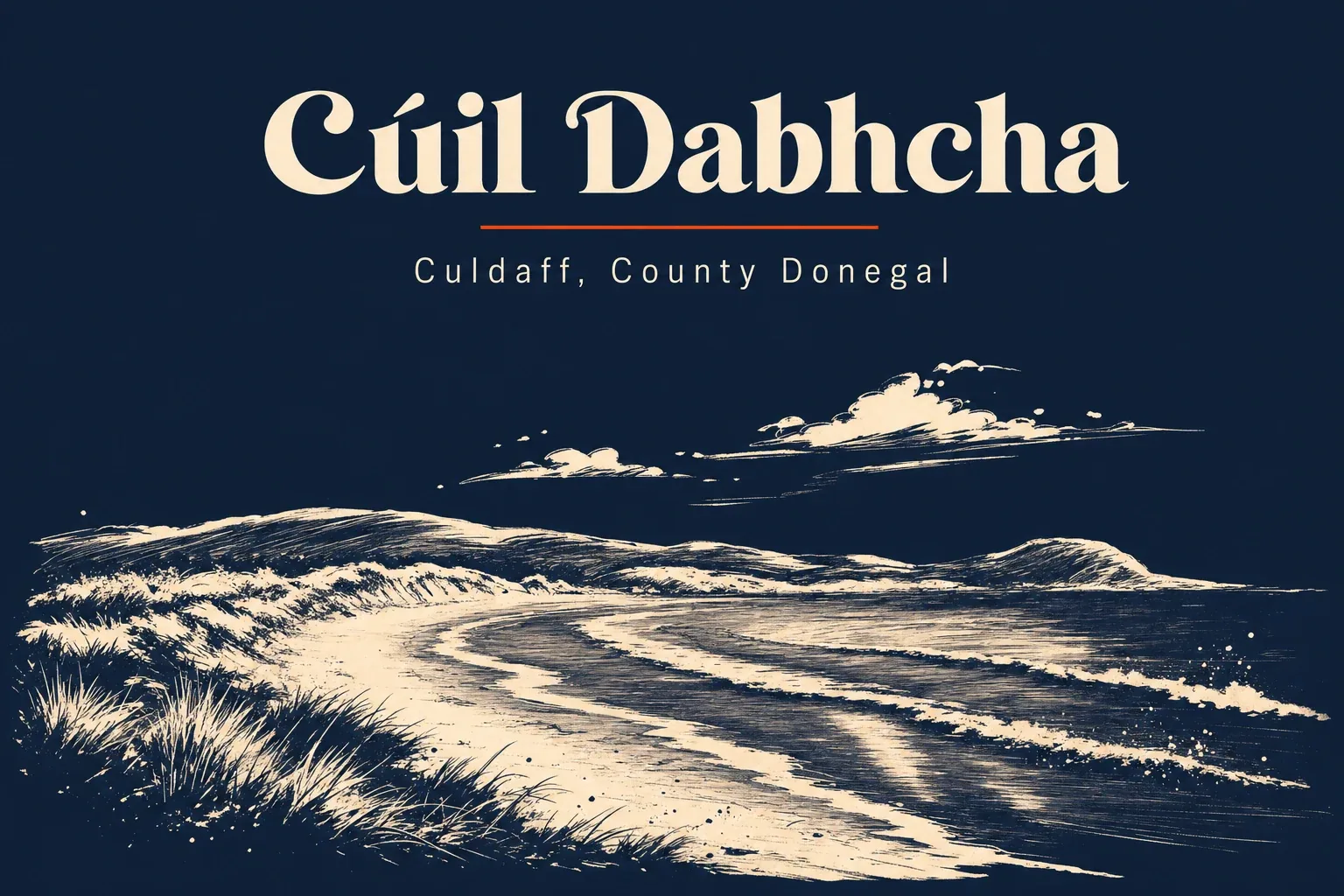
Cúil Dabhcha · Co. Donegal
A Blue Flag beach and a legendary music pub. Not much else. Exactly enough.
Culdaff is small. The bar is 50 meters from the beach. The stone circle is 4,000 years old. On a Saturday night in McGrory's you'll hear a fiddle that arrived from Dublin or Cork, played by someone who's passing through, and the whole room will be still except for the tunes. That's the deal here.
It's not a beauty-spot-and-leave place. It's a place where you stay three nights and the bartender knows your name on the second night, and on the third you're part of the conversation. The beach is real - sand and rock pools and water that'll take your breath. The pubs are three: locals' places where you can sit quiet or join in. Pick your Saturday and come for the music.
Outside town, walk back through five thousand years. Bocan Stone Circle sits on a hill watching the bay. St Buadán's monastery left a 4-meter cross still standing. Bronze Age burial sites. The Cloncha Cross. Inishowen is the archaeology. Culdaff is where you sleep and eat and hear the music.