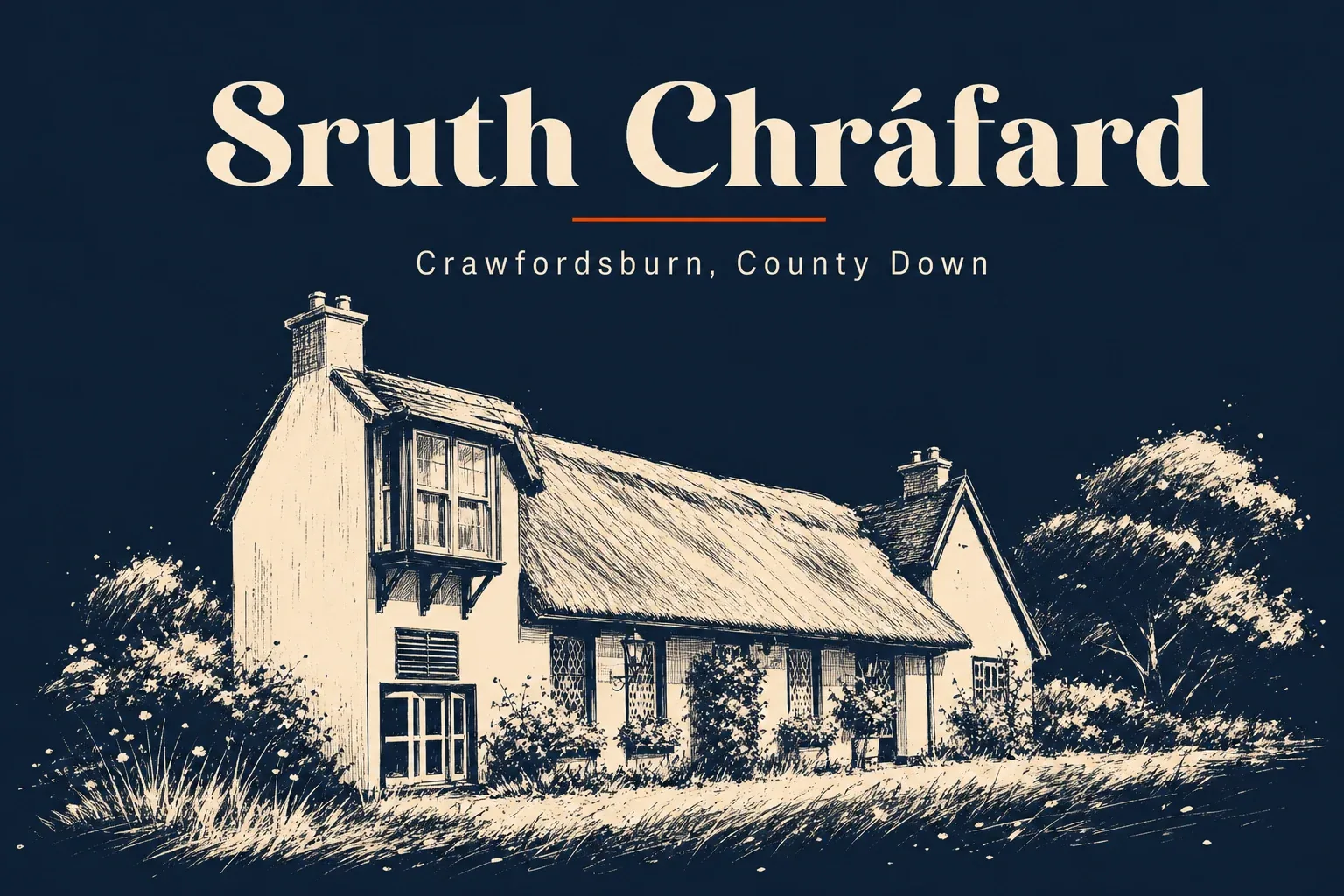
Sruth Chráfard · Co. Down
One street, one famous inn, and a country park that does the heavy lifting.
Crawfordsburn is a small affluent village four kilometres west of Bangor, on a back road between two larger places. It does not look like much from the A2 - a row of white-painted houses, a hotel, a sign for the country park, a turn-off you nearly miss. That is the whole village. Six hundred-odd people live here. Most days they share it with several thousand visitors who are technically going somewhere else.
The somewhere else is Crawfordsburn Country Park, which stretches from the back of the village down a wooded glen, past a waterfall, and out onto a kilometre of beach at Helen's Bay. It is Belfast's go-to country park - the one your auntie takes the kids to, the one the wedding photographers book months ahead, the one that absorbs a city's worth of Sunday afternoons without ever feeling truly full. The village itself functions as the carpark and the lunch.
The Old Inn is the other reason anyone has heard of the place. Records show a building on the site in 1614, which makes it one of the oldest hotels in Ireland by the only honest reckoning - the one with paperwork. The mail coach to the Donaghadee packet boats changed horses here in the eighteenth century. C.S. Lewis chose it for his honeymoon in 1958. Tennyson, Thackeray, Swift, Dickens and Trollope are all reputed to have stopped through, though the Inn's own historians admit you cannot really prove any of them.
Come for an afternoon, not a week. Walk the glen, eat at the Inn, take the coastal path one way or the other, get the train back. Two hours and you have seen the postcard. Stay for a wedding and the postcard becomes confetti underfoot.