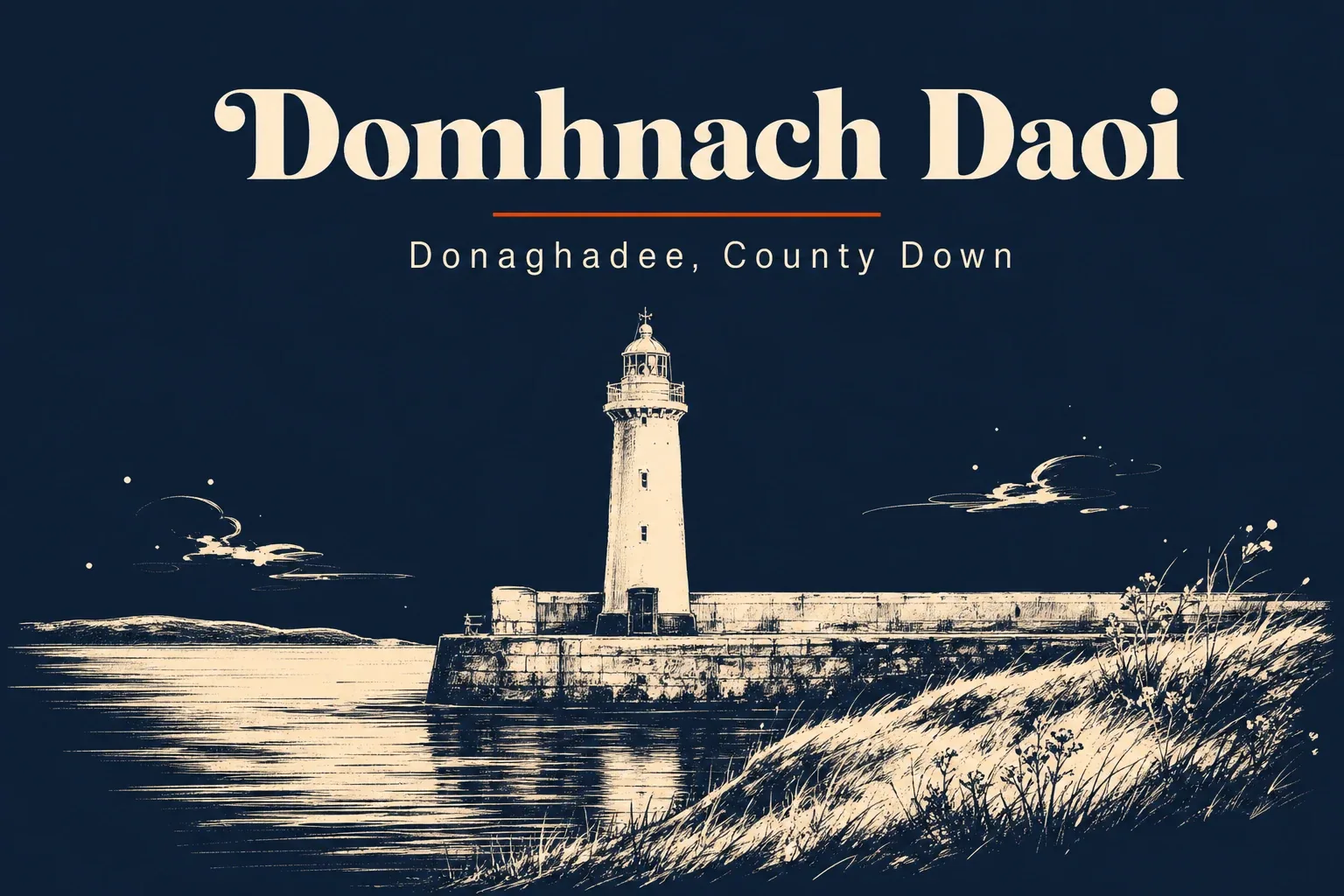
Domhnach Daoi · Co. Down
Postcard harbour town that lost the mailboat to Larne and kept its bones.
Donaghadee was the busiest port in the north of Ireland for the better part of two centuries. The Royal Mail packet ran daily to Portpatrick in Scotland from 1662 until 1849 - twenty-one miles of open water, the shortest hop between the two islands. Then the railways reached Stranraer instead of Portpatrick, the route shifted to Larne, and Donaghadee was quietly retired. The harbour Rennie had just finished building became, almost overnight, a harbour for small boats and Sunday strollers.
What's left is the postcard. A pair of stone piers reaching out into the channel, a fat little Victorian lighthouse painted black at the base and white at the top, a row of pastel houses along The Parade, and the Moat behind the town like a green pudding with a folly on it. The Copeland Distillery moved into the old cinema in 2019 and makes a respectable gin. Pier 36 does the seafood. Grace Neill's, on High Street, claims 1611 and a deed older than any other licensed pub in Ireland - Sean's of Athlone disputes the title, and the row has been going on longer than most marriages.
It's a commuter town for Belfast now, twenty minutes up the A2, and you can feel that. The High Street has a few too many estate agents and a few too few shops. But the harbour at golden hour with the boats coming in, the walk along the Greenway to Bangor, a pint by the fire in the Moat Inn after - none of that has gone anywhere. Come for an afternoon. Stay for the chowder.