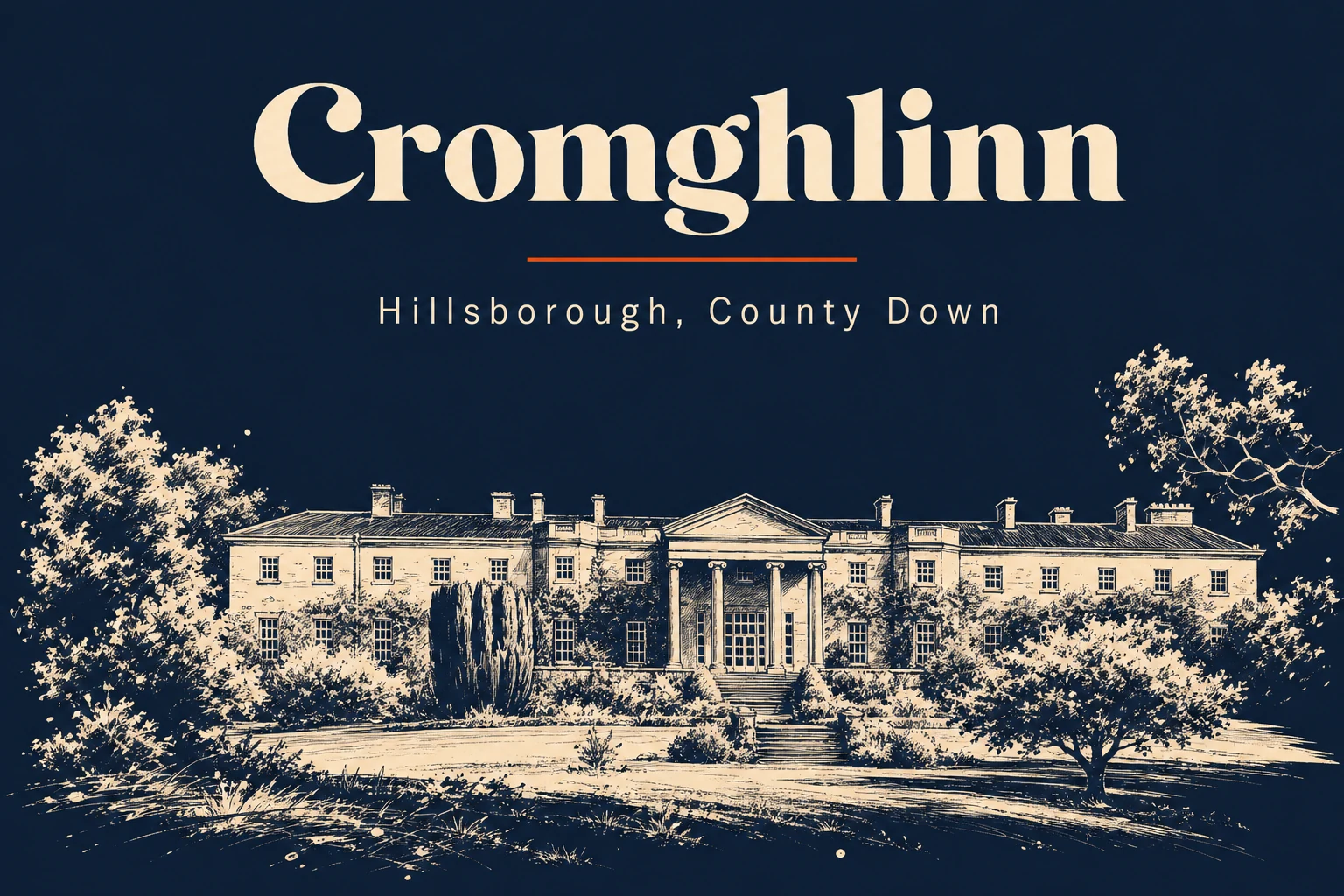
Cromghlinn · Co. Down
A Georgian high street, a working royal residence, and a forest behind both.
Hillsborough is the polished postcard version of County Down. Georgian sandstone, sash windows, planters on the Square, a parish church at the bottom of the hill and a castle behind a wrought-iron gate at the top. The whole village is a conservation area and it looks it. You can do the lap in twenty minutes and still want to start again.
The angle is the Castle. Hillsborough Castle is the official Northern Ireland residence of the British monarch and the live-in house of the Secretary of State. Margaret Thatcher and Garret FitzGerald signed the Anglo-Irish Agreement in the State Drawing Room in November 1985 - a deal the DUP went on to protest from this very Square for years. Historic Royal Palaces took over the visitor side in 2014 and now opens the gardens and State Rooms most of the year. Buy the ticket. The walled garden alone is worth the admission.
Behind the village sits Hillsborough Forest - 200 acres, a lake, a 17th-century artillery fort, and a sculpture trail. It is the quiet half of the day out, and free. The Square is the loud half: antiques shops, gift shops, two of the best-known coaching inns in Ulster, and a Saturday foot-traffic problem that the village has not solved.
Don't make it a half-hour stop. Walk the Square, do the Castle, eat at the Plough or the Pheasant, take the lake loop, and leave the car at home if you can. Castle-open Saturdays in summer turn the parking into blood sport.