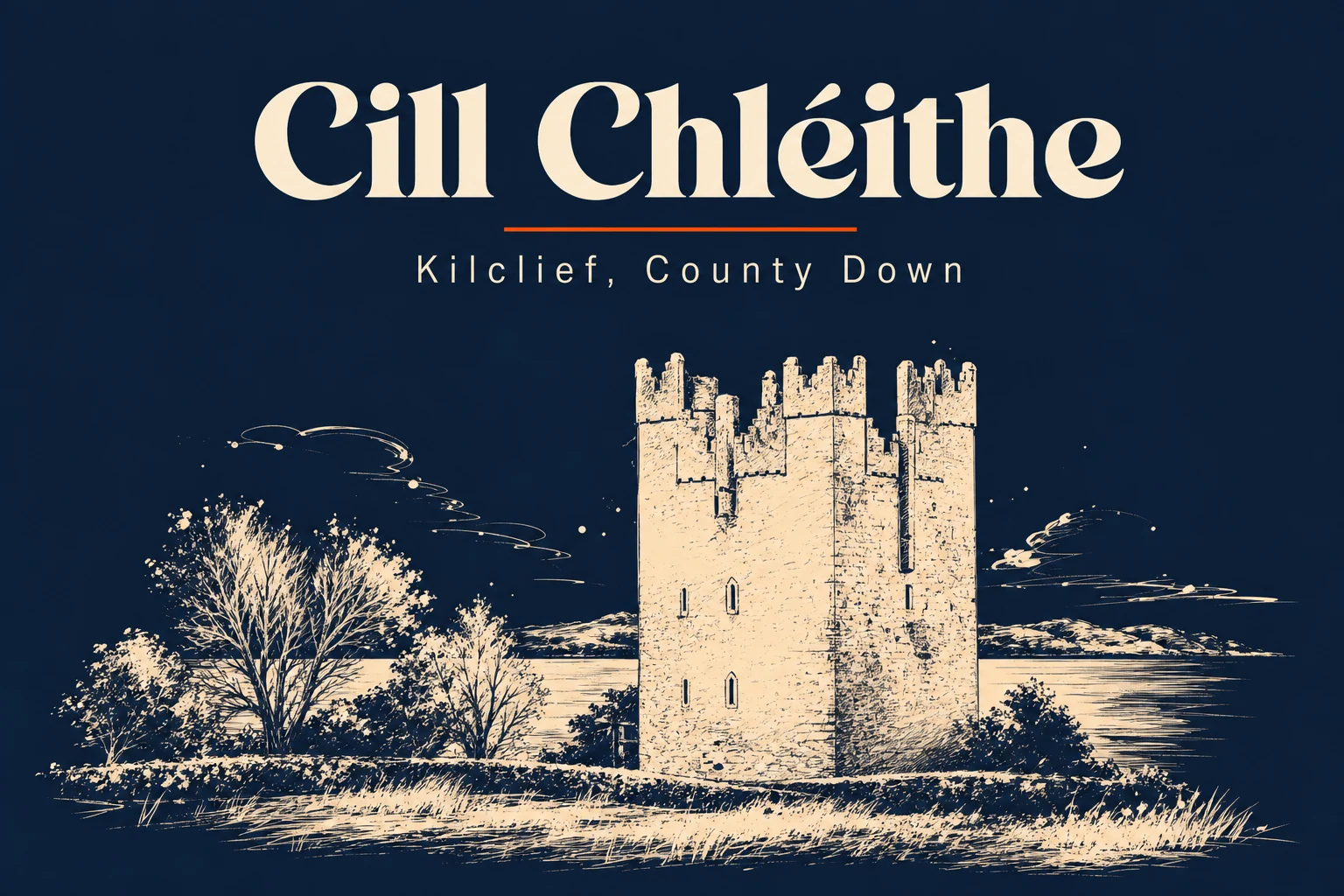
Cill Chléithe · Co. Down
A castle, a strand, and a road to somewhere else. That is the whole village.
Kilclief is a hamlet on the Strangford-to-Ardglass road, in the Lecale corner of County Down where the land tips into the Irish Sea. A castle, a Church of Ireland parish church from 1839, a strand under the castle, a GAA pitch, and the houses of the parish that takes its name from the place. Two hundred and fifty people, give or take. That's the village.
What brings you here is the castle. Kilclief Castle is a four-storey tower-house built around 1413 by John Sely, then bishop of Down, and it is the earliest of its kind in the county - the one archaeologists use to date all the others. The first floor is vaulted in stone. Two turrets jut from the front, one holding a spiral stair, the other a stack of garderobes, and a high arch joins them at roof level with a murder-hole punched through for dropping things on people you did not want to see. The bishop lived in it with a married woman named Lettice Savage and was eventually thrown out of the see for it, in 1443. The tower outlasted him by nearly six centuries.
Make it a stop, not a base. There is nothing to eat in Kilclief and nothing to drink. Park at the castle, walk down to the strand, swim if the tide is in, climb the tower if the door is unlocked, and drive on. Strangford is three kilometres back the way you came; Ardglass is fifteen minutes the other direction. Both have pubs. Kilclief has a churchyard and a view of the Irish Sea.