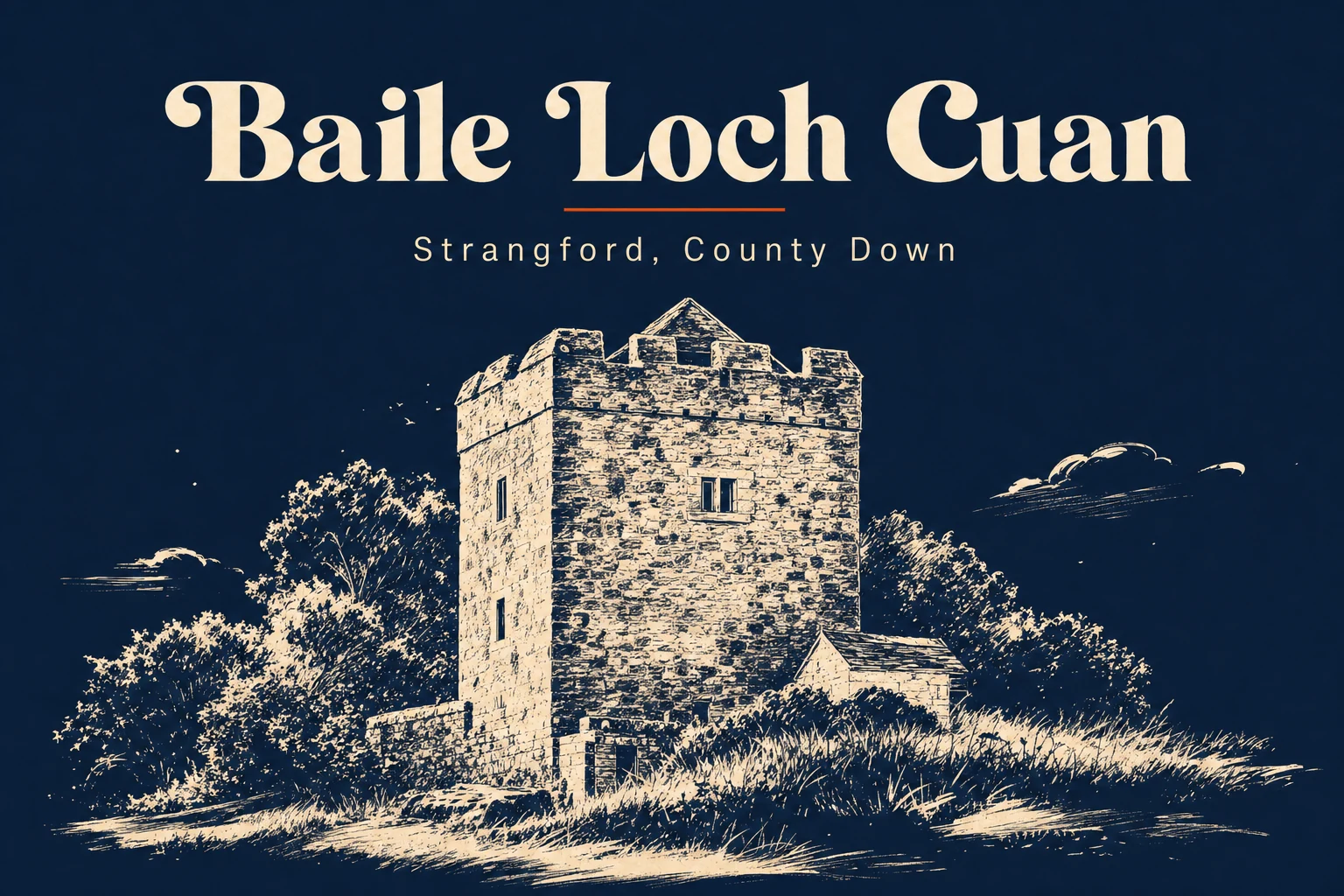
Baile Loch Cuan · Co. Down
One pub, one ferry, one National Trust estate doing all the work.
Strangford is barely a village - a square, a Georgian terrace, a ferry slip, a pub. Walk it in fifteen minutes and you have seen the lot. The reason anyone is here at all is the water in front of you: the Narrows, where Strangford Lough empties into the Irish Sea through a half-mile gap, and the tide does six knots both ways. The Vikings named it strong fjord and the Vikings were not given to overstatement.
The real action is a mile west at Castle Ward. The National Trust estate - half Gothic, half classical, because Lord and Lady Bangor could not agree - became Winterfell when HBO arrived in 2010, and the village has been quietly cashing the cheque ever since. Most days half the cars rolling off the ferry are heading for the farmyard archery range; the other half are doing the loop back to Downpatrick. The village itself stays small. That is the trick.
Off-season - November to March - Strangford is honest about what it is. The pub is open. The restaurant is open. The ferry runs every thirty minutes regardless. The Brent geese arrive. The light on the lough at four in the afternoon does something you cannot explain to anyone who has not seen it. Stay a night. Get the first ferry across to Portaferry in the morning and the breakfast at the other side.