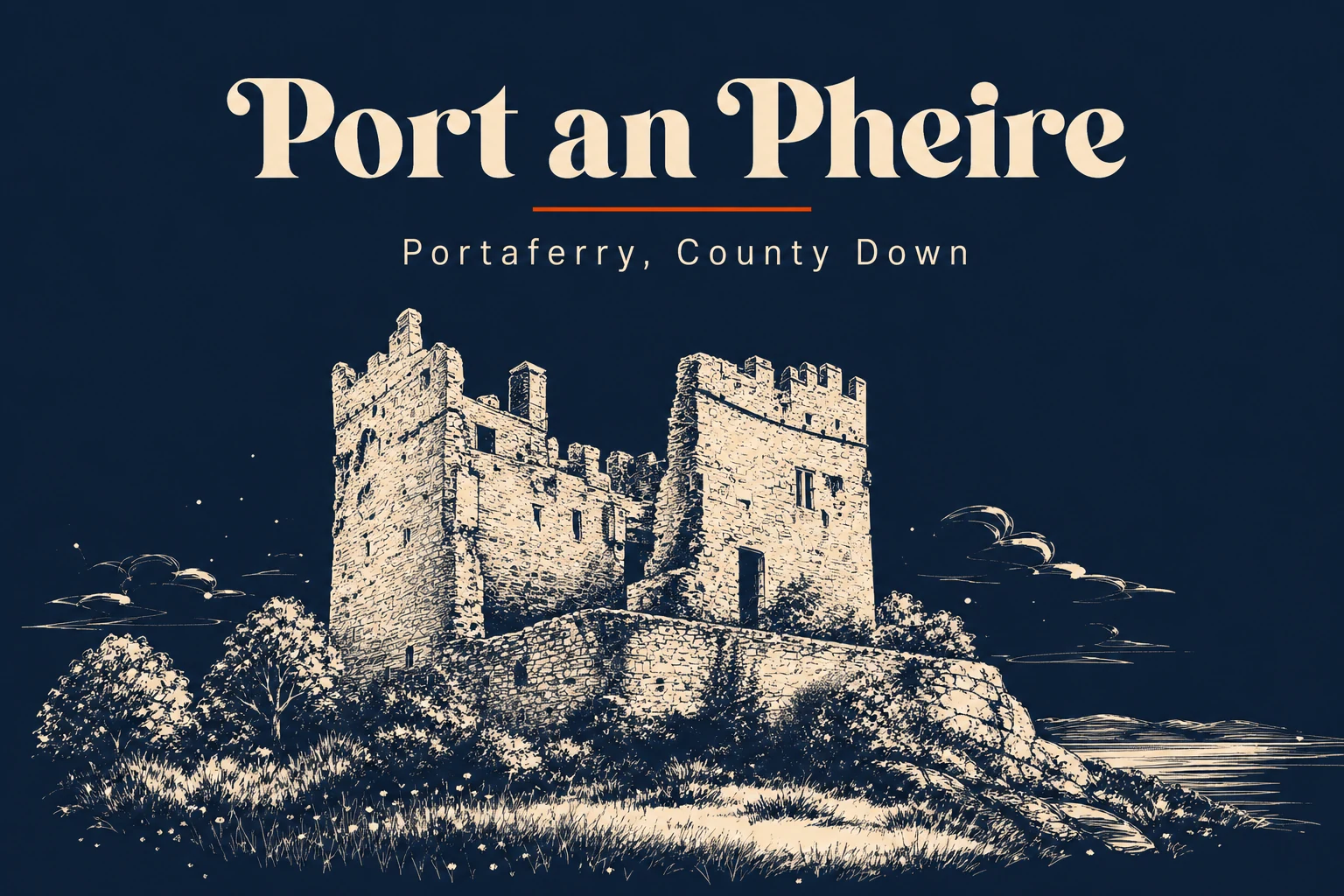
Port an Pheire · Co. Down
A working ferry, a Tudor tower, and the fastest tide in Europe pulling under your feet.
Portaferry sits at the tip of the Ards Peninsula where Strangford Lough meets the Irish Sea through a slot under a kilometre wide. The town runs along the shore, a square, a square's worth of pubs, the tower-house at the harbour, and a boat going back and forth to Strangford village on the other side every half hour. That boat has been the entire point of the place since 1611, and it still is.
What you need to know: the Narrows aren't a view, they're a working tidal channel. Eight knots of current at full ebb. Queen's University put their marine laboratory here for a reason - over two thousand species of marine animal in the lough, more diversity than most of the North Atlantic, and the easiest way to see any of it is to walk down to the pier and look. The diving crowd come from across Europe for this water. The sailors give it respect.
Don't make it a stop. Make it an overnight. The day-trippers all cross on the ferry, eat a chowder, and roll back to the car. Stay the night, walk Nugent's Wood at six in the morning before the herring gulls fully commit to the day, take the first ferry across to Castle Ward, and you've earned the place.